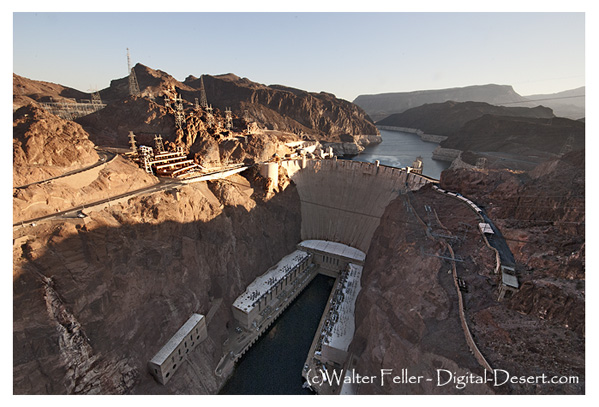
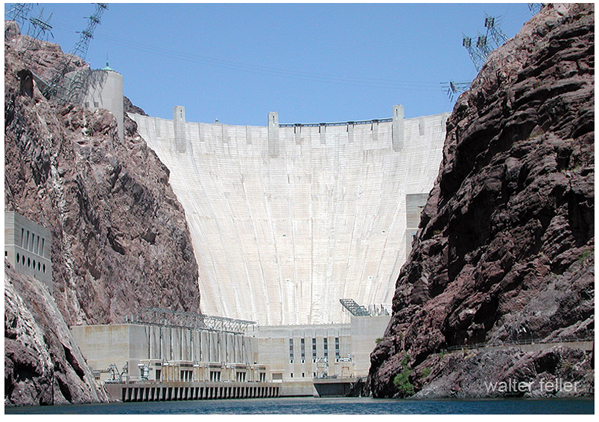
Hoover Dam and Boulder Dam refer to the same concrete structure that crosses the Colorado River between Nevada and Arizona. The distinction lies not in the dam, but in a story formed by planning, politics, and changing names. Early proposals to control the Colorado River focused on Boulder Canyon, upstream of the eventual construction site. As a result, the project became widely known as Boulder Dam, a name that remained familiar even after engineers selected Black Canyon, with its stronger rock walls and narrower gorge, as the better location for such a massive dam.
In 1930, Secretary of the Interior Ray Lyman Wilbur announced that the project would be named Hoover Dam, in honor of President Herbert Hoover, who had supported Colorado River development and played a role in negotiations among the basin states. Construction began during his administration, but the dam soon became associated with the Great Depression and the political changes that followed.
When Franklin D. Roosevelt became president in 1933, his administration returned to the older name Boulder Dam, which government publications and public references often used for years. Roosevelt dedicated the dam in 1935, even as major construction was still underway. During this period, “Boulder Dam” was not merely a casual nickname; it was the official name favored by many people and agencies.
In 1947, Congress formally restored the name Hoover Dam, which has since been the official designation. Boulder Dam remains an older historical term.
The two names, therefore, mark different moments in American history: “Boulder Dam” belongs to the era of early planning, Depression-era construction, and New Deal usage, while “Hoover Dam” is the modern official name. Together, the names reflect not only a landmark of engineering but also the politics of memory in the American West.
Transmogrification, though it carries a slightly literary, almost mythic tone, suggests not just change but a deep and strange transformation into something fundamentally different.
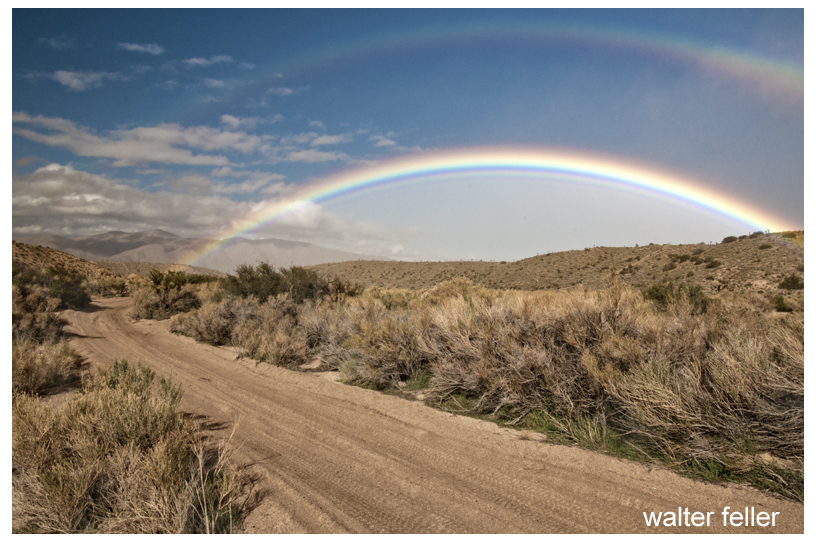
For much of its recorded history, the Mojave Desert was primarily understood as a physical region. Its identity arose from terrain and climate. Dense or permanent human occupation played little role. Early travelers, surveyors, geologists, and writers described it using the language of the landform. They noted broad basins, isolated mountain ranges, dry lakes, volcanic fields, alluvial fans, dunes, washes, and the intermittent course of the Mojave River. The desert was seen as a geographical system. Uplift, erosion, aridity, and distance formed it. Its boundaries were often indistinct. The Mojave was not yet a tightly organized human landscape. It was seen as open country, with character shaped by the land’s form.
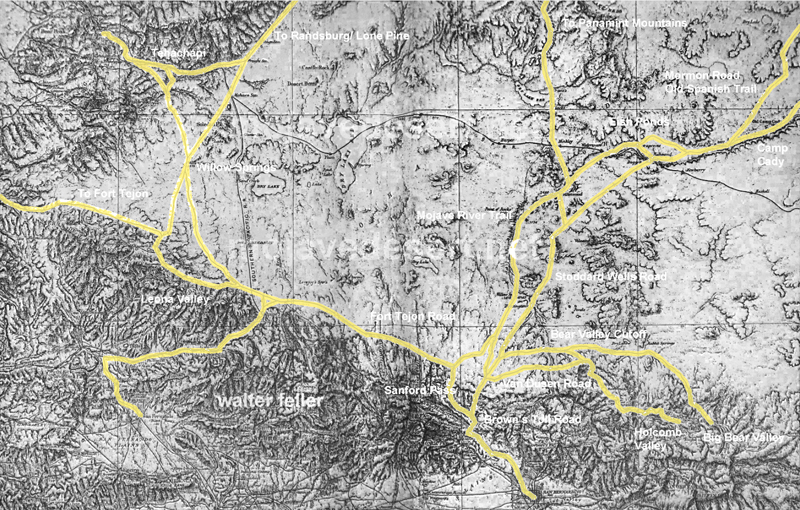
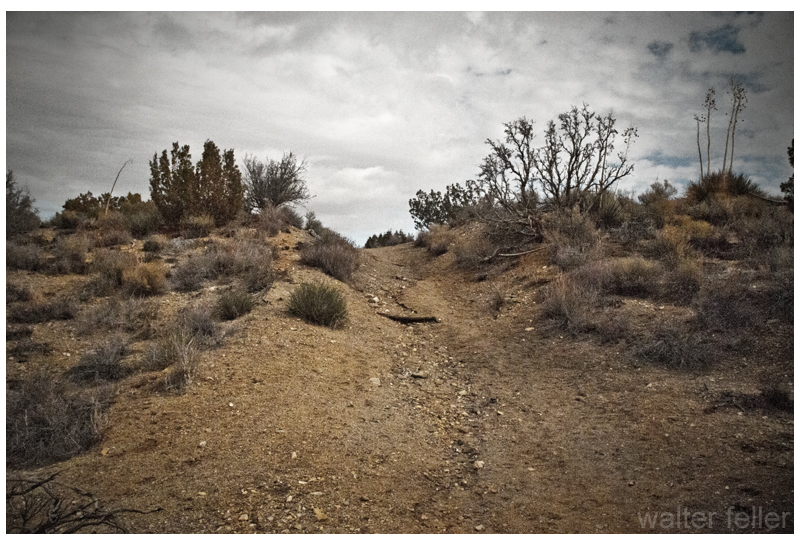
In that earlier conception, geography imposed limits upon people. Travel followed springs, canyon mouths, and natural passes through the mountains. Camps and settlements clustered where water permitted survival. Roads bent around lava flows, crossed playas, or traced older Indigenous routes refined over generations of movement through the desert. Human activity existed within conditions dictated by climate and terrain. The desert remained the dominant force, and people adapted themselves to it.
Even with these earliest permanent intrusions, the long-standing dynamic between people and landscape was not immediately overturned. Mining camps rose and disappeared as ore deposits and water supplies fluctuated. Wagon roads faded when springs failed. Small railroad towns appeared abruptly but often remained fragile in the face of the scale and hostility of the surrounding landscape. Much of the Mojave still retained the appearance of a place shaped principally by geology rather than by civilization.
Over time, a shift occurred: the Mojave, once defined by natural systems, increasingly came to be structured around human needs. The first key shift came with railroads, which established artificial centers in previously insignificant locations—places that had mattered only as crossings or water stops. Afterward, elements like highways, aqueducts, transmission corridors, military reservations, utility infrastructure, suburban expansion, recreational development, industrial agriculture along the margins, and large-scale energy production continued this trend. These forces did not simply occupy the desert; they actively reorganized it.
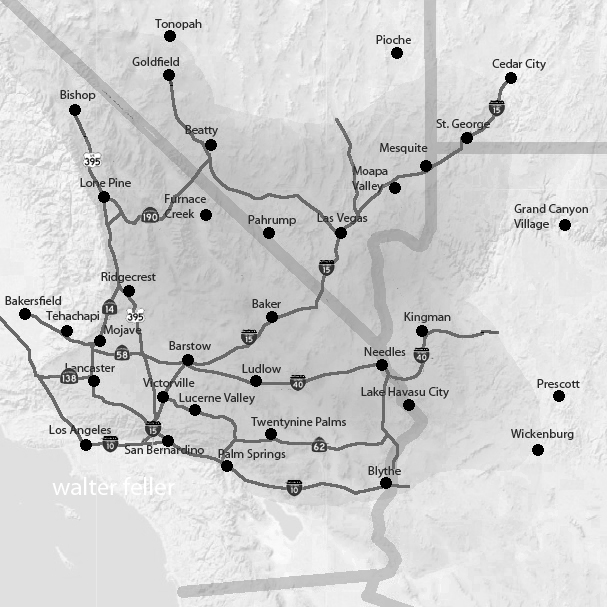
A modern map of the Mojave clearly reveals this shift: vast military boundaries now dominate entire valleys and mountain ranges. Meanwhile, interstate highways create strong directional corridors across what were once diffuse travel landscapes. Utility-scale solar developments, visible for miles, convert open basins into industrial energy fields. Transmission towers march across dry lakes and bajadas. Off-road recreation networks carve repeating tracks into fragile terrain. Finally, conservation areas and national preserves add another layer of organization by establishing access restrictions, managing habitats, providing tourism infrastructure, and developing preservation policies.
Increasingly, the Mojave is understood less through watersheds and landforms than through jurisdiction and use. One valley becomes associated with military training, another with renewable energy, others with recreation, habitat protection, logistics, or suburban expansion. This shift is reflected in the language used to describe the desert. Whereas earlier generations emphasized playas, volcanic mesas, spring systems, or mountain passes, modern discussions focus on renewable energy zones, conservation plans, transportation corridors, protected acreage, groundwater management, housing pressure, and recreational access.
Yet the older desert has not disappeared beneath these overlays. The geology remains the controlling framework beneath every human system. Basin-and-range topography still governs drainage and movement. Mountain ranges still create rain shadows and isolate valleys. Heat still limits settlement density. Water scarcity still defines possibility. Dry lakes still gather runoff after storms, just as they did centuries ago. In many places, the desert resists permanent transformation. Every generation is reminded that the underlying landscape remains older and more powerful than any system laid upon it.
Building on these evolving layers of meaning, what has changed most is not simply the Mojave’s physical appearance but its significance. The desert has shifted in its conceptual role: initially perceived as a natural form, then as a landscape of use, and now increasingly as a landscape of negotiation.
The central question is no longer merely “What is the Mojave?” but “What is the Mojave for?” Different groups now approach the same landscape with competing visions: energy developers see open basins suitable for solar fields and transmission infrastructure; conservationists see fragile ecosystems, migration corridors, and biological continuity; tribes see ancestral homelands, sacred sites, and cultural memory in the terrain itself. The military sees strategic training space, defined by isolation and open airspace, while residents see communities and livelihoods. Recreationists seek freedom, mobility, solitude, and escape, while cities beyond the desert offer land, water, transportation routes, and energy supplies.
As these pressures intensify, nearly every part of the Mojave acquires overlapping claims—emptiness itself becomes contestable. Open land is no longer simply open; instead, it becomes designated, managed, leased, protected, restricted, industrialized, or defended. Consequently, the future Mojave is likely to be shaped not by a single activity, but by tensions among many competing systems, all operating simultaneously across the same terrain.
In this evolving context, the Mojave is entering a third historical phase. Initially, it was defined by its physical landforms. Next, human activities and uses became the defining factors. Now, the Mojave’s identity may increasingly depend on negotiations and conflicts over its meaning, access, and purpose.
The old desert will still remain beneath these arguments. The playas will still whiten under summer heat. Winds will still sweep across creosote flats. Mountain ranges will still rise abruptly from broad basins at dusk. Seasonal floods will still cut across washes after sudden storms. The geological skeleton of the Mojave will endure. However, as human systems become more extensive and entangled, the experience and interpretation of the desert will continue to change.
The future Mojave will be governed as a layered landscape. No single authority will determine its fate: federal agencies will control vast public lands; counties will regulate roads, zoning, and development pressure; tribes will press claims rooted in sovereignty, memory, and sacred geography; energy and mining companies will seek permits, leases, and corridors; conservation groups will defend habitat and species; recreationists will demand access; and residents will argue for the right to live within the desert, not just be managed from outside. In light of these overlapping interests, governance will become less about drawing boundaries and more about arbitrating between claims. The desert will be administered through plans, lawsuits, permits, consultations, closures, leases, and exceptions. Its future will not be decided all at once; instead, it will be determined valley by valley, corridor by corridor, and project by project.
The Mojave functions as both an ancient physical landscape and a modern human one. While it is no longer shaped solely by tectonics, erosion, and climate, it is no longer defined solely by railroads, highways, military reservations, and energy development. Increasingly, the desert is formed by negotiations over how such a landscape should exist. Thus, what once was defined by its form is now shaped by the competing meanings people assign to it.
The association between Thomas Long (Pegleg) Smith and Walkara in Cajon Pass centers on the great horse raids of the 1830s-1840s along the Old Spanish Trail.
Walkara, sometimes called Wakara or Chief Walker, led large mounted raiding parties from present-day Utah into Southern California. These expeditions targeted Californio ranchos and mission herds, especially around San Luis Obispo, San Gabriel, and inland Southern California. The stolen horses were then driven eastward through the Mojave Desert and across Cajon Pass toward Utah and New Mexico.
Pegleg Smith was one of several Anglo mountain men tied to this trade network. Contemporary and later sources repeatedly connect him with Walkara’s operations, though historians debate whether he directly participated in raids or mainly acted as trader, guide, and broker. James Beckwourth and Old Bill Williams are usually mentioned alongside him.
Cajon Pass mattered because it was the principal gateway between the Los Angeles basin and the Mojave Desert. Large bands of stolen horses moved through the pass on their way east. Some traditions claim thousands of horses crossed there during Walkara’s biggest expeditions.
The raids became so notorious that local geographic names in and around Cajon Pass were later linked to them. Horsethief Canyon and Little Horsethief Canyon are traditionally associated with Walkara’s raiders and their escape routes into the desert.
An important detail often missed is that this was not random outlawry in the modern sense. The horse trade formed part of a large transregional economy running along the Old Spanish Trail. California horses had enormous value in the Rockies and Great Basin. Walkara built a disciplined mounted raiding system, while men like Pegleg Smith connected Native raiding networks with Anglo and Mexican trading systems.
By the mid-1840s, Californio authorities and local militia figures such as Benjamin Davis Wilson pursued these raiding bands through Cajon Pass and into the Mojave, though with limited success.
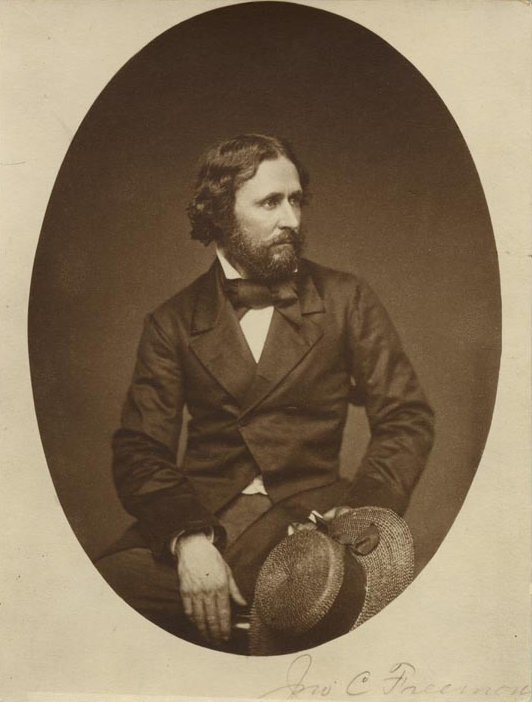
The relationship between John C. Fremont and his chief surveyor, Charles Preuss, was a mixture of professional interdependence and deep personal tension. Both men were indispensable to each other—Fremont as the ambitious public face and commanding officer, Preuss as the trained cartographer and topographic backbone of the expeditions—but their temperaments could hardly have been more different.
John C. Fremont
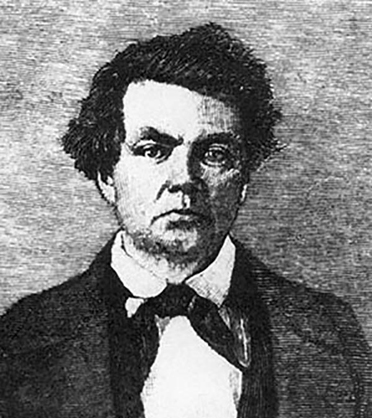
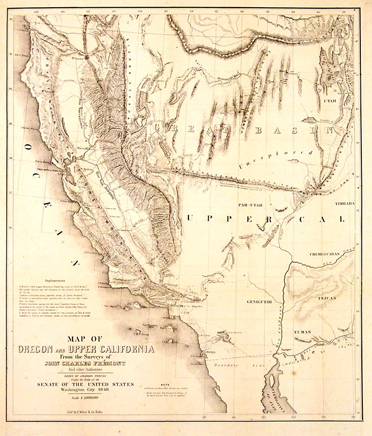
Preuss, a German-born topographer and mapmaker, brought a meticulous scientific discipline and European technical education to Fremont’s ventures. He was responsible for producing the maps that gave Fremont’s reports their authority, accuracy, and ultimate political impact. Fremont depended heavily on Preuss’s precision and methodical fieldwork—his astronomical observations, triangulations, and record-keeping were the foundation upon which Fremont’s reputation as “the Pathfinder” was built.
Charles Preuss
However, the relationship was far from harmonious. Preuss’s surviving diary-often dry, caustic, and skeptical—shows frequent frustration with Fremont’s impulsiveness and his flair for drama. A telling remark from his journal reads, “I feel better because of Fremont’s absence,” reflecting how strained the interpersonal atmosphere could become in the field expeditions of John Fr. Fremont, for his part, maintained formal respect for Preuss’s abilities but rarely mentioned him by name in official correspondence, reinforcing the imbalance between Fremont’s fame and Preuss’s quiet technical role.
Despite their tension, their collaboration was crucial to their success. Preuss translated Fremont’s raw exploration data into accurate maps that guided westward migration and railroad planning for decades. Fremont provided the narrative that captured public imagination, while Preuss provided the empirical skeletonthat made those narratives credible.
In short, theirs was a mutually dependent but uneasy partnership. This partnership combined Fremont’s ambition and charisma with Preuss’s scientific rigor, yielding one of the 19th century’s most influential bodies of cartographic and exploratory work.
“He names mountains and rivers as a poet writes verses, quickly and without measure.” — 1843, eastern Nevada
The “frontier ethos” refers to the cultural attitude and moral outlook shaped by life on a frontier—where civilization meets wilderness, and individuals must rely on toughness, ingenuity, and self-reliance to survive and prosper. It’s both a historical mindset and a national myth, most famously tied to the American West.
Here’s a breakdown of its key traits and origins:
Self-reliance and independence On the frontier, people couldn’t depend on distant authorities or established systems. They had to make their own shelter, find their own food, and solve their own problems. This bred a strong belief in individual responsibility and personal liberty.
Ingenuity and practicality Frontier conditions required resourcefulness. Settlers and pioneers learned to adapt, invent, and repurpose what they had—traits that became central to the American ideal of innovation and “Yankee know-how.”
Courage and endurance The frontier demanded physical and moral toughness. People faced isolation, harsh climates, and conflict, all of which became symbols of endurance and determination.
Optimism and expansionism The frontier ethos was also fueled by the belief that progress and opportunity lay just beyond the horizon. This optimism became tied to Manifest Destiny—the conviction that expansion westward was both inevitable and righteous.
Community and cooperation Despite the focus on rugged individualism, survival often depended on cooperation. Settlers banded together to build towns, schools, and churches, reflecting a balance between independence and mutual reliance.
Moral and religious undertones Many saw the frontier as a proving ground for moral virtue and divine purpose. Hard work, thrift, and faith were often viewed as evidence of good character and divine favor.
Historian Frederick Jackson Turner famously argued in his 1893 “Frontier Thesis” that this ethos defined the American character itself—shaping values of democracy, equality (within limits), and restless ambition. Even after the physical frontier closed, the “frontier spirit” lingered as a national ideal—expressed in space exploration, technology, and the belief that challenges can be overcome through grit and creativity.
In the mid-19th century, the American West was a land of vast open spaces, sparse settlements, and a constant struggle for survival. Among the various challenges faced by settlers, Native Americans, and other inhabitants of the region, horse stealing emerged as a significant and often dangerous activity. This essay explores the multifaceted nature of horse stealing, its impact on different communities, and the notable figures involved in these activities, focusing on the Mojave Desert and surrounding areas.
Historical Context and Importance of Horses
Horses were introduced to North America by Spanish explorers in the 16th century and quickly became integral to the way of life for many Native American tribes. By the 19th century, horses were indispensable for transportation, labor, hunting, and warfare. For settlers and ranchers, horses were crucial assets, representing significant economic value and practical utility.
The California Gold Rush of the late 1840s brought settlers to the region, intensifying resource competition and escalating conflicts between different groups. Horses’ value made them prime targets for theft, and horse stealing became a widespread problem, contributing to the lawlessness and violence that characterized much of the frontier.
Techniques and Tactics of Horse Stealing
Horse stealing requires a combination of skill, knowledge, and audacity. Thieves often operated in bands, using well-planned tactics to carry out their raids. These tactics included:
Night Raids: Most horse thefts occurred at night when thieves took advantage of the darkness to avoid detection and increase their chances of a successful escape.
Remote Trails: Thieves used remote trails and difficult terrain to evade pursuers. Their knowledge of the landscape was a significant advantage, allowing them to move swiftly and remain hidden.
Speed and Surprise: The element of surprise was crucial. Thieves would strike quickly, gather as many horses as possible, and leave before the victims could organize a response.
Dispersal and Fencing: Stolen horses were often dispersed among various locations or quickly sold to fences, making it difficult for the rightful owners to recover them.
Notable Figures in Horse Stealing
Several prominent figures became infamous for their involvement in horse stealing. Their stories highlight the complexities and contradictions of frontier life.
Walkara: The Ute Leader
Walkara, also known as Chief Walker, was a Ute leader born around 1808. He became one of the most feared and respected figures in the Great Basin and Mojave Desert regions due to his prowess in horse stealing. Leading numerous raids from Utah into California, Walkara amassed thousands of horses. His knowledge of the terrain and guerrilla tactics made him a formidable opponent. Despite his reputation as a horse thief, Walkara was also a shrewd leader and negotiator, embodying the dual roles of protector and predator standard among Native American leaders of the time.
Jim Beckwourth: The Adventurous Frontiersman
James P. Beckwourth, a mixed-race mountain man, fur trader, and explorer, was born into slavery in 1798 and gained his freedom to become one of the most colorful figures of the American frontier. While primarily known for his role as a trader and guide, Beckwourth’s interactions with various Native American tribes, including the Crow, often placed him amid horse raiding activities. His involvement in horse stealing adds another layer to his multifaceted legacy, reflecting the blurred lines between legitimate trade and outlaw activities on the frontier.
Peg-leg Smith: The Notorious Thief
Thomas L. “Peg-leg” Smith, born in 1801, was notorious for horse-stealing raids across the Southwest. Known for his wooden leg, Smith conducted large-scale raids on Mexican ranchos, stealing hundreds of horses and driving them north to American markets. His daring exploits and cunning escapes made him a legendary figure in Western folklore, contributing to the mythos of the Wild West. Smith’s activities disrupted the economies of the regions he targeted and highlighted the challenges of maintaining law and order in the frontier.
The Case of Indian Joaquin
Indian Joaquin, also known as Joaquin Valenzuela, was another significant figure in horse stealing. His band of outlaws, including the Mojave Desert, was active in California and was known for their bold raids. In 1845, Governor Pio Pico sent Benjamin Davis Wilson to lead an expedition against these horse thieves. Wilson’s mission culminated in a confrontation where he shot and killed Indian Joaquin. This event marked a significant moment in the struggle between settlers and Native American bands, illustrating the harsh measures taken to protect property and assert dominance in the region.
Responses to Horse Stealing
The persistent threat of horse stealing led to various responses from both military and civilian authorities:
Military Patrols: Increased military presence and patrols aimed to protect settlements and ranchos from raids. Forts and outposts were established strategically to serve as bases for these operations.
Vigilance Committees: Settlers often formed vigilance committees to protect their property and pursue horse thieves. These groups operated outside formal legal structures, using extrajudicial methods to capture and punish suspected thieves.
Negotiations and Treaties: In some cases, attempts were made to negotiate with raiding groups to establish peace and trade agreements. However, these efforts were often temporary and depended on the shifting dynamics of power and resources.
Impact and Legacy
The impact of horse stealing in the American West was profound, influencing economic stability, social dynamics, and cultural interactions. The legacy of horse stealing includes:
Economic Disruption: The theft of horses had significant economic implications, disrupting transportation, labor, and trade. For many settlers, losing horses meant a critical setback in establishing livelihoods in the harsh frontier environment.
Cultural Tensions: Horse stealing exacerbated tensions between different cultural groups, including Native Americans, Mexican landowners, and American settlers. These tensions often led to violent confrontations and shaped the broader patterns of conflict in the region.
Folklore and Mythology: The exploits of horse thieves and the responses to their activities became part of the folklore of the American West. Stories of daring raids, cunning escapes, and brutal reprisals contributed to the mythos of the Wild West, reflecting the complexities of frontier life.
Law and Order: The persistent threat of horse stealing highlighted the challenges of maintaining law and order in the rapidly expanding frontier. Responses to this threat, including military actions and vigilance committees, underscored the often violent efforts to establish security and protect property.
Conclusion
Horse stealing in the American West, particularly in the Mojave Desert and surrounding regions, was a complex phenomenon that significantly shaped the frontier’s history and culture. The activities of Walkara, Jim Beckwourth, Peg-leg Smith, and Indian Joaquin illustrate the multifaceted nature of horse stealing, reflecting broader themes of survival, resistance, and adaptation in a rapidly changing landscape.
The responses to horse stealing, from military patrols to vigilance committees, highlight the ongoing struggle to establish order and protect property in a region marked by turmoil and conflict. The legacy of horse stealing, with its economic, social, and cultural impacts, continues to be a fascinating and integral part of the history of the American West. Through the stories of these notorious figures and the broader patterns of conflict and adaptation, we gain valuable insights into the dynamic and often chaotic nature of 19th-century frontier life.