Victor Valley Timeline

Combined timelines of Victorville, Hesperia & Apple Valley, CA.


Pre-1800s: Indigenous Presence and Trade

  • The Serrano and Vanyume tribes lived along the Mojave River, relying on the river’s intermittent flow for food and trade.
  • Trails used by these tribes would later become parts of the Mojave Road, Old Spanish Trail, and Salt Lake Road.

1850s–1870s: Pioneer Waystations and Early Ranching
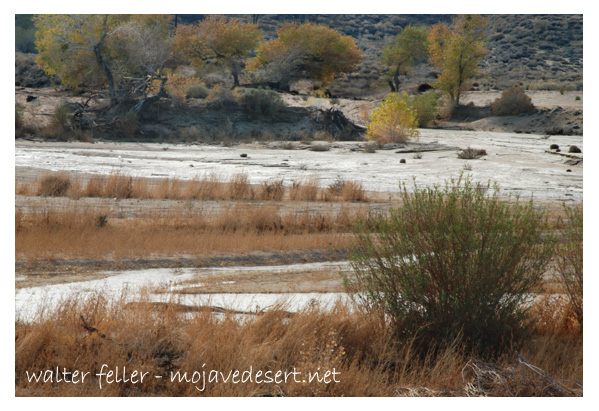
  • 1858Aaron G. Lane establishes Lane’s Crossing on the Mojave River (present-day Oro Grande/Victorville area), offering rest and resupply to travelers heading west.
  • Lane is considered the first permanent American settler along the Mojave River.
  • Summit Valley, near present-day Hesperia, sees increased grazing by early ranchers.
  • The Summit Valley Massacre (1866): A conflict between settlers and Native groups over livestock thefts and land disputes—an often overlooked but significant local tragedy.
1880s: Railroads and Town Foundations

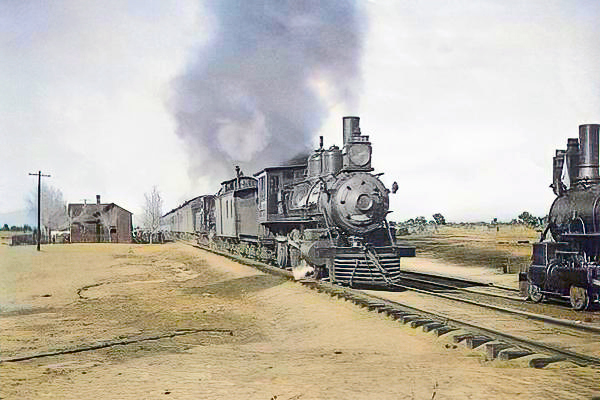
  • 1885: The California Southern Railroad, part of the Atchison, Topeka and Santa Fe system, reaches the High Desert.
  • A telegraph and railroad station named Victor is established, later renamed Victorville in 1901 to avoid confusion with Victor, Colorado.
  • Jacob Nash Victor, the railroad manager, is the town’s namesake.
  • The Hesperia Land and Water Company, led by James G. Howland, promotes Hesperia. It lays out plans for an agricultural colony and resort town, though irrigation plans fall short.

1900s–1930s: Modest Growth and Agriculture
  • Hesperia experiments with vineyards, orchards, and dairy farms, but water shortages and harsh conditions hinder success.
  • Victorville grows as a railroad shipping center and stopover for travelers crossing the desert.
  • The Victor Elementary School District is formed in 1906.
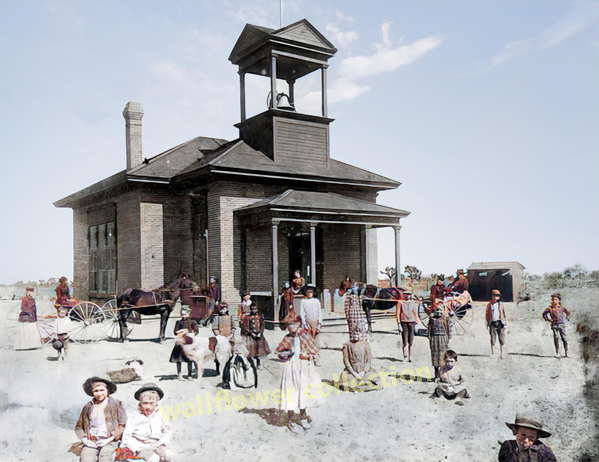
  • Early buildings still visible include the Hesperia Schoolhouse (Main St. and C Ave.).

1940s: War Changes Everything

  • 1941Victorville Army Airfield (later George Air Force Base) is established on the western edge of Victorville.
  • The base brings thousands of military personnel, rapid infrastructure growth, and federal investment.
  • Apple Valley remains mostly desert ranchland, but interest grows due to its mild climate and open space.

1948–1950s: Apple Valley Booms
  • 1948Apple Valley Inn opens, built by Newt Bass and Bud Westlund to attract investors and wealthy land buyers.
  • Stars like Bob HopeMarilyn MonroeJohn Wayne, and President Eisenhower stayed at the inn.
  • Murray’s Dude Ranch (founded earlier, 1920s–30s): One of the few Black-owned resorts in the country. It hosted African American guests during segregation and was used in Black-cast Western films.
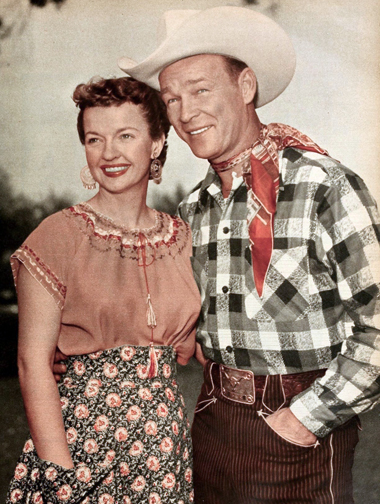
  • Roy Rogers and Dale Evans purchase a ranch in Apple Valley and become its most notable residents, eventually opening Roy Rogers’ Apple Valley Inn.

1950s–1960s: Expansion and Identity
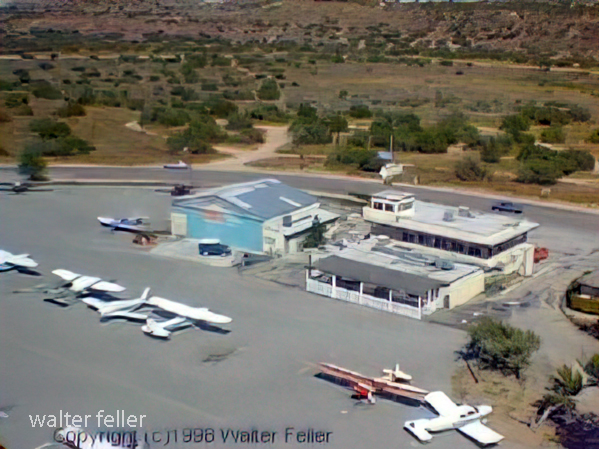
  • Hesperia Inn and the Hesperia Golf & Country Club try to rekindle resort dreams. Jack Dempsey, the former boxing champion, lends his name to a museum at the inn.
  • Victorville grows with new housing and infrastructure to support the military population.
  • Route 66 runs right through Old Town Victorville, lined with diners, motels, and neon signs.

1970s–1980s: Steady Growth and Cultural Legacy
  • Apple Valley becomes a desirable retirement destination, marketing itself as a “Better Way of Life.”
  • Civic leaders like Bud Westlund and Newton Bass help shape the town’s modern layout and community services.
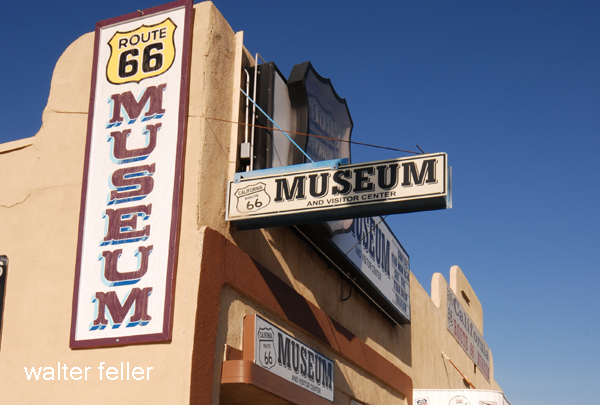
  • The California Route 66 Museum opens in Victorville in a former café, preserving the highway’s local legacy.

1992–2000s: Transformation and Reinvention

  • 1992George Air Force Base closes under federal military restructuring, dealing a blow to Victorville’s economy.
  • The base is repurposed into Southern California Logistics Airport (SCLA), an international freight and aerospace hub.
  • Apple Valley, Hesperia, and Victorville begin to urbanize, growing into commuter towns for the Inland Empire and the Los Angeles area.

2000s–Present: Modern Challenges and Historic Preservation

  • Victor Valley College, founded in 1961, continues to serve the region.
  • Old Town Victorville Revitalization Project aims to preserve the historic downtown.
  • Apple Valley promotes its Western heritage through the Happy Trails Highway and events honoring Roy Rogers and Dale Evans.
  • Hesperia Lake ParkSilverwood Lake, and local trails draw new visitors and recreation seekers.
Kern County Timeline

History of Kern County, California (Wallace M. Morgan, 1914):


Pre-1850s

  • Native Yokuts and Serrano tribes inhabit the region, living along rivers and valleys, practicing hunting and gathering.
  • Lieutenant Edward F. Beale later establishes the Tejon Reservation to “civilize” and protect these groups.

1849

  • Naturalist John Audubon travels through the area, recording early observations of wildlife and the potential for settlement.

1851

  • First discovery of gold along the Kern River sparks a regional rush.
  • Miners arrive from southern and northern routes, establishing primitive camps.

1852–1854

  • Quartz mining begins at Keysville; the Keys and Mammoth Mines become notable operations.
  • The first quartz mill is hauled from San Francisco.
  • Mining towns like Whiskey Flat and Kernville emerge.
  • Discovery of the Keys Mine in 1854.

1857

  • California legislature passes a reclamation act for swamp and overflow lands.
  • Early settlers, including Colonel Thomas Baker, began reclaiming the Kern Delta.
  • A major flood reshapes portions of the lower Kern River lands.

1859

  • The site of modern Bakersfield is first identified.
  • Early cattlemen and settlers began to locate along the delta.

1860s

  • Havilah was founded as a mining center and later became the first county seat.
  • Immigrant roads and stage lines cross the valley.
  • Floods of 1867–68 create temporary lakes and swamps; drainage projects follow.
  • Early schools and cotton crops were established.
  • Outlaw Tiburcio Vasquez operates in the region; wild-horse catching is common.

1866–1870

  • Transition from placer mining to agriculture and stock raising.
  • Swamp land patents granted to Baker and others.
  • Ranching and sheep industries expand.

1868–1872

  • Kern County formally created from parts of Tulare and Los Angeles counties.
  • County seat at Havilah; first county officials elected.
  • Colonel Baker becomes prominent in reclamation and civic improvement.
  • 1872: Death of Colonel Thomas Baker, widely regarded as the founder of Bakersfield.

1873–1876

  • Bakersfield wins the county seat election (1874).
  • Town incorporated (1873) and disincorporated (1876).
  • Havilah declines; Bakersfield begins steady growth.
  • Early capitalists such as Livermore and Redington invest in local enterprises.

1877

  • Severe drought devastates the county’s cattle and farming interests.
  • Settlement expands in Tehachapi; first apple orchards planted.

1878–1885

  • Water rights disputes intensify between Haggin, Carr, Miller & Lux.
  • Major court cases begin over Kern River usage.
  • Construction of irrigation ditches and canal systems begins.
  • Early colonization efforts launched.

1880s

  • Tehachapi develops as a railroad and agricultural community.
  • Lynchings and outlaw conflicts occur during this rough period.
  • Bakersfield experiences a fire and rebuilding effort.
  • Introduction of electricity and other public utilities.

1890–1895

  • Mining resurgence: discovery of the Yellow Aster Mine at Randsburg.
  • Other desert mining districts (Amalie, Tungsten) discovered.
  • Bakersfield gains street railways and gas/electric utilities.
  • Great railway strike affects local commerce (1894).

1899

  • Discovery of oil near McKittrick and Sunset; first wells drilled.
  • Beginning of Kern County’s modern oil era.

1900–1905

  • Kern River oil field developed; Elwood brothers credited with major discovery.
  • Early pipelines and refineries built.
  • Bakersfield begins paving, civic expansion, and population growth.

1906–1910

  • Lakeview gusher (1910) becomes one of California’s largest oil strikes.
  • Consolidated Midway and North Midway fields expand.
  • Gushers flood markets; oil regulation and conservation efforts start.
  • Bakersfield experiences building boom; new roads and public buildings constructed.

1911–1913

  • Pump irrigation develops in valley towns like Wasco and McFarland.
  • Citrus and apple industries expand.
  • Bakersfield and Kern consolidate as one municipality.
  • Bonds issued for paved roads and infrastructure.
  • County churches, schools, and civic institutions flourish.

1914

  • Publication of Morgan’s History of Kern County marks the county’s transition from frontier to industrial modernity.
  • Bakersfield stands as the regional center of oil, agriculture, and commerce.

Kern County

Alfalfa

This article was written circa 1904

The cultivation of alfalfa has become an important industry in this
state and throughout the West. As San Bernardino County can claim the
first successful culture of this plant in the United States, a brief outline of
its history may not be out of place.

Lucerne Valley, Ca.

Alfalfa is the oldest grass known, having been introduced into Greece
from Media, 500 years before Christ. The Romans, finding its qualities good, cultivated it extensively and carried it into France when Caesar reduced Gaul. It has always been extensively cultivated in Europe under the name of lucerne, supposed to be derived from the province of Lucerne in Switzerland. The name alfalfa was given to the plant in Chili, where it grows spontaneously in the Andes as well as on the pampas of that country and of the Argentine Republic.

Oro Grande, Ca.

It was introduced into the United States as early as 1835—and probably
earlier—and attempts at cultivation in New York and other Eastern states
were unsuccessful.

In the United States Agricultural Report for 1872, Mr. N. Wyckoff, of
Yolo, Napa County, Cal, reports: “In the winter of 1854. I sowed four acres
with alfalfa, or lucerne, as it was then called, seed brought from Chili. As
far as I know, it was a part of the first parcel of seed brought into this
country. My sowing proved so foul with weeds that I plowed it up and
did not re-sow until 1864.” The United States Agricultural Report of
1878, a considerable production of alfalfa is reported from some of the
northern counties of the state.

In the winter of 1852-3, a party of Mormons arrived in San Bernardino from Australia. At least one of the party, Mr. John Metcalf, brought with him some alfalfa seed. This was sown on his place, now the Metcalf place on Mount Vernon Avenue, near First street. It was irrigated from Lytle Creek and did well, and the plant was soon cultivated by others. The seed was at first sold for $1.00 per pound and was distributed from San Bernardino to other points in Southern California. The early supply of seeds for Los Angeles was obtained from San Bernardino and the seed was taken from here to Salt Lake thus the alfalfa industry, one of the most important in Utah, was started. The alfalfa crop is now one of the most important of the county and San Bernardino County had, in 1900, more than six thousand acres seeded to this plant.

INGERSOLL’S CENTURY ANNALS OF
San Bernardino County
1769 to 1904 (201)