Curtis Howe Springer and the Complicated Story of Zzyzx

Curtis Howe Springer and the Complicated Story of Zzyzx

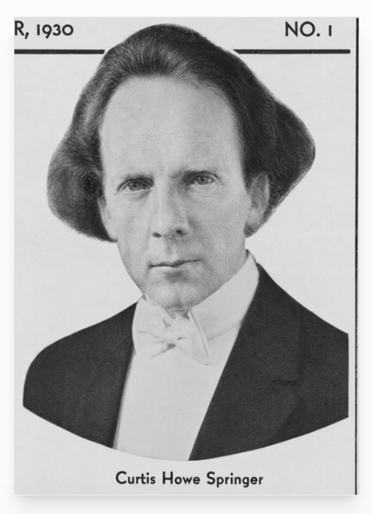
Curtis Howe Springer was a radio preacher, health-product salesman, resort promoter, and one of the Mojave Desert’s most unusual characters. He was neither simply a generous desert visionary nor merely a confidence man. He built a functioning community, provided work and shelter, attracted visitors, and helped Baker’s economy. He also used credentials he had not earned, advertised products with unsupported medical claims, and operated a large resort on federal land he did not own.

Springer arrived at Soda Springs in 1944 with Helen Springer. He filed mining claims covering about 12,800 acres and renamed the place Zzyzx, which he promoted as “the last word in health.” From a collection of tents and old ruins, the Springers developed a resort with guest rooms, a dining hall, a chapel, mineral baths, a swimming pool, radio facilities, workshops, gardens, animal pens, and an airstrip.

Much of this was real. Zzyzx wasn’t simply a name on a brochure. People lived, worked, ate, worshiped, and vacationed there for nearly 30 years. The federal court later described four guest buildings containing 59 units, a dining room and kitchen, an administration building, a chapel, mineral baths, electrical equipment, and numerous other structures.

Work and Economic Benefits

Springer’s operation created work at Zzyzx and generated business in nearby Baker. Workers mixed and packaged health foods, printed literature, prepared radio recordings, filled orders, handled correspondence, maintained buildings, cooked meals, cared for animals, and mailed products.

Some workers were recruited from Los Angeles’ Skid Row. They were offered food, shelter, a small wage, and a place away from alcohol in exchange for construction and maintenance work. This labor helped Springer build the resort at relatively low cost, but it also provided men with few alternatives, a temporary home, and useful work.

Zzyzx also affected Baker. Visitors sometimes stayed in Baker motels while waiting to enter the resort. Springer’s enormous volume of packages, promotional literature, donations, and correspondence helped raise the Baker post office to first-class status. The federal court record specifically confirms that foods, printed materials, and radio recordings were packaged and prepared for mailing at Zzyzx.

However, Springer did not cause Baker’s first post office to be established. Postal records show that the office began under the name Silver Lake on March 27, 1907. It was renamed Baker in February 1933, eleven years before Springer arrived. His business greatly increased its workload, but it did not create the first post office.

Was Springer Rich?

Springer appears to have become wealthy during Zzyzx’s most successful years. The National Park Service describes him as a millionaire. His radio broadcasts reached hundreds of stations, while listeners sent donations and ordered teas, food supplements, books, and other products. The National Park Service states that he shipped more than four million packages during his years at Zzyzx.

One witness later recalled that Springer paid a $2,500 court fine immediately, treating it like a minor expense. This suggests that he had considerable available money.

His exact personal wealth is still unknown. No dependable financial statement or estate accounting has been found. Some of his apparent wealth was represented by buildings and improvements at Zzyzx. Those improvements stood on federal land, and Springer never obtained legal title to the property. He could control the operation while he occupied it, but he did not own a desert estate that he could legally sell.

The Ownership Problem

Springer held unpatented mining claims. Such claims allowed legitimate mineral exploration and mining, along with activities reasonably connected to mining. They did not automatically transfer ownership of the land.

The United States remained the legal owner. Springer’s hotel, health resort, food-packaging operation, radio studio, pools, airstrip, residential buildings, and religious activities went far beyond ordinary mining.

Springer made several attempts to obtain a stronger legal right to the property. He filed desert-land applications in 1951, public-recreation applications in 1957 and 1958, and another non-mineral application in 1966. These applications were rejected, dismissed, or denied. Despite those decisions, he continued operating Zzyzx.

In 1970, a federal district court restricted the property to mining-related uses. A 1971 injunction prohibited Springer from operating the resort, renting rooms, packaging food, preparing mail, recording broadcasts, maintaining pools, or inviting people to live there for purposes unrelated to mining. The Ninth Circuit Court of Appeals upheld that injunction.

The legal record, therefore, leaves little doubt about ownership: Springer and his organizations built and operated Zzyzx, but the United States owned the land.

Was Springer Selling Land?

There is evidence that Springer marked off residential lots and allowed major donors to build homes on them. Some historical accounts describe this as offering or selling parcels to supporters.

The wording requires care. Springer could promise someone a place to live or accept a donation in exchange for the use of a lot, but he could not convey valid ownership because he did not own the land. No deed from Springer could transfer federal property.

It is therefore safest to say that Springer allocated or offered homesites to donors as if he controlled the property. Whether every arrangement was described as a direct sale is less certain. What is certain is that donors could not receive a valid title from him.

Would Nonprofit Status Have Helped?

Nonprofit status would not have solved Springer’s central problems. In fact, organizations connected with Zzyzx already included the Dr. Curtis Howe Springer Foundation and the Zzyzx Community Church. Both were named in the federal land case.

A properly managed nonprofit could have accepted donations, operated a retreat, and possibly applied for an authorized lease or public-purpose agreement. It still would have needed federal approval to occupy the land. It would also have been required to follow food, drug, advertising, tax, and charitable organization laws.

Calling the resort a church, foundation, charity, or nonprofit could not transform a mining claim into ownership. It also could not legalize false medical advertising or the unauthorized distribution of public land.

A nonprofit might have helped only if Springer had reorganized the operation, stopped making unsupported health claims, kept proper financial records, and obtained a valid federal lease. The government had already rejected several of his applications, so nonprofit status alone would not have guaranteed that result.

Why Springer Went to Prison

Springer was not imprisoned merely for being eccentric, practicing natural health, or building a resort in the desert. The strongest court evidence concerns false advertising and misbranded foods.

The Ninth Circuit record states that he had been convicted on 18 counts of false advertising involving supposed remedies for hemorrhoids, heart disease, nervous conditions, thyroid problems, and goiter. It also records violations of California food-misbranding laws.

Springer was fined and sentenced to 60 days in jail. After appeals, he reportedly served 49 days. His imprisonment should be distinguished from the land dispute. The land case was primarily a federal civil action for an injunction, damages, ejectment, and eviction. His false advertising and food law convictions provided the criminal penalties.

Thus, two legal problems came together:

  1. Springer used federal mining-claim land for a resort, residence, manufacturing, and mail-order business.
  2. He advertised health products with claims that authorities and courts found false or misleading.

The first problem cost him Zzyzx. The second resulted in penalties and imprisonment.

Did the Rehabilitation Program Work?

Some men probably benefited from their time at Zzyzx, although their progress was never formally documented. Springer offered homeless and struggling men food, shelter, work, routine, and an alcohol-free environment. The National Park Service has concluded that these conditions certainly helped some visitors.

Springer later claimed that Zzyzx had helped rehabilitate 4,000 destitute men. That figure came from Springer himself. No known records follow these men after they left, nor do they show how many remained sober, found permanent employment, reunited with families, or established stable homes.

Zzyzx was not a licensed rehabilitation center with trained counselors, medical supervision, case records, or long-term follow-up. Nevertheless, temporary shelter and meaningful work can still help people. The fair conclusion is that Springer probably helped some individuals, but his claim of 4,000 successful rehabilitations cannot be verified.

Eviction and Final Years

After years of court proceedings, federal authorities removed Springer and his followers from Zzyzx in 1974. The government did not recognize his ownership claims, and Springer could not take the property with him or sell it as his estate.

In 1976, the Bureau of Land Management permitted the California State University system to use the site. Zzyzx became the Desert Studies Center, where students and researchers continue to study Mojave Desert biology, geology, hydrology, and history.

Springer and Helen moved to Las Vegas after the eviction and his short imprisonment. He remained there for the rest of his life. Curtis Howe Springer died in Las Vegas on August 19, 1985, at age 88. Available sources do not identify the particular residence or hospital where he died.

A Balanced Judgment

Springer’s story resists a simple conclusion. He was a persuasive promoter who made unsupported medical claims and used public land far beyond the limits of his mining claims. He accepted money and donations while presenting himself as a doctor and minister, even though he lacked recognized qualifications. His legal troubles were based on substantial evidence, not simply disagreement with unconventional medicine.

At the same time, he built a real desert community. Zzyzx provided jobs, meals, shelter, inexpensive vacations, religious fellowship, and temporary stability. His mail-order business supported packaging and mailing work and brought measurable business to Baker. Some people remembered him with sincere thanks.

His good works did not give him ownership of federal land, and nonprofit status would not have erased the legal violations. Likewise, his unlawful conduct does not mean that nobody benefited from Zzyzx. Both parts belong in history.

Sources

United States v. Springer, Ninth Circuit Court of Appeals

Mojave National Preserve Administrative History

National Park Service: Zzyzx

Los Angeles Times: Zzyzx and Curtis Howe Springer

California Post Office Records

SFGATE: The History of Zzyzx Road
Zzyzx

Willie Boy & Carlota

A Braided Tale

The story of Willie Boy is one of the most haunting and complex episodes in the history of the California desert. It begins in the early autumn of 1909, when a young Chemehuevi-Paiute man named Willie Boy falls deeply in love with Carlota, the daughter of a respected tribal elder. Their romance, set in the desert landscapes around Banning and Twentynine Palms, was as ill-fated as any tragic ballad of the Old West, and it ended in bloodshed, loss, and a manhunt that became part of American legend.

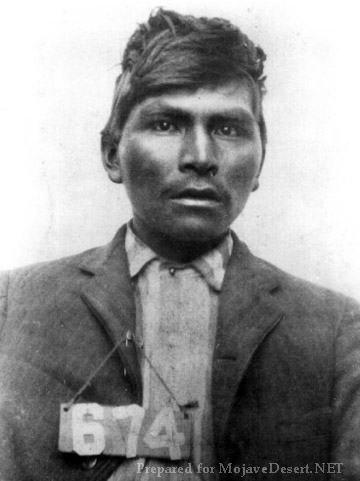
Willie Boy was about twenty-eight years old, a Chemehuevi from the Southern Paiute people, raised near the Colorado River but often working for white ranchers in the San Gorgonio Pass area. He was a quiet man, by most accounts, known for his skill as a runner and his ability as a capable worker. Carlota was sixteen, the daughter of William and Maria Mike, who lived with their people at the Oasis of Mara, now part of Joshua Tree National Park. Their families knew each other, but Chemehuevi tradition forbade marriage between cousins, which made the match impossible in the eyes of her father.

When Willie Boy and Carlota ran off together, they defied both cultural law and parental authority. They were brought back once, but they met again later that year when the Mike family traveled to Banning for the fall fruit harvest. The reunion of the two lovers set the final tragedy in motion. One evening in late September 1909, Willie Boy went to the Mike family’s camp near the Gilman Ranch to ask for Carlota’s hand. Her father, a strong-willed and traditional man, refused him flatly. Some say the older man reached for a gun, others that Willie Boy had brought one and lost his nerve. There was a struggle, a shot, and when the dust settled, William Mike lay dead. Whether the shooting was deliberate or accidental has never been settled.

Knowing that the white authorities would come for him, Willie Boy fled into the desert with Carlota. They rode and walked across the dry country east of Banning, following faint trails and water holes that only local people knew. When Maria Mike discovered her husband’s body at dawn, she reported the killing to the sheriff. Within hours, a posse had formed, led by Riverside County Sheriff Frank Wilson and his deputy Ben de Crevecoeur. With them were a handful of local ranchers and two Native trackers, John Hyde and Segundo Chino.

The chase that followed quickly became a national story. Newspapers painted Willie Boy as a savage outlaw, “a drunken Piute renegade” who had killed in a jealous rage and carried off a helpless girl. The language was raw, racist, and designed to sell papers. Reporters wrote that the “bloodthirsty Indian” might even threaten President Taft, who happened to be visiting Riverside that week. This hysteria turned a local tragedy into a full-blown legend.

Meanwhile, Willie Boy and Carlota pressed deeper into the Mojave. They moved mostly at night, hiding by day in the arroyos and canyons. Willie Boy’s endurance was remarkable; he could travel fifty miles across rough ground in a day. But they were running low on food and water, and the posse was relentless.

At some point during the pursuit, Carlota was killed. Her body was found later, shot through the back. Early newspaper reports said Willie Boy had murdered her so she would not slow him down. That version fit the outlaw story perfectly, but later investigations suggest otherwise. The coroner’s report showed she was shot from long range, likely by a posse member who mistook her for Willie Boy. She was wearing his coat at the time. Decades later, oral histories from the Chemehuevi confirmed that this is what their elders always believed: that the white men killed Carlota by mistake, then blamed her lover to save face.

After Carlota’s death, the posse pressed on. The final confrontation came at Ruby Mountain, near what is now Landers. Willie Boy took a defensive position among the rocks. As the posse approached, he opened fire, deliberately aiming for their horses rather than their riders. One deputy, Charlie Reche, was wounded in the arm. The standoff lasted all day until the lawmen pulled back to tend to the injured. At sunset, they heard a single gunshot from the mountain. They assumed Willie Boy had turned the gun on himself. When they returned a few days later, they found a badly decomposed body lying near a rifle and declared the manhunt over. They burned the remains on the spot rather than carrying them out of the desert.

That cremation left no evidence. No one could later prove that the body was Willie Boy’s, and none of the posse’s surviving photographs show a face that can be identified. This gap opened the door to one of the enduring mysteries of the story. Among the Chemehuevi, Paiute, and Cahuilla people, the belief persisted that Willie Boy escaped. They said he traveled north through the desert and eventually settled with relatives near Pahrump, Nevada, living quietly until tuberculosis took him years later. Segundo Chino, one of the trackers on the posse who later married Maria Mike, is said to have admitted that the posse never actually caught Willie Boy.

The events deeply shook the Chemehuevi community. They left their traditional home at the Oasis of Mara, afraid that William Mike’s restless spirit might bring misfortune. For many years, they refused to speak of the tragedy. In that silence, white writers filled the void. The newspapers portrayed Willie Boy as a villain and the manhunt as a piece of frontier nostalgia.

Half a century later, journalist Harry Lawton rediscovered the tale. Working from old newspaper clippings and interviews with surviving posse members, he published Willie Boy: A Desert Manhunt in 1960. His book treated the story as both history and myth, but it still leaned toward the posse’s version. The novel won awards and inspired the 1969 film Tell Them Willie Boy Is Here, directed by Abraham Polonsky and starring Robert Blake and Robert Redford. The film gave the story a tragic, modern edge and questioned some of the old assumptions, but it also cemented certain inaccuracies in popular memory.

In the 1990s, historians James Sandos and Larry Burgess revisited the story in The Hunt for Willie Boy: Indian-Hating and Popular Culture. They demonstrated how racism and sensationalism influenced the original reports and concluded that many of the most colorful details were fabricated. They agreed that Carlota was almost certainly killed by the posse, not by Willie Boy, but they accepted that he probably died on Ruby Mountain.

A generation later, Native historian Clifford Trafzer went further. Drawing on oral histories from Chemehuevi and Cahuilla elders, he argued that the man the posse burned was not Willie Boy at all. In the stories told by his people, Willie Boy survived the chase, lived for years among the Paiute in Nevada, and died quietly of illness. Trafzer’s work reframed the legend as a Native tragedy rather than a Western adventure.

For the Chemehuevi and other desert people, the story of Willie Boy and Carlota is more than a love story gone wrong. It represents the collision of two worlds: traditional tribal law and the laws of the new American order. It marks the loss of a way of life and the pain of a community forced into silence.

Today, the tale continues to echo across the desert. Artists and filmmakers have attempted to retell the story from the Native perspective. In 2016, Cahuilla artist Lewis de Soto created an installation in Twentynine Palms called Carlota, giving voice to the young woman whose story had long been overshadowed. In 2022, Jason Momoa produced The Last Manhunt, a film made in collaboration with the Chemehuevi that depicts the event as the tribe remembers it.

Whether Willie Boy died on Ruby Mountain or escaped into the Nevada desert may never be known. What is certain is that his story reveals how quickly truth can be twisted by fear and prejudice, and how long it can take for those who were silenced to be heard again.

The Willie Boy saga began as a local tragedy, became a legend through the press, and has endured as a window into the uneasy meeting of cultures in the desert. It reminds us that history is not fixed in stone, but lives in the voices of those who tell it, and that sometimes the best we can do is listen to all of them.

Landers, CA

Oasis of Mara

Twentynine Palms, CA

Cahuilla

Chemehuevi

Willie Boy

Indian Trails in the Mojave Desert

The Mojave Desert, an expansive arid region spanning southeastern California and parts of Nevada, Arizona, and Utah, is more than just a vast, desolate landscape. It is a land imbued with a rich cultural history, much of which is etched into the ancient Indian trails that crisscross its terrain. These trails are a deep connection to the land possessed by the indigenous peoples who once called this desert home.

Historical Significance

.

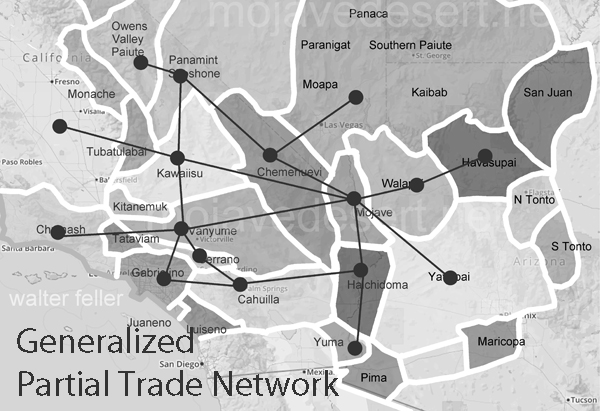
The Indian trails of the Mojave Desert were primarily created and used by Native American tribes such as the Mojave, Chemehuevi, and Southern Paiute. These tribes utilized the trails for various purposes, including trade, communication, and seasonal migration. The network of trails facilitated the exchange of goods like pottery, shells, foodstuffs, and obsidian, linking the Mojave Desert with coastal and inland regions. This trade network was integral to the economy and culture of the tribes, allowing for the spread of ideas, technologies, and cultural practices.

The trails were not merely utilitarian. They often held spiritual and cultural significance, following natural landmarks and water sources. Sacred sites, ceremonial grounds, and essential gathering places were often along these trails. This cultural layer adds depth to understanding these pathways, illustrating how they were interwoven with the people’s social and spiritual lives.

The Old Spanish Trail

One of the most notable trails is the Old Spanish Trail, which later became a significant route for Spanish explorers and settlers in the 18th and 19th centuries. Blazed initially by Native Americans, this trail stretched from Santa Fe, New Mexico, to Los Angeles, California. The Spanish utilized these established paths to connect their colonial holdings, facilitating trade and the movement of people and goods. The trail highlights the continuity of use by various cultures over centuries, transforming from an indigenous trade route to a significant conduit of colonial expansion.

The Old Spanish Trail was a challenging route, traversing some of the harshest landscapes in North America. Its use by both Native Americans and later Spanish settlers underscores the adaptability and resourcefulness required to navigate the Mojave Desert.

Adaptation to the Desert Environment

The Indian trails of the Mojave Desert showcase the adaptive strategies of Native Americans to the harsh desert environment. The tribes identified and utilized natural springs and seasonal water sources, ensuring safe passage across the expansive and often unforgiving terrain. These water sources were crucial, as they provided the necessary hydration points along the trails. Knowledge of these water sources was passed down through generations, often guarded closely as essential survival information.

The trails frequently ran along the base of mountain ranges and through passes, providing more accessible routes than the open desert. These paths took advantage of the natural topography to offer shade, easier walking conditions, and strategic viewpoints. The trails also connected various ecological zones, allowing the tribes to exploit various resources, from desert plants to mountain game.

Cultural Legacy

Today, the Indian trails of the Mojave Desert are an integral part of the region’s cultural heritage. Many of these trails are preserved and studied by archaeologists and historians, offering insights into the historical movements and lifestyles of the indigenous populations. Modern-day hikers, historians, and cultural enthusiasts retrace these paths, gaining a deeper understanding of the rich history and enduring legacy of the Native American tribes who first navigated the vast Mojave Desert.

Preservation efforts are crucial in maintaining these historic routes. Many trails are threatened by modern development, off-road vehicle use, and natural erosion. Organizations dedicated to preserving Native American heritage work tirelessly to document and protect these trails, ensuring they remain a living testament to the ingenuity and resilience of the desert’s original inhabitants.

Contemporary Relevance

In recent years, interest has been resurgent in these ancient trails. Educational programs, guided tours, and cultural heritage projects aim to bring the stories of these paths to a broader audience. Indigenous groups also play a vital role in these efforts, sharing their knowledge and perspectives to preserve and respect the trails as sacred cultural sites.

The trails also offer lessons in sustainable living and environmental stewardship. The indigenous peoples of the Mojave Desert thrived in a harsh environment through a deep understanding of the land and its resources. Their trails remind us of the importance of living in harmony with nature, an increasingly relevant lesson today.

Conclusion

The Indian trails of the Mojave Desert are more than just paths across the sand; they are the veins of a rich cultural heritage, connecting the past with the present. They tell stories of trade, migration, survival, and spiritual journeying etched into the desert’s landscape. As we explore and preserve these trails, we honor the legacy of the Native American tribes that first navigated the Mojave Desert, ensuring that their stories and knowledge continue to inspire and educate future generations.