Why I Like Geology

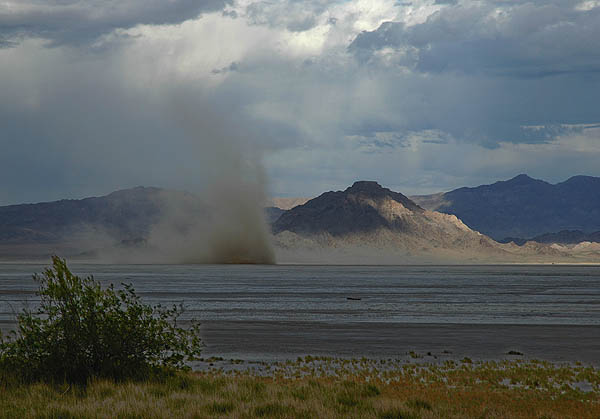
Soda Lake – Mojave National Preserve

I like geology because it transforms how I see the desert. Geology explains why the land looks the way it does, why water follows certain paths, why mountains rise, or basins sink, and why springs appear. It shows how natural forces shape human choices: trails, roads, mines, railroads, and settlements emerge from the land’s history. Geology turns the desert from empty space into a record that can be read.

To many people, the desert looks still and silent. They see rocks, dry washes, cliffs, playas, distant mountains, and open ground. However, geology reveals that the desert is not still at all. It is the result of movement, pressure, heat, erosion, faulting, volcanism, uplift, and time. Every ridge, canyon, lava flow, terrace, wash, spring, and fault scarp has a reason for being there. While the land may not speak plainly, it leaves evidence.
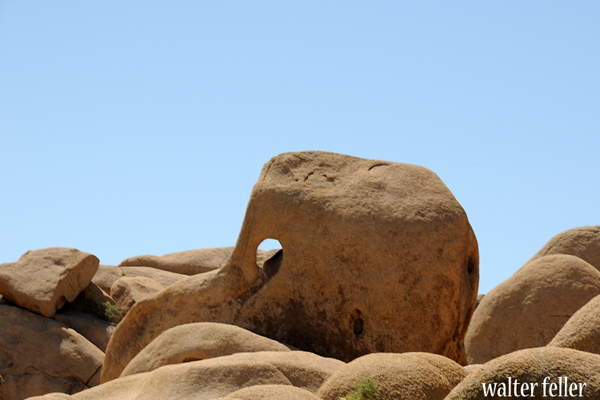
Jumbo Rock – Joshua Tree National Park

That is one reason geology appeals to me. It is based on visible proof. A geologist can look at a cliff face, a broken hillside, a tilted layer of rock, a dry lakebed, or a mine dump and begin to understand what happened. The evidence may be old, weathered, scattered, or partly hidden, but it is still there. Geology rewards careful observation. It asks a person to slow down, look closely, compare patterns, and respect what the land is showing.

For about nine years, I wandered and explored the desert simply by going out there. I moved from one point of interest to another, mostly staying to myself. Instead of following a formal course or guided route, I learned by looking, walking, comparing places, and remembering what I had seen. A canyon led to a spring. A spring led to a wash. A wash led to a road. A road led to a mine, a pass, a dry lake, or a faulted hillside. Over time, the separate places began to connect, further deepening my understanding.
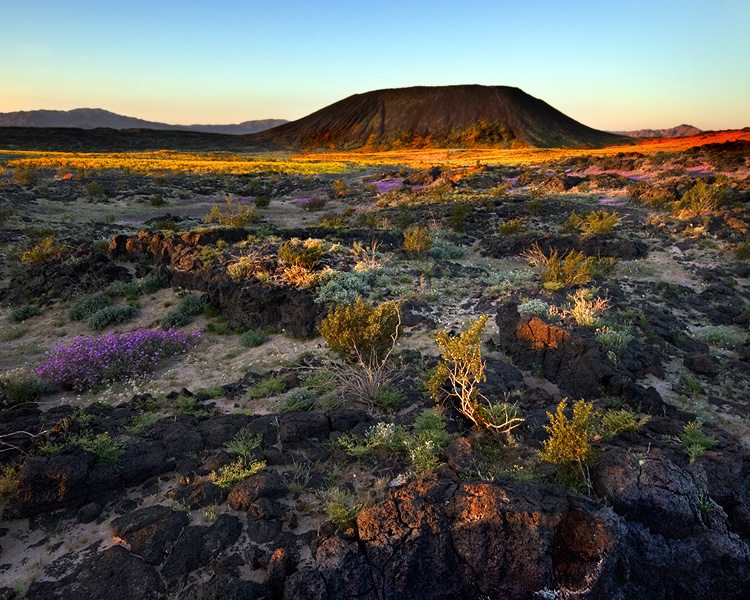
Amboy Crater

That kind of wandering gave the desert time to teach me. I was not trying to master it all at once. Some places made sense right away. Others stayed confusing until I saw another place that explained them. Over time, the desert became less like a collection of isolated sites and more like one connected landscape.
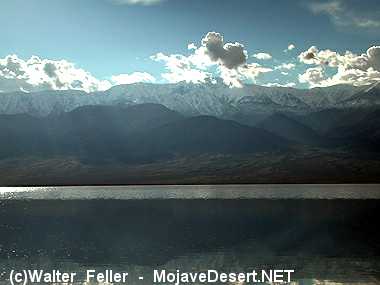
Lake Manly – Death Valley

In making these connections, I began to see that geology and history both seek to explain the past, but in different ways. History asks who came through a place, what they did, what they called it, and what they left behind. Geology, in contrast, asks deeper questions: Why is this pass here? Why did the river cut through at this place? Why did the lake disappear? Why was ore found in this mountain and not another? Why did a spring appear along one route and not another? Ultimately, human history depends on the shape and structure of the earth beneath it.
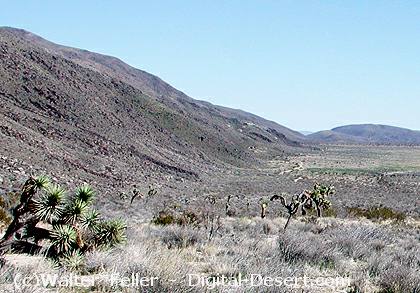
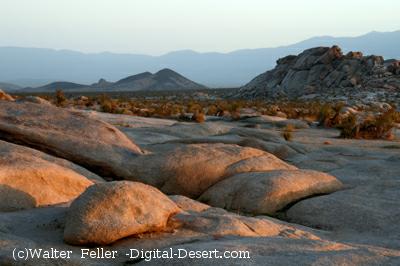
Blue Cut Fault – Joshua Tree National Park

This is especially true in the Mojave Desert. The Mojave is a land of corridors, barriers, basins, mountains, playas, springs, faults, and washes. People did not move across a blank map. They followed water, passes, dry lake margins, river channels, and openings between ranges. Trails, wagon roads, railroads, highways, mining camps, and towns were all influenced by geology. To understand the Mojave well, a person has to understand the ground.

Geology also explains why the desert can feel so old. Human history may reach back a few hundred or a few thousand years, but geology reaches into deep time. It deals with ancient seas, vanished lakes, old volcanoes, buried rivers, moving faults, and mountains worn down and raised again. It reminds us that the land existed long before us and will remain long after us. That perspective gives the desert dignity.
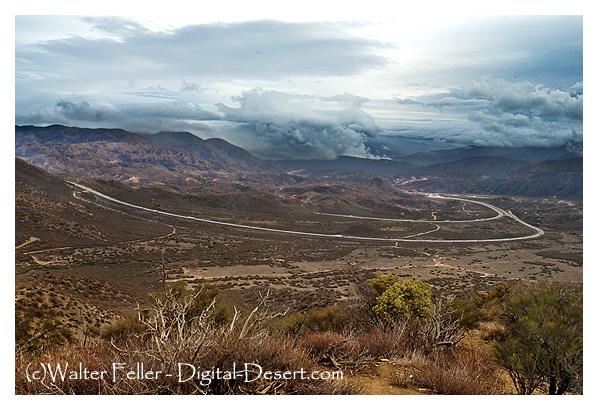
I admire geologists because they know how to read the earth without needing it to speak plainly. They can stand before a canyon wall, a fault zone, a lava field, or a dry lake and see more than scenery. They see time, force, sequence, and evidence. They understand that the land is not random. It has structure. It has a history. It has a record, even when that record is difficult to read.

I also admire the dedication and discipline geology requires. It is not casual work. It takes field study, maps, measurements, samples, notes, old reports, and comparison. A geologist must be willing to walk rough ground, endure heat and distance, and keep looking when the answer is not obvious. The earth does not reveal its story all at once. Understanding comes one observation at a time.

That kind of work requires humility. A good geologist cannot force the land to fit an easy explanation. The evidence has to lead. If the rocks say one thing and the theory says another, the theory must change. That respect for facts is one of the strongest parts of geology. It is disciplined curiosity. It combines imagination with restraint.

The Desert Studies Center at Zzyzx belongs in this story because it represents desert study put into practice. With this focus shifting from theory to place, it is a center where students, teachers, and researchers can go into the Mojave itself and learn directly from the land. Set near Soda Dry Lake, at the end of the Mojave River system, it stands in one of the best natural classrooms in the desert.

That setting matters. Around Zzyzx are dry lake beds, springs, salt flats, rocky slopes, volcanic features, desert plants, old shorelines, and evidence of water, heat, faulting, erosion, and long-term change. A person studying there is not learning geology only as an abstract subject. He is standing inside the evidence.

The Desert Studies Center also shows why geology requires discipline. Field science is not guessing from a distance. It means walking the ground, taking notes, checking maps, and comparing what is seen with what has been written. That is the kind of work I admire. It takes order and respect for facts.

In that sense, Zzyzx is more than a place on the map. It serves as a bridge between curiosity and discipline, and as a living example of how the Mojave Desert continues to be studied and interpreted. The Desert Studies Center turns admiration for geology into practical learning. Connecting students and researchers directly with the land shows that the desert itself remains the best teacher.

Geologists also help preserve meaning in places that might otherwise be overlooked. A dry wash is not just a wash. A playa is not just a flat place. A fault is not just a crack. A mine is not just a hole in the ground. Building on this, each one belongs to a larger story. Geology connects small details to big forces. It turns scattered features into a pattern.

That is why geology makes the desert understandable. Instead of seeing emptiness, geology reveals the bones and memory of the landscape. The Mojave is not barren, but layered with evidence of violence, patience, age, movement, and history. Geology’s explanation brings order and beauty to the surface, grounded in the evidence it preserves.

I like geology because it deepens every desert visit. Once you begin to see the land geologically, ordinary places become more interesting. A roadcut becomes a lesson. A wash becomes a process. A spring becomes a clue. A mountain front becomes evidence of movement. A dry lake becomes the trace of a vanished world.

Most of all, I like geology because it sharpens attention and deepens understanding. Geology rewards patience, discipline, and respect for the past. It reminds us that the earth has a story older than our own, and the Mojave Desert, far from being empty, vividly displays that story. With geology, the desert becomes readable and meaningful.
Comparative Geomorphology

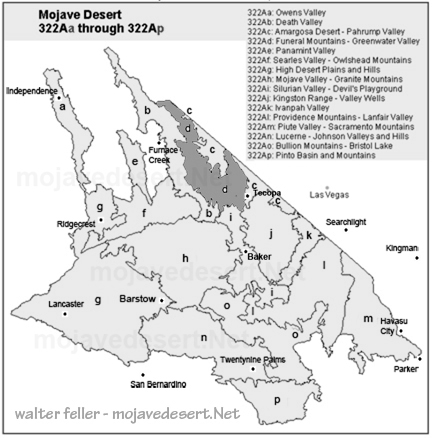
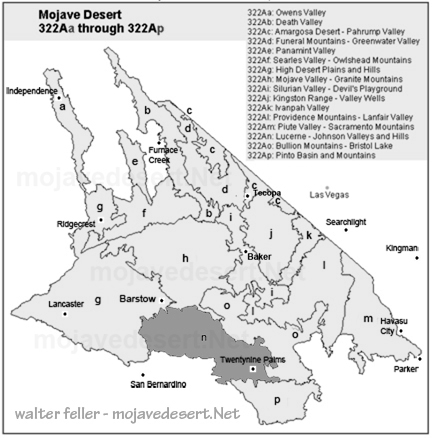
Here’s a comparison between the geomorphology of the Funeral Mountains – Greenwater Valley subsection and the second geomorphological description:

Geomorphology
Funeral Mountains and Greenwater Valley

  • Landforms: Steep to very steep mountains and valleys, with very gently to moderately sloping alluvial fans, nearly level basin floors, and dry lake beds.
  • Orientation: Mountains align north-south or north-northwest.
  • Elevation Range: About 1,000 feet to 6,703 feet on Pyramid Peak, with many peaks over 5,000 feet.
  • Geomorphic Processes: Mass wasting, fluvial erosion and deposition, and eolian deflation and deposition.

Geomorphology

Geomorphology is the scientific study of landforms and the processes that shape them, including their origin, evolution, and spatial distribution.

Geomorphology
Lucerne and Johnson Valleys

  • Landforms: Steep mountains, moderately steep hills, gently to moderately sloping pediments and alluvial fans, nearly level basin floors, and dry lake beds. Presence of “badlands” on eroded Miocene nonmarine sedimentary rocks.
  • Orientation: The hills’ general orientation is less straightforward than the major faults, which trend northwest.
  • Elevation Range: About 1,600 feet up to 4,873 feet in the Granite Mountains, 5,525 feet in the West Ord Mountains, 6,309 feet in the East Ord Mountains, and 5,878 feet in the Rodman Mountains.
  • Dry Lake Beds: Includes Lucerne, Soggy, Melville, Galway, Emerson, and Deadman Lake.
  • Geomorphic Processes: Mass wasting, fluvial erosion and deposition, and eolian deflation and deposition.
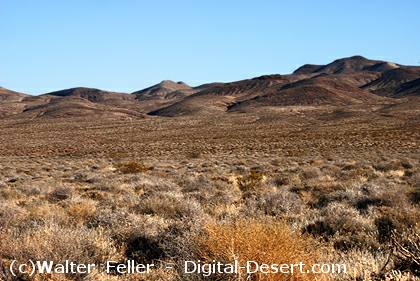
Greenwater Valley, Death Valley National Park

Comparison

  • Landforms: Both regions feature steep mountains and valleys, alluvial fans, basin floors, and dry lake beds. However, the second description includes pediments and mentions “badlands,” which are not noted in the Funeral Mountains – Greenwater Valley description.
  • Orientation: The Funeral Mountains – Greenwater Valley mountains align north-south or north-northwest, while the hills in the second description have a less clear orientation than the major northwest-trending faults.
  • Elevation Range: The Funeral Mountains – Greenwater Valley has a broader elevation range, reaching higher peaks (up to 6,703 feet), whereas the second area reaches 6,309 feet in the East Ord Mountains.
  • Dry Lake Beds: The second description specifies several large dry lake beds by name, which are not mentioned in the Funeral Mountains – Greenwater Valley description.
  • Geomorphic Processes: Both regions experience similar geomorphic processes, including mass wasting, fluvial erosion and deposition, and eolian deflation and deposition.

In summary, while both regions share common geomorphic features and processes, they differ in specific landform characteristics, elevation ranges, and the presence of features such as “badlands” and named dry lake beds.

Geologic Diversity

When someone mentions they are a geologist, it’s easy to assume that all geologists do the same thing. However, geology is a diverse and multifaceted field, encompassing a wide range of specialties. Each geologist may focus on different aspects of the Earth’s structure, materials, processes, and history. Here’s a more detailed look at the various types of geology and the distinct roles that geologists might have:

Types of Geology

  1. Structural Geology: Geologists in this field study the architecture and processes responsible for the deformation of the Earth’s crust. They analyze faults, folds, and rock formations to understand tectonic movements and stress patterns.
  2. Petrology: Petrologists examine the origin, composition, and structure of rocks. They specialize in:
    • Igneous Petrology: Focuses on rocks formed from magma or lava.
    • Sedimentary Petrology: Studies rocks formed by the accumulation of sediments.
    • Metamorphic Petrology: Investigates rocks transformed by heat and pressure.
  3. Mineralogy: Mineralogists study minerals, including their structure, properties, classification, and distribution. They identify and analyze mineral compositions in various geological contexts.
  4. Geochemistry: Geochemists explore the chemical composition of Earth materials and the chemical processes occurring within and on the Earth’s surface. They study element cycles and mineral interactions.
  5. Geomorphology: Geomorphologists study landforms and the processes that shape them. They analyze erosion, weathering, and sediment deposition to understand landscape evolution.
  6. Sedimentology: Sedimentologists focus on sediments and sedimentary rocks, including their formation, transport, and deposition. They study sedimentary environments like rivers, lakes, and oceans.
  7. Paleontology: Paleontologists study fossils and ancient life forms to understand the history of life on Earth. They analyze fossil records to reconstruct past ecosystems and evolutionary trends.
  8. Volcanology: Volcanologists study volcanoes, volcanic processes, and volcanic rocks. They monitor volcanic activity and assess eruption risks.
  9. Seismology: Seismologists study earthquakes and the propagation of seismic waves through the Earth. They analyze seismic data to understand earthquake mechanics and predict future events.
  10. Geophysics: Geophysicists use physical methods to study the Earth’s interior and its physical properties. They specialize in:
    • Seismic Geophysics: Uses seismic waves to map the Earth’s interior.
    • Magnetic Geophysics: Studies the Earth’s magnetic field and anomalies.
    • Gravitational Geophysics: Examines variations in the Earth’s gravitational field.
  11. Hydrogeology: Hydrogeologists study groundwater, its distribution, movement, and quality. They analyze aquifers and manage water resources.
  12. Engineering Geology: Engineering geologists apply geological knowledge to construction and environmental management engineering practices. They assess ground stability and risks for infrastructure projects.
  13. Environmental Geology: Environmental geologists focus on human interaction and the geological environment. They address natural hazards and resource management to mitigate environmental impacts.
  14. Economic Geology: Economic geologists study materials for financial and industrial purposes, such as minerals, oil, and gas. They explore and develop natural resources.
  15. Planetary Geology: Planetary geologists study the geology of other celestial bodies, such as moons, planets, and asteroids. They analyze surface features and geological processes beyond Earth.

Each type of geologist brings unique expertise to their field, contributing to a comprehensive understanding of the Earth’s dynamic systems. Understanding these distinctions helps us appreciate geologists’ specialized skills and knowledge of various challenges and projects.

Summary

Geology is a diverse field with various specialties. Structural geologists study Earth’s crust deformation, while petrologists focus on rock origins and types. Mineralogists analyze minerals, and geochemists explore Earth’s chemical processes. Geomorphologists study landforms, sedimentologists examine sediments, and paleontologists investigate fossils. Volcanologists monitor volcanic activity, seismologists study earthquakes, and geophysicists use physical methods to probe Earth’s interior. Hydrogeologists focus on groundwater, engineering geologists apply geology to construction, and environmental geologists manage natural hazards. Economic geologists explore resources like minerals and oil, and planetary geologists study celestial bodies. Each specialty offers unique insights into Earth’s processes and history.