How Sand Forms: A Step-by-Step FAQ
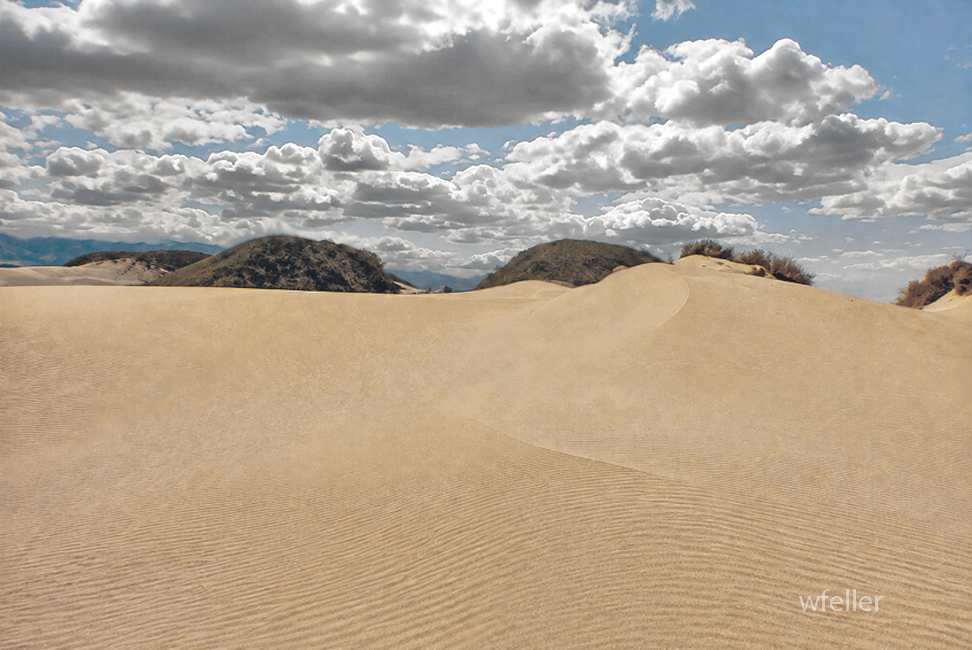
What is sand?
Sand is loose grains of rock or mineral. Most light-colored sand is quartz, a hard mineral that lasts a long time. Desert sand can also contain fragments of granite, volcanic rock, and other local materials.
How does rock become sand?
- Rock is exposed at the ground surface.
- Heat, cold, rain, frost, plant roots, and chemical changes crack the rock apart.
- Gravity, runoff, streams, and floods carry the broken pieces downhill.
- Moving water and wind grind the fragments against one another, making them smaller and often smoother.
- As the material is sorted, the grains that are roughly sand-sized remain as sand. Finer material becomes silt or clay; larger pieces remain gravel, cobbles, or boulders.
How does sand reach the desert?
In the Mojave, mountains are the main source. Rainstorms wash broken rock into canyons and desert washes. Floodwater spreads the material across fans and valleys. When the water dries, wind can pick up the finer grains and move them into dunes or broad sheets of sand.
How long does it take?
The work never really stops. A storm can break rock loose and move sand in a single day, but building a large sand deposit usually takes thousands to tens of thousands of years. The source rocks themselves may be millions of years old.
What does “recent geologic time” mean?
For desert deposits, it often means the Quaternary Period, the last 2.58 million years. Many dunes, wash deposits, and dry-lake sediments are much younger, often only thousands or tens of thousands of years old.
Can sand become rock again?
Yes. If sand is buried, pressure compacts it. Groundwater may carry dissolved minerals into the spaces between the grains. Silica, calcite, or iron minerals can cement the grains together, forming sandstone.
What are petrified dunes?
“Petrified dunes” is a common name for ancient sand dunes that have turned into sandstone. Their sloping internal layers, called cross-bedding, preserve the shape of the old wind-blown dunes.
Does this process make more sand?
Yes. It is a long recycling process:
Rock breaks down into sand.
Sand can harden into sandstone.
Weathering can break the sandstone into sand again.
Wind, water, weather, and time keep the material moving through that cycle.
Then . . .
Rock breaks down into sand.
Sand can harden into sandstone.
Weathering can break the sandstone into sand again. . . .