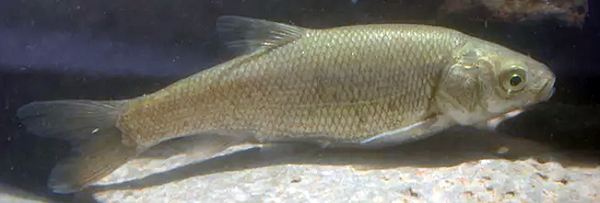
The Mohave tui chub (Siphateles bicolor mohavensis), formerly Gila bicolor mohavensis, is the only fish native to California’s Mojave River. It once lived throughout the river–inhabiting deep pools, sloughs, marshes, and backwaters from the Forks of the Mojave near the San Bernardino Mountains to Soda Lake near Baker. Now, it survives only in a few isolated refuges, making it one of the rarest native fishes in the American Southwest.
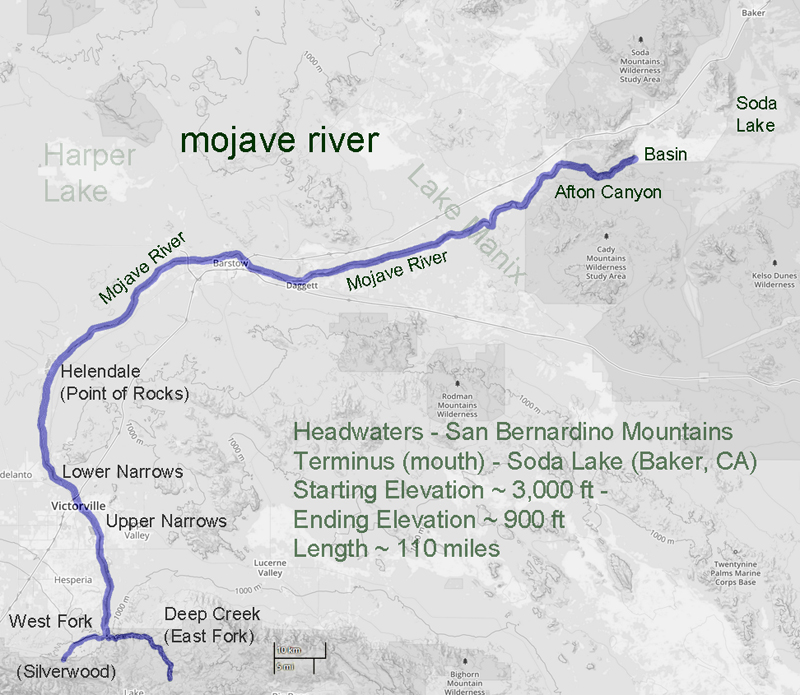
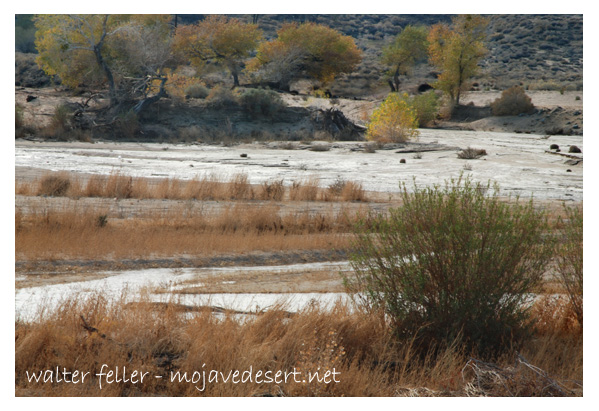
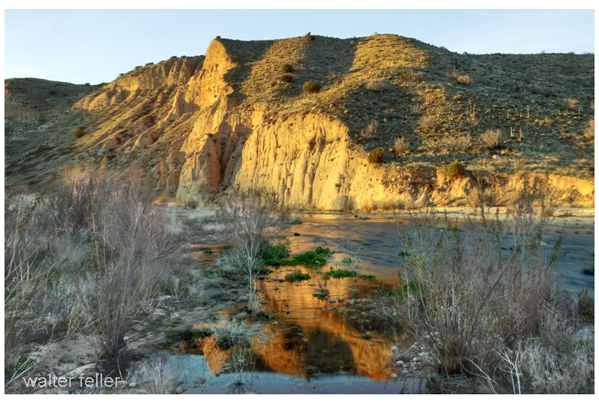
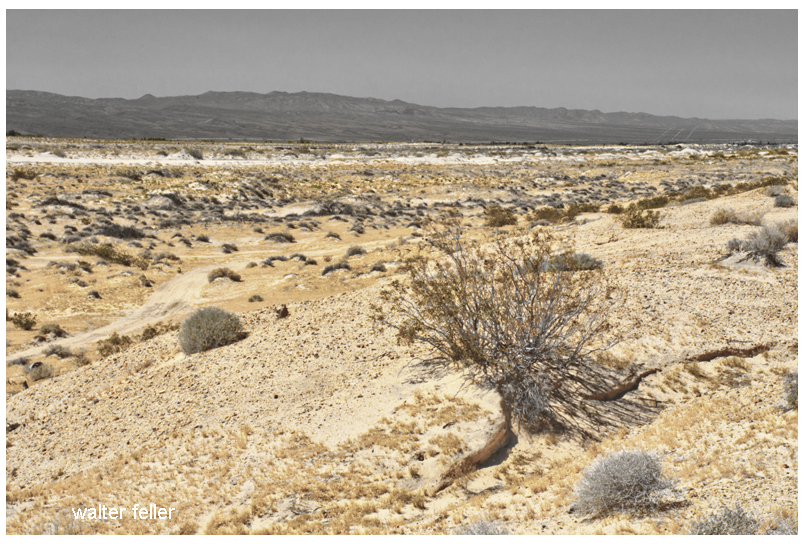
The Mojave River is unlike most North American rivers. It courses about 100 miles from the San Bernardino Mountains into the Mojave Desert, with most of its water underground. Surface flows occur only where bedrock forces groundwater to the surface, or when storms cause runoff. Despite being intermittent, the river once supported a rich aquatic ecosystem, including the Mohave tui chub.
The fish is a chunky, large-scaled minnow with a small terminal mouth, olive-brown to brassy back, and silver-white belly. Adults are usually 4 to 6 inches long; some reach 9 inches. Mohave tui chub feed on insect larvae, algae, and organic debris. Spawning runs from February to October, when females deposit thousands of adhesive eggs on aquatic plants.
For thousands of years, the species did well in the Mojave River basin. Its decline began in the early twentieth century as dams, groundwater pumping, and water diversions altered the river’s flow. Yet, habitat modification alone did not cause its disappearance.
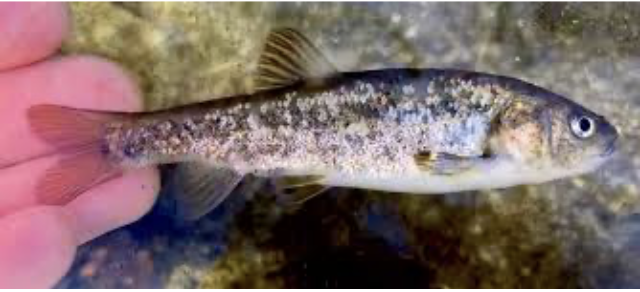
Around 1930, arroyo chub (Gila orcutti), native to coastal Southern California streams, were introduced into reservoirs in the San Bernardino Mountains. Likely released by trout anglers or accidentally during fish stocking, they spread throughout the Mojave River after major floods in March 1938.
Unlike many introduced species that compete with native wildlife, the arroyo chub threatened the Mohave tui chub by interbreeding with it. Studies by Carl Hubbs and Robert Miller documented extensive hybridization and backcrossing. Over time, the native fish was absorbed into the introduced population. By the 1960s, pure Mohave tui chubs had disappeared from the Mojave River, and by 1970, the species was effectively extirpated from its native habitat.
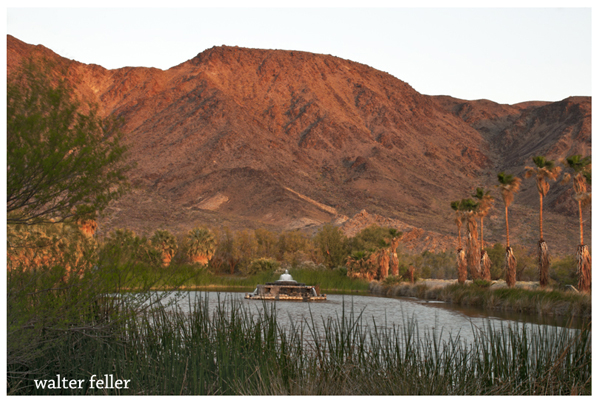
Fortunately, a small population survived in isolated ponds at Soda Springs near the lower end of the watershed. These fish formed the foundation for all subsequent recovery efforts.
Authorities immediately recognized the species’ precarious status. The Mohave tui chub was listed as endangered under federal law in 1970, and the State of California followed in 1971. California also designated it as a Fully Protected species. In 1984, the U.S. Fish and Wildlife Service completed a recovery plan to prevent extinction and to establish secure refuge populations.
Today, genetically pure Mohave tui chubs survive in only a few places: Lake Tuendae at Zzyzx, Camp Cady Wildlife Area, MC Spring, and the Lark Seep system at China Lake. The China Lake population is regarded as the most secure. Since the mid-1990s, annual surveys there have estimated the number of fish in thousands. Water quality monitoring, invasive species control, habitat management, and vegetation removal help maintain suitable conditions.
Modern genetic studies have greatly improved the understanding of the species. Yongjiu Chen, Steve Parmenter, and Bernie May used microsatellite DNA analysis to examine surviving populations and compare them with fish from the Mojave River. Their results confirmed that refuge populations remain genetically pure Mohave tui chubs, while fish occupying the Mojave River today are pure arroyo chubs.
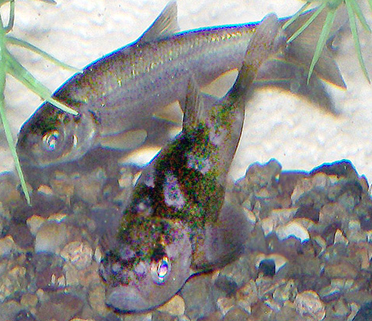
The study revealed key differences among populations. Lake Tuendae and China Lake have high genetic diversity and are genetically similar. Camp Cady has lower diversity because it was founded by only 10 fish. MC Spring shows the lowest diversity, likely due to long isolation and genetic change. The researchers recommended boosting gene flow among populations and creating new ones from the most diverse sites.
While the Mohave tui chub survived, the Mojave River itself continued to change. By 2002, at least twenty-two non-native fish species had entered the watershed. Introduced species dominated fish communities in the middle and lower Mojave River. Researchers documented six exotic species in their study reaches and found evidence of continued hybridization among non-native fishes. In some locations, other introduced species displaced even the arroyo chub.
Many scientists concluded restoration of Mohave tui chub to its historic range would be very difficult. The river’s ecology has been fundamentally changed by invasive species, water development, habitat modification, and altered hydrology. While some reintroductions might be possible within controlled settings, restoring the species throughout the Mojave River now appears unlikely.
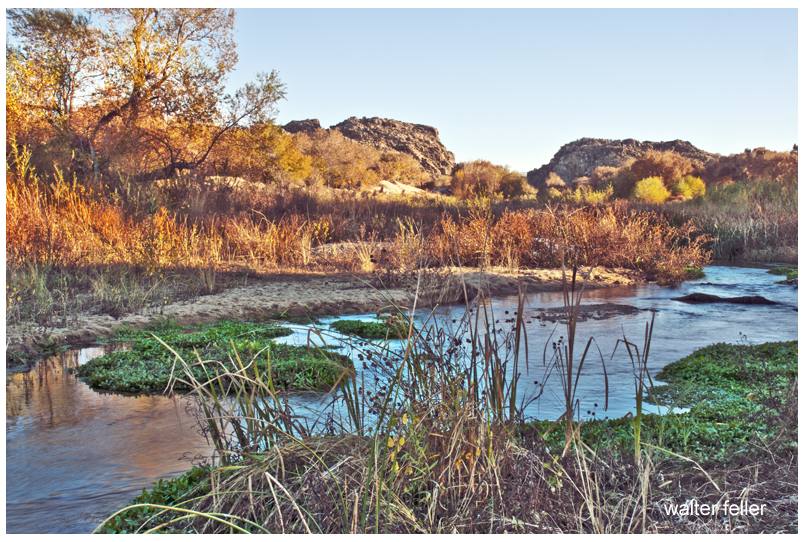
Despite these challenges, important habitat remains. One example is the Transition Zone of the Mojave River, where perennial surface water supports a fifteen-mile corridor of cottonwood and willow forest. Conservation measures have protected portions of this habitat, including the 1,647-acre Palisades Ranch. The property contains approximately 3.5 miles of Mojave River frontage and hundreds of acres of riparian forest, supporting a remarkable diversity of wildlife.
Species benefiting from the protection of the river corridor include the southwestern willow flycatcher, least Bell’s vireo, western yellow-billed cuckoo, Mojave River vole, southwestern pond turtle, arroyo toad, desert tortoise, Mohave ground squirrel, burrowing owl, and Mohave shoulderband snail. The area also contains habitat that could support Mohave tui chub if biological and hydrological obstacles are overcome.
The story of the Mohave tui chub is both a conservation success and a cautionary narrative. The species disappeared from the river where it evolved, not primarily because of direct predation or habitat destruction, but because it was replaced by genetic introgression from an introduced relative. Yet biologists, land managers, and conservation agencies worked together to save the fish from extinction.
Now, the Mohave tui chub is a living remnant of the earliest Mojave River ecosystem. Its survival depends on protected refuges, careful genetic management, and protection of remaining river stretches. As the only fish native to the Mojave River basin, it is a key symbol of the desert’s natural heritage.