Solitude

Experiencing solitude differs from just being alone. Being alone means having no one else present, while solitude is freedom from being watched, measured, interrupted, explained, or directed.
This is why it isn’t solitude if someone tells you so. When another names it, your experience transforms into performance. You’re no longer simply alone; you’re seen as alone, and that changes everything. True solitude can’t be certified; it has no witness.

Solitude arrives when the mind stops looking over its shoulder—no audience to impress, answer, or defend against. At first, it feels empty, but then honest. The usual noise from others fades, as well as the quiet inside you grows.

Because of this inward journey, solitude must be discovered, not assigned. Someone might point you to a trail, canyon, road, or quiet room, but can’t give you the experience. You must arrive inwardly and stay until silence feels present, not absent.

It is important to note that solitude is not loneliness, even though the two may seem alike at first. Loneliness longs for company; solitude accepts aloneness. Loneliness feels like exclusion; solitude feels like being reunited with yourself. Solitude is a private settlement between a person and the world.

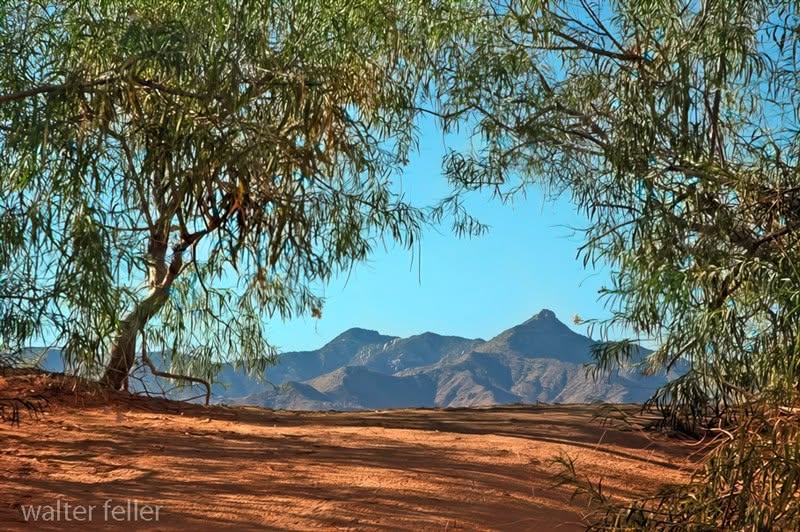
In true solitude, the land does not explain itself. The wind does not ask to be understood. The stones, brush, sky, and distance do not perform for you. They simply exist. And if you remain still enough, you begin to exist in the same plain way. No announcement. No approval. No lesson forced upon you.

Once found, solitude is easier to visit. At first, it’s distant—a place with no road. You may mistake it for loneliness, boredom, or emptiness. But after that first encounter, you recognize the path back. You know what to set aside: noise, explaining, the need to be seen, and the habit of answering others. Then solitude is no longer a strange country; it becomes a place you can return to.

With practice, in solitude, you can sit still until the restlessness passes. At first, the mind seeks noise: a task, a voice, a screen, a reason to leave. Stay past that. Solitude works once the urge to be distracted fades.

In this space, you can walk without regarding it as exercise. Notice the ground, wind, tracks, shadows, slope, distance, heat, cold, bird calls, creosote, and how light changes on the rock. Let the place be, without turning it into a lesson.

During this attention, think honestly—not dramatically, not in circles. Ask simple questions: What burdens aren’t mine? What do I defend? What do I believe with no pressure? What matters without an audience?

Afterward, write a few plain sentences. Just field notes of the mind: I noticed. I remembered. I avoided it. I felt calmer when. No need to explain.

If writing settles your thoughts, read something steady: nature writing, scripture, philosophy, desert history, a field guide, or a map. Old books help because they don’t shout; they wait.

For example, I have read books in solitude. Land of Little Rain by Mary Hunter Austin is one. As time went on, I made photographs to illustrate her chapters. That kind of reading does not finish with the last page. It carries you back into the land itself. The words teach you how to look, and the camera becomes a quiet way of answering what the book first taught you to notice.

Study one plant, rock, wash, bird, or old road cut. Solitude pairs well with attention; the deeper you look at one thing, the less you crave many things.

Pray, meditate, or be silent. The name matters less than the act. The point is to stop performing and listen inwardly.

Above all, stop explaining yourself. That is solitude’s rarest gift: no defense, no audience, no argument. Quiet enough to be real again.

That is the value of being alone: it does not flatter or define you. It gives you space to find out.
Desert Literature of the Mojave and American Southwest

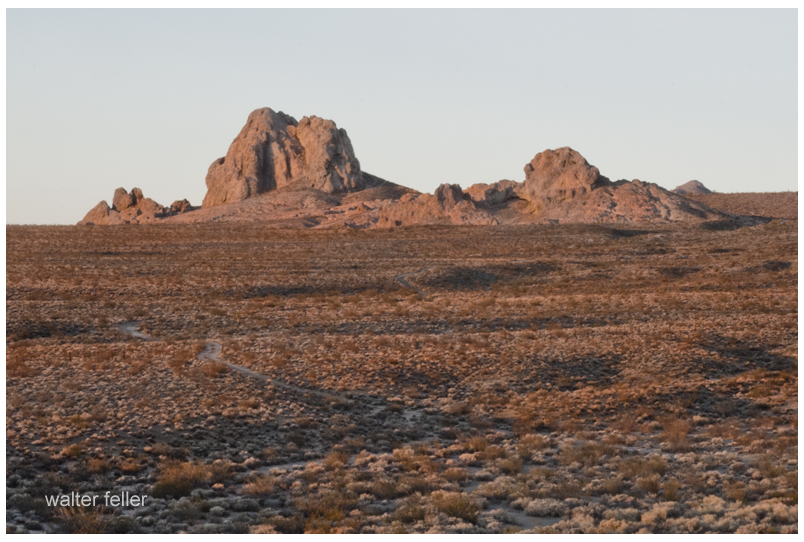
The deserts of California and the greater Southwest have produced a distinct body of writing shaped by aridity, distance, scarcity, and endurance. This literature does more than describe the landscape. It records how people have understood, moved through, depended on, and argued about dry country. In the Mojave system and its adjoining regions, literature serves as evidence, showing how the desert has been interpreted over time.

Mary Austin
Mary Austin stands at the foundation of desert literature in the American West. In The Land of Little Rain (1903) and The Country of Lost Borders (1909), she described the Mojave, Owens Valley, and eastern Sierra as living systems shaped by water, ecology, and long human presence. Her work established the desert as a place of complexity rather than emptiness.

W. A. Chalfant
W. A. Chalfant represents the historical record of the desert borderlands. Through his work on Owens Valley and Inyo County, especially The Story of Inyo (1922), he documented settlement, mining, agriculture, and the major water conflicts tied to the Los Angeles Aqueduct. His writing anchors the desert in documented civic and regional history.

Edna Brush Perkins
Edna Brush Perkins brings the experience of movement through the desert into focus. In The White Heart of Mojave (1922), she recorded her travels across open desert country, emphasizing distance, silence, exposure, and the psychological effects of arid landscapes. Her work preserves what it felt like to cross the Mojave when the land still imposed strict limits.

Joseph Wood Krutch
Joseph Wood Krutch marks a shift toward ecological understanding. In The Desert Year (1951), he described the seasonal rhythms of desert plants and animals, portraying the desert as a balanced, functioning natural system. His work helped move public perception away from the idea of the desert as barren and toward recognition of its internal order.

Edward Abbey
Edward Abbey represents the modern phase of desert literature, where preservation becomes central. In Desert Solitaire (1968), he argued against overdevelopment, excessive access, and the industrialization of wilderness. His writing reframes the desert as something to be defended, not simply explored or used.

Together, these writers form a complete cultural layer for understanding the Mojave and the broader desert Southwest. Their work complements geology, ecology, transportation, and settlement history by providing a record of how the desert has been observed, experienced, documented, and contested.

1. “How to Overthrow the System: brew your own beer; kick in your Tee Vee; kill your own beef; build your own cabin and piss off the front porch whenever you bloody well feel like it.”

2. “The idea of wilderness needs no defense, it only needs defenders.”

3. “Life is too short for grief. Or regret. Or bullshit.”

4. “Freedom begins between the ears.”

5. “I’ve never yet read a review of one of my own books that I couldn’t have written much better myself.”

6. “Belief? What do I believe in? I believe in sun. In rock. In the dogma of the sun and the doctrine of the rock. I believe in blood, fire, woman, rivers, eagles, storm, drums, flutes, banjos, and broom-tailed horses…”

7. “In the first place you can’t see anything from a car; you’ve got to get out of the goddamned contraption and walk, better yet crawl, on hands and knees, over the sandstone and through the thornbush and cactus. When traces of blood begin to mark your trail you’ll begin to see something, maybe. Probably not.”

8. “This is the most beautiful place on Earth. There are many such places. Every man, every woman, carries in heart and mind the image of the ideal place, the right place, the one true home, known or unknown, actual or visionary.”

9. “I have been called a curmudgeon, which my obsolescent dictionary defines as a ‘surly, ill-mannered, bad-tempered fellow’. Nowadays, curmudgeon is likely to refer to anyone who hates hypocrisy, cant, sham, dogmatic ideologies, and has the nerve to point out unpleasant facts and takes the trouble to impale these sins on the skewer of humor and roast them over the fires of fact, common sense, and native intelligence. In this nation of bleating sheep and braying jackasses, it then becomes an honor to be labeled curmudgeon.”

10. “A world without open country would be universal jail.”