Solitude

Experiencing solitude differs from just being alone. Being alone means having no one else present, while solitude is freedom from being watched, measured, interrupted, explained, or directed.
This is why it isn’t solitude if someone tells you so. When another names it, your experience transforms into performance. You’re no longer simply alone; you’re seen as alone, and that changes everything. True solitude can’t be certified; it has no witness.

Solitude arrives when the mind stops looking over its shoulder—no audience to impress, answer, or defend against. At first, it feels empty, but then honest. The usual noise from others fades, as well as the quiet inside you grows.

Because of this inward journey, solitude must be discovered, not assigned. Someone might point you to a trail, canyon, road, or quiet room, but can’t give you the experience. You must arrive inwardly and stay until silence feels present, not absent.

It is important to note that solitude is not loneliness, even though the two may seem alike at first. Loneliness longs for company; solitude accepts aloneness. Loneliness feels like exclusion; solitude feels like being reunited with yourself. Solitude is a private settlement between a person and the world.

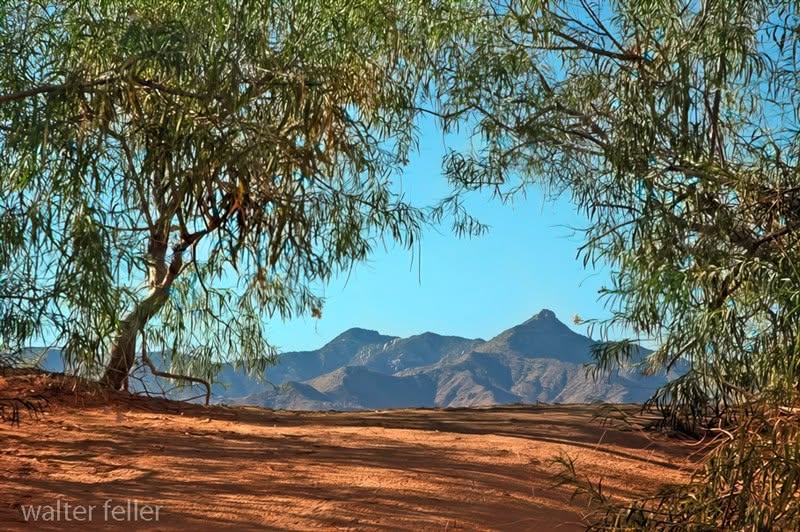
In true solitude, the land does not explain itself. The wind does not ask to be understood. The stones, brush, sky, and distance do not perform for you. They simply exist. And if you remain still enough, you begin to exist in the same plain way. No announcement. No approval. No lesson forced upon you.

Once found, solitude is easier to visit. At first, it’s distant—a place with no road. You may mistake it for loneliness, boredom, or emptiness. But after that first encounter, you recognize the path back. You know what to set aside: noise, explaining, the need to be seen, and the habit of answering others. Then solitude is no longer a strange country; it becomes a place you can return to.

With practice, in solitude, you can sit still until the restlessness passes. At first, the mind seeks noise: a task, a voice, a screen, a reason to leave. Stay past that. Solitude works once the urge to be distracted fades.

In this space, you can walk without regarding it as exercise. Notice the ground, wind, tracks, shadows, slope, distance, heat, cold, bird calls, creosote, and how light changes on the rock. Let the place be, without turning it into a lesson.

During this attention, think honestly—not dramatically, not in circles. Ask simple questions: What burdens aren’t mine? What do I defend? What do I believe with no pressure? What matters without an audience?

Afterward, write a few plain sentences. Just field notes of the mind: I noticed. I remembered. I avoided it. I felt calmer when. No need to explain.

If writing settles your thoughts, read something steady: nature writing, scripture, philosophy, desert history, a field guide, or a map. Old books help because they don’t shout; they wait.

For example, I have read books in solitude. Land of Little Rain by Mary Hunter Austin is one. As time went on, I made photographs to illustrate her chapters. That kind of reading does not finish with the last page. It carries you back into the land itself. The words teach you how to look, and the camera becomes a quiet way of answering what the book first taught you to notice.

Study one plant, rock, wash, bird, or old road cut. Solitude pairs well with attention; the deeper you look at one thing, the less you crave many things.

Pray, meditate, or be silent. The name matters less than the act. The point is to stop performing and listen inwardly.

Above all, stop explaining yourself. That is solitude’s rarest gift: no defense, no audience, no argument. Quiet enough to be real again.

That is the value of being alone: it does not flatter or define you. It gives you space to find out.
The Ethos of the Wanderer & the Modern Desert Social Ethos

The ethos of a wanderer is best understood when set in contrast to what it is not.

It developed in opposition to the settled instinct—the urge to mark, hold, improve, and return. Where the settler seeks continuity through permanence, the wanderer accepts continuity through passage. One builds to remain; the other moves to understand.

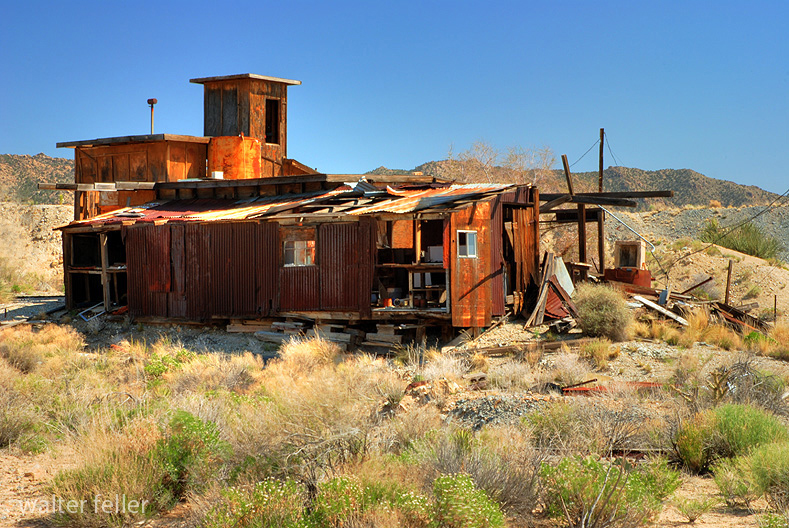
In contrast to ownership, the wanderer practices use without claim. He drinks from a spring without naming it, crosses land without enclosing it, and departs without recording his presence. What matters is not leaving a mark, but leaving things unchanged. The settler measures success by what endures; the wanderer by what does not need repair after he is gone.

Where the settled ethos relies on rules and boundaries, the wanderer relies on judgment. Fences, signs, and procedures are substitutes for attentiveness. The wanderer reads weather, terrain, and circumstance directly. He adapts moment by moment rather than enforcing a plan. This makes him appear unstructured, though his discipline is internal and exacting.

In contrast to improvement, the wanderer values recognition. He does not assume that what he encounters is incomplete. The impulse to fix, organize, or optimize is held in check by humility. The land is not a problem to be solved, and silence is not emptiness.

In opposition to speed and efficiency, the wanderer practices measured movement. He goes slow enough to notice and fast enough to remain light. He understands that lingering can be as intrusive as rushing. Timing matters more than arrival.

Finally, in contrast to the fence-builder, the wanderer embodies confidence rather than control. He does not fear what lies behind him, nor does he need to close it off. He trusts that his path does not require guarding once passed. If he does not return, nothing is lost. If he does, he will come by a different way.

Thus, the wanderer’s ethos is not a rejection of order, but a refusal of unnecessary enclosure. It arose where land was vast, memory was personal, and freedom required responsibility. It is an ethic shaped by open ground—best understood by those who know when to keep moving.


Below is a paired essay, written to sit beside The Ethos of the Wanderer without undoing it or moralizing against it. The tone is observational, not accusatory, and treats the modern condition as an ethos—something practiced rather than merely suffered.


The Modern Desert Social Ethos

The modern desert social ethos is best understood not by how it moves, but by how it manages.

It arose not from passage or permanence alone, but from coordination—the need to share limited space among many people who no longer know one another personally. Where earlier desert ethics relied on judgment or stewardship, the modern ethos relies on systems. Continuity is achieved not through memory or return, but through regulation.

In contrast to use without claim, modern desert life operates through conditional access. Land is public, but entry is governed. Roads, trailheads, permits, and signage define where movement is acceptable. One may cross vast ground, but only along prescribed lines. What matters is not leaving no trace, but complying with an approved one.

Where the wanderer relied on attentiveness, the modern ethos relies on procedural safety. Risk is managed in advance rather than met directly. Warnings replace experience; liability replaces judgment. Responsibility is externalized so that no individual is required to know the land deeply to be present upon it.

In contrast to recognition, the modern desert ethos values mitigation. Landscapes are assessed, restored, hardened, or restricted based on projected impacts. Silence becomes a resource to be managed, solitude a condition to be scheduled. The land is neither teacher nor adversary, but a system requiring oversight.

In the face of measured movement, modern desert life favors accessibility and efficiency. Roads reach farther, vehicles go faster, and communication is constant. Lingering is acceptable only where designated. Movement is encouraged, but improvisation is not. The goal is experience without uncertainty.

Finally, in contrast to confidence without enclosure, the modern ethos operates through containment rather than trust. Fences, closures, and enforcement do not presume ill intent, but assume scale. What once could be handled through mutual restraint must now be managed through control, because the number of participants has outgrown shared understanding.

Thus, the modern desert social ethos is not a rejection of older desert ways, but a response to their erosion. It developed where land remained open, but society grew dense, where memory became collective rather than personal, and where responsibility had to be standardized to function at all. It is an ethic shaped by pressure on open ground—best understood by those who must balance freedom with coexistence.

==