Mojave Rodents: Squirrels, Rats, and Mice

Mojave Rodents: Squirrels, Rats, and Mice

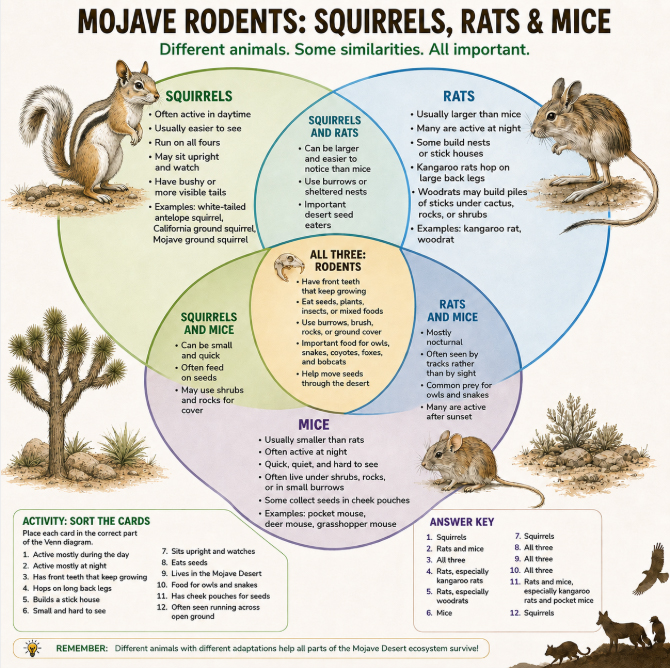
The Mojave Desert is home to many small rodents, including squirrels, rats, and mice. At first glance, they may seem alike, but each group has its own habits and place in the desert.

Antelope Squirrel

Squirrels are often the easiest to see because many are active during the day. White-tailed antelope squirrels, California ground squirrels, and Mojave ground squirrels may be seen running across open ground, sitting upright, or watching from near a burrow. Their alert behavior helps them survive in a land of hawks, snakes, coyotes, and foxes.
PackratRoger Barbour photo – USFWS

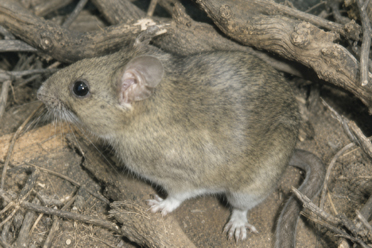
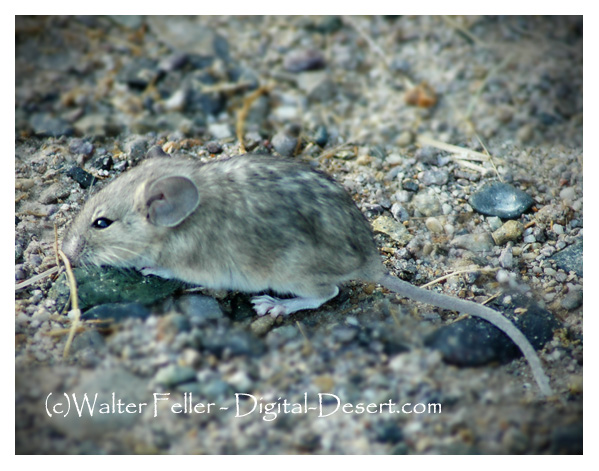
Rats and mice are more often active at night. Kangaroo rats are well-adapted to desert life, with long hind legs for hopping and cheek pouches for carrying seeds. Woodrats may build large stick nests under cactus, shrubs, or rocks. Mice are usually smaller, quicker, and harder to notice. Pocket mice, deer mice, and grasshopper mice often stay hidden in burrows, brush, or rocky cover.
Pocket mouse

All of these animals are rodents. They have front teeth that keep growing, and many feed on seeds, plants, insects, or a mix of foods. Though small, they are an important part of the Mojave ecosystem. They move seeds, loosen soil, and provide food for owls, snakes, bobcats, kit foxes, and other desert predators.

Squirrels are the daytime watchers. Kangaroo rats are the night jumpers. Mice are the hidden seed gatherers. Together, they help keep the desert alive.
Grasshopper Mouse

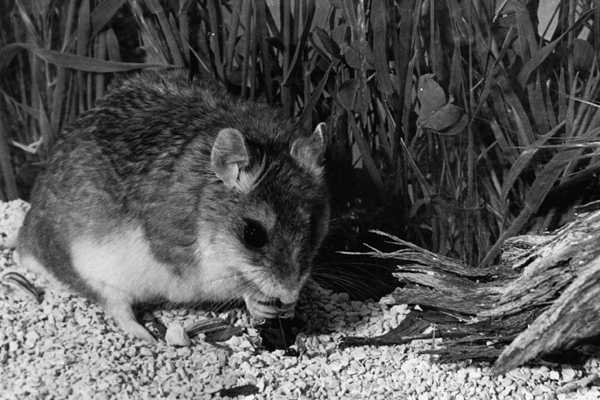
The grasshopper mouse, belonging to the genus Onychomys, is a fascinating creature known for its unique behaviors and adaptations. Here’s a detailed overview of its natural history:

Physical Description

  • Size: Small rodents, typically around 4 to 5 inches in body length, with an additional 1 to 2 inches of tail.
  • Appearance: They have a robust body, short tails, and large ears. Their fur is generally grayish-brown on the back and white on the belly.

Habitat

  • Geographic Range: Found in North America, particularly in the arid and semi-arid regions of the western United States and Mexico.
  • Preferred Environment: Grasshopper mice inhabit deserts, scrublands, and prairies. They are well-adapted to dry environments and can be found in areas with sparse vegetation.

Behavior

  • Nocturnal Lifestyle: These mice are primarily nocturnal, coming out to hunt and forage at night.
  • Territoriality: Grasshopper mice are highly territorial and aggressive. They establish and defend territories vigorously.

Diet

  • Carnivorous Diet: Unlike many other rodents, grasshopper mice are primarily carnivorous. They feed on insects, other small invertebrates, and even small vertebrates.
  • Specialization: They are named for their tendency to prey on grasshoppers, but their diet can also include beetles, scorpions, spiders, and even other mice.
  • Hunting: Known for their hunting prowess, they are sometimes called “scorpion mice” due to their ability to hunt and consume scorpions, showing resistance to the venom.

Vocalizations

  • Unique Calls: Grasshopper mice are known for their high-pitched, wolf-like howls, which they use to communicate with each other, especially to mark territory.

Reproduction

  • Breeding Season: Typically breed from spring through late summer.
  • Litter Size: Females give birth to 2 to 6 young after a gestation period of about 30 days.
  • Parental Care: The young are weaned after a few weeks and reach maturity at around 2 to 3 months.

Adaptations

  • Water Conservation: Adapted to arid environments, grasshopper mice obtain most of their water from the food they eat and have efficient kidneys to conserve water.
  • Venom Resistance: They have developed a resistance to the venom of scorpions, allowing them to prey on these arachnids without harm.

Ecological Role

  • Predator Control: By preying on insects and other small animals, grasshopper mice help control the populations of these species in their habitats.
  • Indicator Species: Their presence and health can be indicators of the ecological balance in their environment.

The grasshopper mouse’s unique dietary habits, vocalizations, and behaviors make it a remarkable example of adaptation to harsh environments, playing a crucial role in the ecosystems they inhabit.