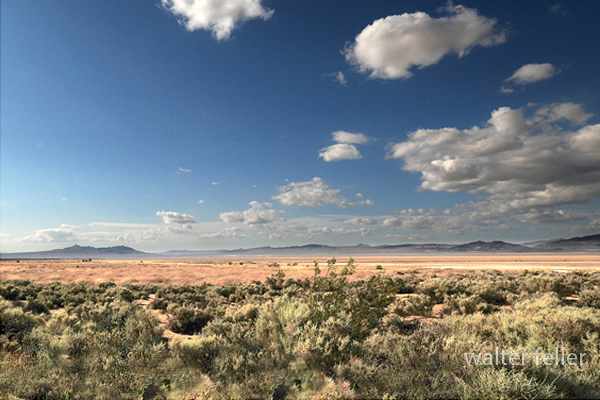
The Desert Character of Its People

1) Foundation: People shaped by limits

The earliest desert people were not simply residents; they were formed by the land itself. Groups such as the Mojave people and Southern Paiute lived within a system defined by scarcity, timing, and precision.

Water determined everything. Springs, washes, and seasonal flows organized movement. Knowledge was practical and inherited, not optional. A person needed to know where to go, when to move, and how to use what was available.

This produced a distinct human type:

  • Memory-based knowledge of place
  • Endurance and adaptability
  • Careful use of limited resources
  • Cultural continuity is tied directly to the landscape

The desert was not something to overcome. It was something to understand.


2) Transitional figure: The crosser and builder

In the 19th century, a different kind of person entered the desert: traders, soldiers, freighters, miners, ranchers, and surveyors. Routes like the Old Spanish Trail carried people across the region rather than within it.

These individuals did not have generations of accumulated knowledge, but they still had to respect the desert’s limits. Many adapted quickly; others did not last.

Their traits were different:

  • Practical, experience-driven learning
  • Willingness to take risks
  • Dependence on known routes and water points
  • Early shift toward ownership, extraction, and control

They began reshaping the desert, but they had not yet escaped its authority.


3) Industrial desert people: Workers of the corridor

With the arrival of large-scale infrastructure, the desert produced a different kind of person. Railroads such as the Atchison, Topeka, and Santa Fe Railway and the Southern Pacific Railroad, followed by highways like Route 66, transformed the region into a corridor.

The people of this phase were workers tied to systems: railroad crews, station agents, mechanics, miners, motel owners, and military personnel.

Their relationship to the desert shifted:

  • Less reliance on natural water and terrain knowledge
  • Greater reliance on infrastructure
  • Identity tied to function (rail hub, highway stop, base town)
  • Continued toughness, but within organized systems

The desert still mattered, but it mattered indirectly. The system stood between the person and the land.


4) Contemporary condition: Layered and divided identities

Today, desert populations are not uniform. In places like Victorville and Apple Valley, people of many types coexist, often with very different relationships to the land.

These include:

  • Long-time residents with inherited knowledge
  • Commuters tied to outside economies
  • Logistics and warehouse workers are connected to national systems
  • Retirees seeking space and climate
  • Recreational users (off-roaders, hikers, tourists)
  • Preservation-focused individuals
  • Developers and energy interests

These groups do not share a single understanding of what the desert is.

Modern traits tend to include:

  • Reduced dependence on local ecological knowledge
  • High mobility and population turnover
  • Identity is shaped by lifestyle rather than landscape
  • Fragmented sense of place

The desert person is no longer one type. It is a mix of overlapping roles.


5) Structural shift: From land-taught to system-supported

The core change can be stated clearly:

Desert people moved from being shaped by the land to being supported by systems that buffer them from it.

Earlier conditions:

  • Knowledge was necessary for survival
  • Mistakes had immediate consequences

Modern conditions:

  • Infrastructure absorbs risk (water systems, roads, services)
  • Direct knowledge of the land is no longer required for daily life

This shift did not remove the desert’s influence, but it reduced its direct control over behavior.


6) Continuities: What has not disappeared

Some traits persist where the desert still exerts pressure:

  • Toughness and endurance
  • Independence and skepticism of outside control
  • Improvisation under constraint
  • Strong attachment to space and openness

These qualities remain evidence of the older desert character, still present beneath modern conditions.


7) Cultural consequence: A divided meaning of the desert

The modern desert holds multiple meanings at once:

  • Home
  • Opportunity
  • Hardship
  • Scenery
  • Memory
  • Resource

Because people no longer depend on the land in the same way, they no longer share a single desert identity.


Bottom line

Desert people evolved through three broad stages:

  • Land-taught inhabitants shaped by necessity and knowledge
  • Transitional builders and workers balancing constraint and control
  • Modern system-supported populations living within a layered infrastructure

The deeper shift is this:

from direct dependence on the land
to mediate life within systems built across it

But the underlying desert remains unchanged, and it still quietly determines what is possible
Levels of History (DRAFT)

A Mojave Regional Perspective

Oral history and word of mouth sit at the most intimate level. This is where interviews, remembered events, family stories, miner recollections, ranch accounts, and “what people around here said” belong. These are not weak sources; they are simply different sources. They preserve lived experience, but they must be marked as memory, testimony, or tradition rather than treated automatically as settled fact.

Family and genealogy history is the next layer. This works especially well on your sites for desert families, settlers, ranchers, mining people, storekeepers, road builders, and local civic figures. In your system, genealogy matters most when it connects a family to place, movement, land use, occupation, or continuity across generations.

Local and community history is one of your core operating levels. This is where places like Apple Valley, Goodsprings, Barstow, Littlerock, Boron, Pearblossom, or Lucerne Valley live as communities rather than just dots on a map. It includes schools, churches, inns, cemeteries, road junctions, stores, clubs, folklore, preservation fights, and the memory of ordinary people.

Regional history is probably the true center of gravity for both sites. The Mojave Desert is not just a collection of towns. It is a region with shared constraints and patterns: aridity, routes, mining belts, rail corridors, military geography, basin-and-range structure, ecological transitions, and a distinct cultural imagination. This is where your corridor logic, basin overlays, and node system become especially powerful. Regional history lets you connect Camp Cady to the Mojave Road, Barstow to rail convergence, Apple Valley to the Mojave River corridor, and Joshua Tree to wider desert systems.

State history is still important, but more as a framing layer than a primary one. California and Nevada state structures matter because they shape land law, water law, transportation planning, parks, counties, and preservation regimes. In your project, state history is most useful when it explains why a regional or local pattern took the form it did.

National history enters when the Mojave intersects larger U.S. processes – westward expansion, railroad building, federal land management, military occupation, highway development, wartime industry, conservation law, and tourism. But your sites usually should not begin here. They should arrive here after grounding the subject.

International or world history is the outer ring. It matters when the Mojave is tied to bigger systems: Spanish colonial networks, Mexican-era movement, global mining capital, transoceanic migration, climate history, wartime logistics, or worldwide desert studies. Useful, yes – but not the everyday scale of your project.

So if I were to adapt this specifically for Digital-Desert / MojaveDesert.net, I would rank the historical levels like this:

  1. Oral / memory / testimony
  2. Family / genealogy
  3. Site-core history
  4. Community / local history
  5. Corridor history
  6. Basin / landscape history
  7. Regional Mojave history
  8. State context
  9. National context
  10. International context

That version fits your actual architecture better than the standard textbook ladder.

Just as important, your sources also fall into levels. For your work, I would sort them this way:

Memory sources:
interviews, oral accounts, family recollections, folklore, local tradition

Material/local evidence:
photos, buildings, ruins, artifacts, cemeteries, inscriptions, maps, site visits

Documentary sources:
newspapers, county records, land patents, census schedules, mining records, railroad timetables, diaries, military reports

Interpretive sources:
local histories, scholarly books, agency reports, geology papers, ethnographies, historical syntheses

That gives you a good method rule:

The closer the source is to lived experience, the more valuable it is for texture and local meaning.
The closer the source is to formal documentation, the more useful it is for chronology, attribution, and verification.
The best pages on your sites usually combine both.

So in relation to your two domains, I would say this plainly:

Digital-Desert.com is strongest when it builds on oral, local, corridor, and regional history.
MojaveDesert.net is strongest when it organizes those same layers into a broader structural and interpretive framework.
Neither site needs to chase “national history” as its main identity. Their evidence lies in showing how the Mojave’s local realities connect to wider systems.

A practical label set for page-building could be:

Memory
Family
Site-core
Community
Corridor
Basin
Regional
State context
National context
Global context

That would fit your architecture far better than a generic school-history list.

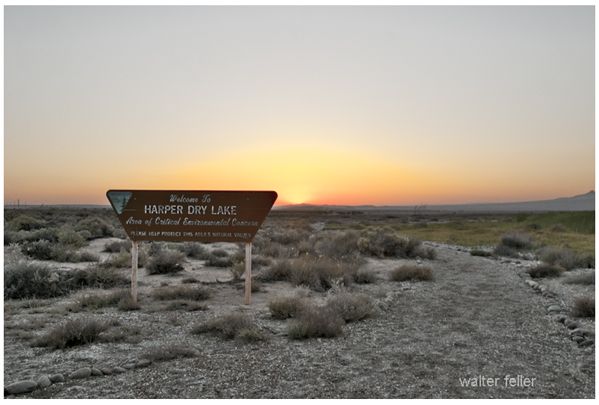
Synthetic Harper Lake

Introduction
This synthetic history offers a short, integrated view of how a place or event may have developed over time. It draws on known facts, adds reasonable connections, and presents a straightforward narrative that helps the reader see the larger pattern behind the details.

Harper Lake began as a shallow Pleistocene basin fed by the changing Mojave River system. As the climate shifted and Lake Manix drained, water reached the Harper basin only in rare pulses, leaving broad mudflats and signs of older shorelines. Early travelers used the dry lake as an open landmark between Barstow and the Fremont Valley. Ranchers later crossed it while moving stock between seasonal ranges. In the twentieth century, power lines, ranch roads, and the airfield at Lockhart marked its edges, but the basin itself stayed quiet. What began as an ancient lake became a wide, dependable reference point in the western Mojave.

Diagram version

Pleistocene Basin
(formed during wetter Mojave River phases)
          |
          v
Lake Manix Drainage
(water reaches basin in rare pulses)
          |
          v
Broad Mudflats
(old shorelines, dry lake surface)
          |
          v
Travel Landmark
(open guide between Barstow and Fremont Valley)
          |
          v
Ranch Use
(stock crossings, seasonal routes)
          |
          v
Modern Markers
(power lines, Lockhart airfield, access roads)
          |
          v
Present Basin
(dry, stable landmark in the western Mojave)

Essay
Harper Lake is one of those quiet western Mojave basins that tells a long story without saying much. Its history begins in the late Pleistocene, when the Mojave River behaved differently, and water sometimes pushed farther west than it does today. After Lake Manix drained, the river wandered across its basin system in unpredictable pulses. During the wetter periods, some of that water reached the Harper basin, leaving layers of fine silt and clay, smoothing the floor, and marking low shoreline benches on the basin walls. These old lake margins still sit a few feet above the flats, showing where storms, climate, and river pathways once made a shallow lake in a place that is now dry most of the year.

As the climate warmed and dried, Harper Lake shifted into a different role. Its connection to the Mojave River became rare and temporary. Water arrived only through heavy storms, brief pooling, or scattered sheetflow that vanished as fast as it came. By the Holocene, the basin had settled into the pattern we recognize today: a vast playa surrounded by creosote scrub, saltbush patches on the margins, and a wind-polished surface that reflects the sky when it is dry and mirrors it when it is briefly wet.

This kind of history fits perfectly with the synthetic examples we started building. In those early models, we traced how simple features in desert country begin as natural formations and slowly take on meaning as people start using them. Harper Lake followed that path. Long before written history, Native travelers crossed its edges as they moved between springs and gathering places. The lake itself offered little water, but its openness made it a dependable marker between the Mojave River corridor and the Fremont Valley routes.

When ranching spread into the region, the basin became part of seasonal stock drives. The flat surface offered a straight line across the land, and the margins gave access to scattered grazing after rare rains. Later, freighters and early motorists used the dry lake the same way: as a clear, recognizable point in a vast landscape where a person needed all the help they could get to stay oriented. The open horizon, the straight edges, and the bare floor served as practical signs that they were on the right course.

By the twentieth century, modern structures began to appear around the basin. Power lines crossed the margins. Utility roads threaded across the flats. The airfield at Lockhart took advantage of the open terrain. Yet even with these additions, Harper Lake retained its quiet identity. It stayed dry most years, it kept its old shorelines in place, and it remained a stable reference point for anyone who knew the western Mojave.

This is the same pattern our first synthetic histories described: a natural feature shaped by water and climate becomes a guide for travel, a minor stage in ranching and settlement, and finally a fixed part of the regional map. Harper Lake shows that a place does not need deep water or dramatic cliffs to play a long role in desert history. Sometimes a broad, silent basin does the work, carrying its past in its shape and offering direction to anyone crossing the land.

Synthetic history disclaimer
This synthetic history blends facts with interpretive narrative to show how events, places, and processes may have unfolded. It is not a primary source and does not replace direct historical records, archaeological findings, or scientific studies. Details drawn from known evidence are kept as accurate as possible, while connecting material is written to provide continuity and context. Readers should treat this as an interpretive aid, not as a definitive account, and consult documented sources for precise dates, data, and citations. This is a learning engine rather than a teaching engine.

Harper Lake Ecology

High Desert Plains & Hills