1) Foundation: People shaped by limits
The earliest desert people were not simply residents; they were formed by the land itself. Groups such as the Mojave people and Southern Paiute lived within a system defined by scarcity, timing, and precision.
Water determined everything. Springs, washes, and seasonal flows organized movement. Knowledge was practical and inherited, not optional. A person needed to know where to go, when to move, and how to use what was available.
This produced a distinct human type:
- Memory-based knowledge of place
- Endurance and adaptability
- Careful use of limited resources
- Cultural continuity is tied directly to the landscape
The desert was not something to overcome. It was something to understand.
2) Transitional figure: The crosser and builder
In the 19th century, a different kind of person entered the desert: traders, soldiers, freighters, miners, ranchers, and surveyors. Routes like the Old Spanish Trail carried people across the region rather than within it.
These individuals did not have generations of accumulated knowledge, but they still had to respect the desert’s limits. Many adapted quickly; others did not last.
Their traits were different:
- Practical, experience-driven learning
- Willingness to take risks
- Dependence on known routes and water points
- Early shift toward ownership, extraction, and control
They began reshaping the desert, but they had not yet escaped its authority.
3) Industrial desert people: Workers of the corridor
With the arrival of large-scale infrastructure, the desert produced a different kind of person. Railroads such as the Atchison, Topeka, and Santa Fe Railway and the Southern Pacific Railroad, followed by highways like Route 66, transformed the region into a corridor.
The people of this phase were workers tied to systems: railroad crews, station agents, mechanics, miners, motel owners, and military personnel.
Their relationship to the desert shifted:
- Less reliance on natural water and terrain knowledge
- Greater reliance on infrastructure
- Identity tied to function (rail hub, highway stop, base town)
- Continued toughness, but within organized systems
The desert still mattered, but it mattered indirectly. The system stood between the person and the land.
4) Contemporary condition: Layered and divided identities
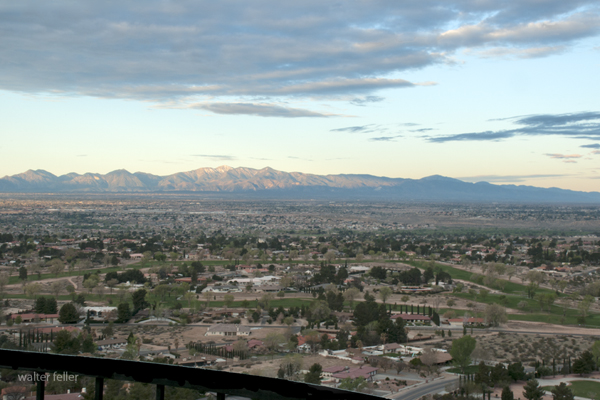
Today, desert populations are not uniform. In places like Victorville and Apple Valley, people of many types coexist, often with very different relationships to the land.
These include:
- Long-time residents with inherited knowledge
- Commuters tied to outside economies
- Logistics and warehouse workers are connected to national systems
- Retirees seeking space and climate
- Recreational users (off-roaders, hikers, tourists)
- Preservation-focused individuals
- Developers and energy interests
These groups do not share a single understanding of what the desert is.
Modern traits tend to include:
- Reduced dependence on local ecological knowledge
- High mobility and population turnover
- Identity is shaped by lifestyle rather than landscape
- Fragmented sense of place
The desert person is no longer one type. It is a mix of overlapping roles.
5) Structural shift: From land-taught to system-supported
The core change can be stated clearly:
Desert people moved from being shaped by the land to being supported by systems that buffer them from it.
Earlier conditions:
- Knowledge was necessary for survival
- Mistakes had immediate consequences
Modern conditions:
- Infrastructure absorbs risk (water systems, roads, services)
- Direct knowledge of the land is no longer required for daily life
This shift did not remove the desert’s influence, but it reduced its direct control over behavior.
6) Continuities: What has not disappeared
Some traits persist where the desert still exerts pressure:
- Toughness and endurance
- Independence and skepticism of outside control
- Improvisation under constraint
- Strong attachment to space and openness
These qualities remain evidence of the older desert character, still present beneath modern conditions.
7) Cultural consequence: A divided meaning of the desert
The modern desert holds multiple meanings at once:
- Home
- Opportunity
- Hardship
- Scenery
- Memory
- Resource
Because people no longer depend on the land in the same way, they no longer share a single desert identity.
Bottom line
Desert people evolved through three broad stages:
- Land-taught inhabitants shaped by necessity and knowledge
- Transitional builders and workers balancing constraint and control
- Modern system-supported populations living within a layered infrastructure
The deeper shift is this:
from direct dependence on the land
to mediate life within systems built across it
But the underlying desert remains unchanged, and it still quietly determines what is possible