Range One East and Raising the Dust
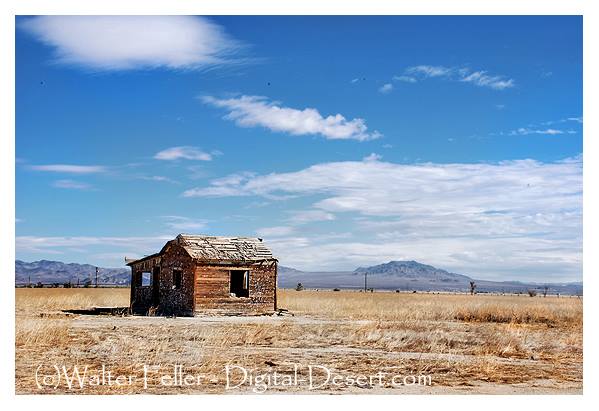
The early history of Lucerne Valley has been preserved in large part through two closely related books: Range One East and Raising the Dust. Together, these works provide an important record of desert homesteading, agriculture, and daily life during the early settlement period of the Victor Valley region.
Lucerne Valley occupies a high desert basin north of the Mojave River and at the foot of the San Bernardino Mountains. During the late nineteenth and early twentieth centuries, the area was still largely an undeveloped desert, visited mainly by ranchers, prospectors, and travelers moving along routes between the Mojave Desert and the mountain communities. Permanent settlement increased during the homestead era, when families began attempting agriculture in the basin despite its arid conditions.
A central figure in this early history was F. J. Gobar, who settled in the Rabbit Springs area. In 1912, he gave the valley its modern name, “Lucerne Valley,” inspired by lucerne—another name for alfalfa—which he believed could be cultivated successfully there. (Swarthout History – CA, n.d.) The Gobar family experimented with crops and water development, helping demonstrate that farming could be attempted in the valley if irrigation wells were developed. (California – Cult Resources Mojave Western, 1978)
Much of this early period is described in Range One East, written by Virginia C. Hemphill-Gobar and published in 1972. (Hemphill-Gobar, 1972) The book documents the lives of settlers who attempted to build farms and ranches in Lucerne Valley during the early twentieth century. Drawing on family records, oral histories, and local recollections, Hemphill-Gobar describes the challenges of desert homesteading—scarce water, isolation, and the difficulty of establishing a reliable agricultural base in an arid landscape.
The title of the book refers to the Public Land Survey System designation “Range One East,” a six-mile-wide column of survey townships east of the San Bernardino Meridian. (Public Land Survey System, 2024) Much of the land in Lucerne Valley was described using the township-and-range system, and Hemphill-Gobar used that framework to organize the valley’s geography and the locations of early homesteads.
While Range One East presents a broader settlement history, the companion work Raising the Dust provides a more personal perspective. The book records the recollections of Julian Smith Gobar, who grew up in the region during the early years of settlement. His stories describe daily life in the Mojave Desert—working cattle, farming experiments, desert travel, and the colorful characters who populated the small communities scattered across the high desert.
Together, the two books complement each other. Range One East documents the development of the community and settlers’ efforts to establish farms and ranches in Lucerne Valley. Raising the Dust, by contrast, captures the personal experiences of those who lived through that period, preserving memories of the hardships, humor, and independence that characterized desert life.
Although neither work was written as an academic study, both have become valuable historical sources. They preserve details about early settlement, agriculture, and everyday life that are often absent from official records. Cultural resource studies, local historians, and researchers examining the development of Lucerne Valley frequently cite these books because they document firsthand accounts of the region’s formative years.
Through the combined efforts of Virginia C. Hemphill-Gobar and Julian Smith Gobar, the early history of Lucerne Valley—its homesteads, ranches, and pioneering families—was preserved for later generations. Their books remain an important window into the era when settlers first attempted to transform a remote Mojave Desert basin into a farming community.
The early history of Lucerne Valley has been preserved in large part through two closely related books: Range One East and Raising the Dust. Together, these works provide an important record of desert homesteading, agriculture, and daily life during the early settlement period of the Victor Valley region.
Lucerne Valley occupies a high desert basin north of the Mojave River and at the foot of the San Bernardino Mountains. During the late nineteenth and early twentieth centuries, the area was still largely an undeveloped desert, visited mainly by ranchers, prospectors, and travelers moving along routes between the Mojave Desert and the mountain communities. Permanent settlement increased during the homestead era, when families began attempting agriculture in the basin despite its arid conditions.
A central figure in this early history was F. J. Gobar, who settled in the Rabbit Springs area. In 1912, he gave the valley its modern name, “Lucerne Valley,” inspired by lucerne—another name for alfalfa—which he believed could be cultivated successfully there. The Gobar family experimented with crops and water development, helping demonstrate that farming could be attempted in the valley if irrigation wells were developed.
Much of this early period is described in Range One East, written by Virginia C. Hemphill-Gobar and published in 1972. The book documents the lives of settlers who attempted to build farms and ranches in Lucerne Valley during the early twentieth century. Drawing on family records, oral histories, and local recollections, Hemphill-Gobar describes the challenges of desert homesteading—scarce water, isolation, and the difficulty of establishing reliable agriculture in an arid landscape.
The title of the book refers to the Public Land Survey System designation “Range One East,” a six-mile-wide column of survey townships east of the San Bernardino Meridian. Much of the land in Lucerne Valley was described using the township-and-range system, and Hemphill-Gobar used that framework to organize the valley’s geography and the locations of early homesteads.
While Range One East presents a broader settlement history, the companion work Raising the Dust provides a more personal perspective. The book records the recollections of Julian Smith Gobar, who grew up in the region during the early years of settlement. His stories describe daily life in the Mojave Desert—working cattle, farming experiments, desert travel, and the colorful characters who populated the small communities scattered across the high desert.
Together, the two books complement each other. Range One East documents the development of the community and settlers’ efforts to establish farms and ranches in Lucerne Valley. Raising the Dust, by contrast, captures the personal experiences of those who lived through that period, preserving memories of the hardships, humor, and independence that characterized desert life.
Although neither work was written as an academic study, both have become valuable historical sources. They preserve details about early settlement, agriculture, and everyday life that are often absent from official records. Cultural-resource studies, local historians, and researchers examining the development of Lucerne Valley frequently cite these books because they record firsthand knowledge of the region’s formative years.
Through the combined efforts of Virginia C. Hemphill-Gobar and Julian Smith Gobar, the early history of Lucerne Valley—its homesteads, ranches, and pioneering families—was preserved for later generations. Their books remain an important window into the era when settlers first attempted to transform a remote Mojave Desert basin into a farming community