These appear to be desert land snail shells, probably from one of the small Mojave or Sonoran desert snail groups rather than marine shells. The thick, chalky white shell and tight spiral are typical adaptations for arid environments: the pale color reflects heat, while the heavy shell helps reduce water loss.
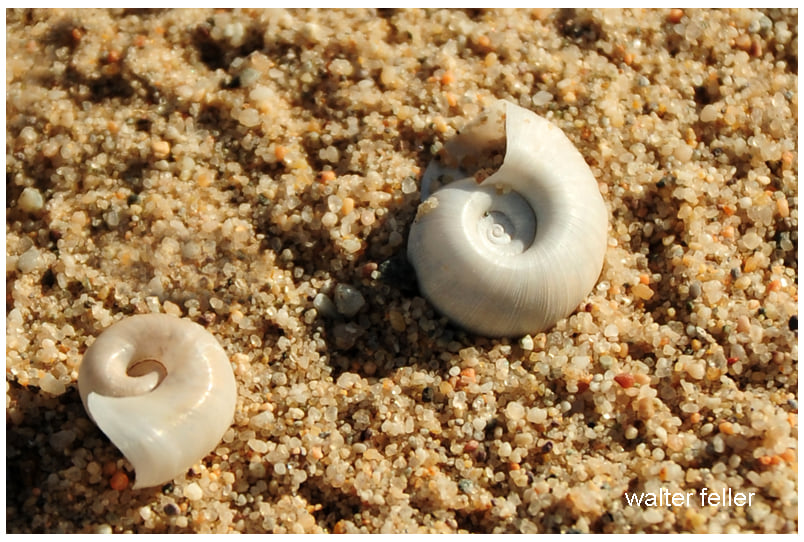
The shell on the right looks weathered and sun-bleached, likely long dead. In deserts, snail shells can persist for years because the dry climate slows decomposition. After seasonal rains, the living snails emerge briefly to feed and reproduce, then retreat underground or beneath rocks and seal themselves inside the shell with a thin membrane during drought.
The shape is especially reminiscent of desert hairy snails and allied southwestern taxa in the family Helminthoglyptidae, though exact identification from shells alone is difficult.
It is one of the quieter desert details people often overlook: tiny white shells scattered across washes and dunes, evidence that even the most arid country supports hidden cycles of dormancy and brief renewal.