(Mojave–Great Basin system) * DRAFT *
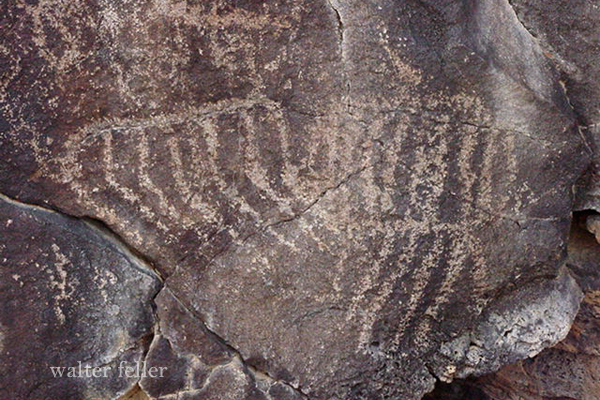
A petroglyph corridor is a stretch of landscape where rock art sites appear repeatedly along a natural travel route. Instead of a single isolated panel or canyon full of carvings, the imagery is distributed along a pathway that people used for movement across the desert.
In practical terms, a petroglyph corridor is a travel landscape marked by symbolic sites.
Format
Node | Region Belt | Corridor Intersection | Node Type | Motif Emphasis | Significance
- Coso Petroglyph Field
Region Belt: Eastern Sierra–Great Basin frontier
Corridor Intersection: Owens Valley corridor / eastern Mojave uplands
Node Type: Major ceremonial core
Motif Emphasis: Bighorn sheep, hunters, anthropomorphs
Significance: One of the largest rock art landscapes in North America and the primary symbolic center of the Coso corridor.
- Little Petroglyph Canyon
Region Belt: Coso Range
Corridor Intersection: Coso canyon travel routes
Node Type: Canyon site-core
Motif Emphasis: Sheep imagery and hunting scenes
Significance: Dense petroglyph concentration marking a heavily traveled volcanic canyon corridor.
- Renegade Canyon
Region Belt: Coso Range
Corridor Intersection: Coso canyon system
Node Type: Canyon ceremonial node
Motif Emphasis: Hunters, patterned-body anthropomorphs
Significance: Major interpretive canyon central to debates over Coso symbolism and ceremonial activity.
- Sheep Canyon
Region Belt: Coso Range
Corridor Intersection: Hunting landscape corridor
Node Type: Specialized hunting node
Motif Emphasis: Bighorn sheep
Significance: Strongly associated with hunting geography and ritual interpretations tied to sheep imagery.
- Grapevine Canyon
Region Belt: Mojave–Colorado corridor
Corridor Intersection: Lower Colorado River travel routes
Node Type: Major corridor anchor
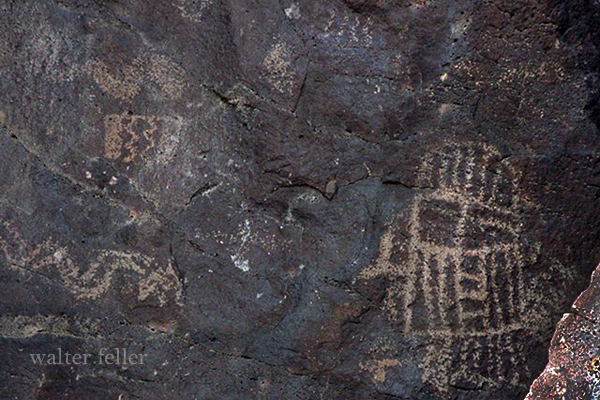
Motif Emphasis: Rectilinear geometric forms
Significance: Key node connecting Mojave rock art with lower Colorado River cultural traditions.
- Sloan Canyon
Region Belt: Southern Nevada–Mojave margin
Corridor Intersection: Las Vegas basin travel routes
Node Type: Canyon corridor node
Motif Emphasis: Abstract geometric motifs
Significance: Important transition node linking Basin and Range traditions with Mojave landscapes.
- Black Canyon (Pahranagat)
Region Belt: Southern Great Basin
Corridor Intersection: Pahranagat Valley–White River travel route
Node Type: Valley corridor node
Motif Emphasis: Anthropomorphic figures
Significance: Core location of the Pahranagat Representational Style.
- Pahranagat Valley Wetlands
Region Belt: Southern Great Basin
Corridor Intersection: Basin travel routes
Node Type: Water-source corridor node
Motif Emphasis: Mixed imagery across nearby sites
Significance: Wetland basin likely served as a staging area for travel and symbolic marking.
- Mojave River – Afton Canyon
Region Belt: Central Mojave Desert
Corridor Intersection: Mojave River travel corridor
Node Type: Water corridor node
Motif Emphasis: Mixed Mojave petroglyph forms
Significance: One of the few natural passageways through the central Mojave Desert terrain.
- Newberry Mountains Ritual Complex
Region Belt: Central Mojave
Corridor Intersection: Cross-desert routes between Mojave River and eastern desert
Node Type: Ritual landscape node
Motif Emphasis: Ceremonial deposits and symbolic associations
Significance: Key ritual comparison site tied to bighorn symbolism.
- Mojave National Preserve Lava Fields
Region Belt: Eastern Mojave Desert
Corridor Intersection: Basin margin travel routes
Node Type: Distributed rock art field
Motif Emphasis: Mixed abstract and representational motifs
Significance: Petroglyph clusters associated with springs and lava landscapes.
- Lagomarsino Canyon
Region Belt: Western Great Basin
Corridor Intersection: Basin-to-basin travel routes
Node Type: Monumental abstract node
Motif Emphasis: Circles, grids, abstract motifs
Significance: One of the largest rock art concentrations in the Great Basin.