Gold Mines, Ghost Towns, and Historic Communities
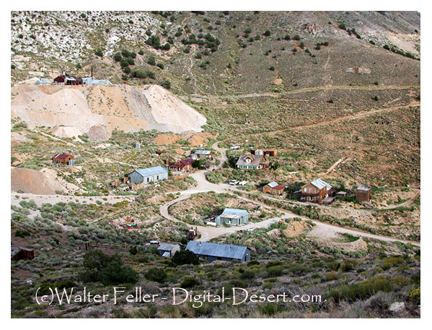
The Mojave Desert holds the remnants of a once-booming gold rush era, when thousands of prospectors flooded the region in search of wealth. Towns sprang up seemingly overnight wherever gold was found. They boomed with activity—saloons, general stores, boarding houses, and stamp mills sprang to life in the middle of the desert. But the rush rarely lasted. Once the gold played out, so did the people. Many of these places were abandoned just as quickly as they had appeared, leaving behind ghost towns—silent, sunbaked reminders of a time driven by hope and speculation.-- Amboy, CA -- Arbuckle Mine -- Atolia -- Bagdad-Chase -- Ballarat -- Bickel Camp -- Bodie -- Bonanza King Mine -- Bonanza King Mill -- Cadiz Summit
-- Calico Ghost Town -- Cartago -- Cerro Gordo -- Chloride, Arizona -- Chloride Cliff -- Chrysopolis -- Cima -- Cudahy
-- Darwin -- Death Valley Mine -- Desert Queen Mine -- Dolomite -- Dublin Gulch -- Eagle Cliff Mine -- Essex -- Eureka Mine -- Evening Star Mine
-- Garlock -- Goffs -- Goldfield, Nv -- Gold Hammer Mine -- Goldstone -- Goler Gulch -- Goodsprings, Nv. -- Greenwater
-- Ibex -- Ivanpah -- Johannesburg -- Keane Wonder Mine -- Keeler Smelter -- Kokoweef -- Keeler -- Kelso -- Leadfield -- Llano del Rio
-- Manvel -- Mastodon Mine -- Moorehouse Mine -- Moorten’s Mill -- Nelson, Nevada -- New Dale -- Nipton
-- Oatman, Arizona -- OK Mine -- Old Dale -- Old Dominion Mine -- Old Dutch Cleanser Mine -- Providence -- Ragtown -- Randsburg -- Red Mountain -- Rhyolite -- Rice -- Ruth Mine
-- Searchlight -- Shoshone -- Silver Bell (Barstow) -- Silver Bell Mine (Joshua Tree) -- Skidoo -- Skidoo Mill -- Stedman / Bagdad-Chase -- Swansea -- Techatticup Mine -- Tecopa -- Tonopah, Nevada -- Tropico -- Vanderbilt -- Vontrigger -- Yermo
However, not all of these towns disappeared. A few managed to endure and grow into modern communities. Their secret? Location and water. In a desert as harsh as the Mojave, water is life. Places near springs, rivers, or where water could be drawn from the ground became natural gathering points. Many of these sites were originally stops along wagon roads or trails where travelers could rest and refill their canteens. Over time, those stops developed into towns and waystations. When roads became railways and highways, those locations stayed important.
Today, the Mojave is scattered with abandoned mines, forgotten mill sites, and ghost towns—some well-preserved, others reclaimed by the desert. Meanwhile, towns like Barstow, Needles, and Twentynine Palms reflect the staying power of locations that offered something more than just gold.
The ghost towns remind us of how quickly fortunes and communities can rise and fall when they rely solely on resources like minerals. The places that survived tell a different story—one of adaptation, smart placement, and the essential role of water in sustaining life in the desert.
Whether you're drawn to the history, the mystery, or just the scenery, exploring these places reveals the real legacy of the Mojave’s gold rush: a region shaped not only by wealth, but by resilience and survival.
WARNING
Many mines and ghosttown ruins have become active under private ownership. DO NOT TRESPASS! Obtain permission from the property owner before entering any private property for any activity.
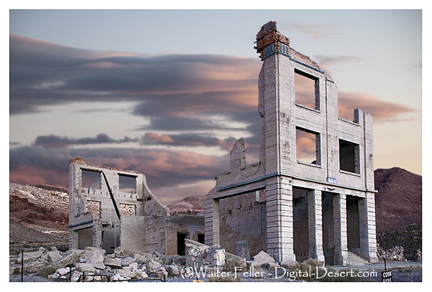
There is only one reason why desert ghost towns exist; the absence of money. If money isn't there, there is no reason for people to stay. In areas where good-tasting water is readily available, contemporary communities have developed.
In the Mojave, these population centers evolved from springs along trails and later roads into transportation waystations and hubs, sometimes concealing or obscuring historical consequences.
Cemeteries
Death Valley Ghost Towns
East Mojave Ghost Towns
East Mojave
Upper Mojave Ghost Towns
Ore Processing
Mining History
Desert Fever
Gold
Boomtown Characteristics
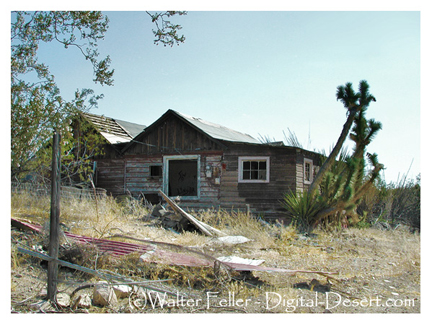
Not all of the sites and points of interest on this list are ghost towns per se or abandoned. Still, they may be active communities undermined by the loss of industry or commerce.