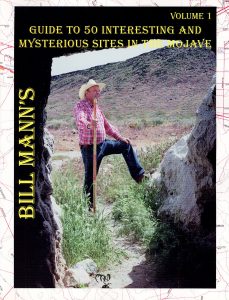
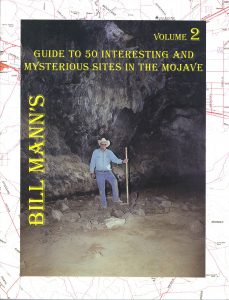
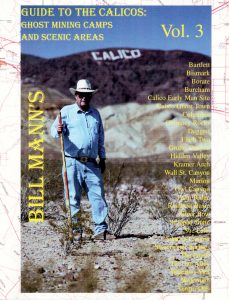
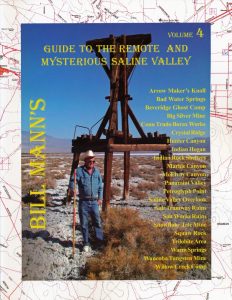
Bill Mann’s books occupy an uneasy place in Mojave Desert history. They are valued by many readers because they preserve a kind of field knowledge that was once passed from explorer to explorer, prospector to prospector, and local historian to local historian. His guidebooks were published by the Mojave River Valley Museum, and the series was built around little-known desert places in the Mojave, the Calicos, Saline Valley, Lucerne Valley, and Big Bear regions. Museum listings and booksellers describe the books as guides to “interesting and mysterious” sites, with coverage of remote backcountry places and, in some editions or descriptions, GPS coordinates and vehicle requirements.
That is also where the controversy begins.
The issue is not that Bill Mann became the center of a single famous scandal. The controversy is structural. His books belong to a long-running desert argument over whether publishing directions to obscure places is a form of preservation or exposure. When guidebooks identify fragile ruins, mining camps, rock formations, or little-known historic sites, they can preserve memory and broaden public knowledge. At the same time, they can increase traffic to places that had previously been protected by distance, obscurity, or the simple difficulty of finding them. The books themselves were marketed around places that “few people know about,” which makes that tension especially clear.
In the older field-guide era, that risk was partially limited by friction. A reader still had to acquire the book, interpret the directions, read the landscape, and navigate difficult terrain. Printed guidebooks did not behave like digital information does today. They spread more slowly, required more effort, and usually reached a narrower audience. In that older setting, a desert guide could reveal a place without instantly turning it into a widely circulated waypoint. That does not mean there was no danger, only that the rate and scale of disclosure were different. This is why Mann’s books can be understood as part of a pre-digital field-guide tradition rather than as modern mass-access publishing. The surviving descriptions of the series consistently frame them as backcountry exploration guides rooted in firsthand desert travel.
A second source of controversy is methodological. Mann’s books are useful, but they are not usually treated as academic works. Reviews and summaries describe them as broad, eclectic field guides covering mining ruins, homesteads, curiosities, scenic areas, and oddities across the desert. That kind of book can be rich in leads, local knowledge, and exploratory value, but it does not carry the same authority as a tightly sourced historical monograph or archaeological report. The result is that researchers may respect the books as guide-layer material while still feeling the need to verify individual claims, route logic, or site identifications against other records.
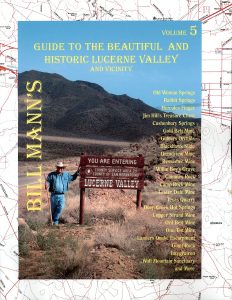
So the real controversy around Bill Mann’s books is best described in three parts. First, they disclose obscure places. Second, some of those places may be fragile. Third, the books sit in a gray area between field exploration, local history, and public site-sharing. For readers who value openness, these books are generous and important. For readers concerned with site protection, that same quality can seem careless or outdated. Both reactions come from the same fact: the books were designed to help people find places that were not widely known.
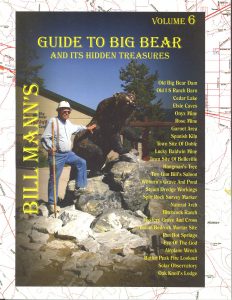
In that sense, the controversy is larger than Bill Mann himself. His books are evidence of a transition in desert culture. They come from a period when local knowledge was beginning to move from oral tradition and private notes into wider print circulation. Today, in a digital environment, that same kind of site-sharing raises sharper ethical questions because information can be copied, mapped, reposted, and amplified far beyond the original context. What once functioned as a field guide can now operate like a distribution system. That is why Mann’s books remain historically valuable, but also why modern public-facing desert projects often handle this kind of source material with more caution than earlier guide writers did.
For Mojave work today, the fairest reading is this: Bill Mann’s books matter because they preserved a layer of desert knowledge that might otherwise have been lost. The controversy is that preserving such knowledge in public form can also place vulnerable sites at risk. That tension, more than any personal scandal, is what defines the debate around his books.