Joshua Tree National Park
The Lost Horse Mine is one of the best-known historic mining sites in what is now Joshua Tree National Park and was among the most productive mining operations in the region. Its history combines documented mining development with one of the park’s most persistent desert legends, the story of Johnny Lang. Together, the mine and the man form an important part of Joshua Tree’s cultural landscape, linking frontier prospecting, small-scale gold mining, and the hard conditions of desert life in the late nineteenth and early twentieth centuries.
Like many mining stories in the California desert, the origins of Lost Horse Mine are tied to both opportunity and legend. According to park history, Johnny Lang acquired the mining rights in the 1890s after a chain of events involving horse theft, cattle rustling, and the rough frontier conditions of the area. The episode gave the mine its memorable name and became part of local lore. Whether every detail of the story can be proven matters less than the fact that it became inseparable from the site’s identity.
Lang and his associates first developed the claim with a small two-stamp mill. In these early years, mining in the Joshua Tree region was difficult and uncertain. Water was scarce, transportation was expensive, and fuel had to be secured to run machinery. Most desert claims never produced enough ore to justify the effort. Lost Horse Mine was one of the exceptions.
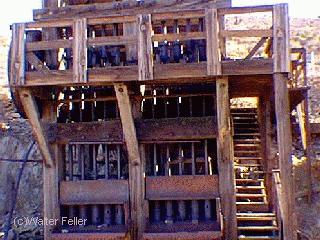
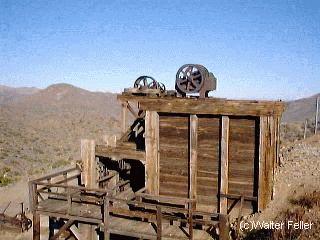
The operation entered a more productive phase after J.D. Ryan bought out the original owners in 1895. Ryan expanded the works, installed a steam-powered ten-stamp mill, and improved the mine’s efficiency. Water was brought in through a pipeline from a spring near Ryan’s ranch, and nearby pinyon and juniper were heavily cut for fuel to power the mill. The mine’s success came at a visible cost to the landscape, and some of that environmental mark remained long afterward.
Between 1894 and 1931, Lost Horse Mine produced approximately 10,000 ounces of gold and 16,000 ounces of silver, making it one of the few truly successful mines in the Joshua Tree region. In modern terms, that output has often been estimated at roughly $5 million. For a desert mine in such an isolated setting, it was a substantial achievement and a clear indication of how unusual Lost Horse was among the many short-lived claims of the region.
Johnny Lang remained tied to the mine even after his direct role in its early development faded. In park tradition, he appears as both prospector and cautionary figure, a man drawn deeper into the desert by gold, suspicion, and loss. Stories grew around him, including accounts that he stole amalgam from the operation and later returned to search for gold he had hidden near the mill site. These stories belong to the legendary side of the Lost Horse narrative, but they have long shaped how visitors remember the place.
By the early twentieth century, the richest ore had been worked out, and activity slowed. The main productive phase ended after the ore-bearing vein was lost, and later efforts failed to restore the mine’s earlier success. In 1931, rising gold prices prompted the reworking of old tailings, but this marked the end rather than a revival of the operation.
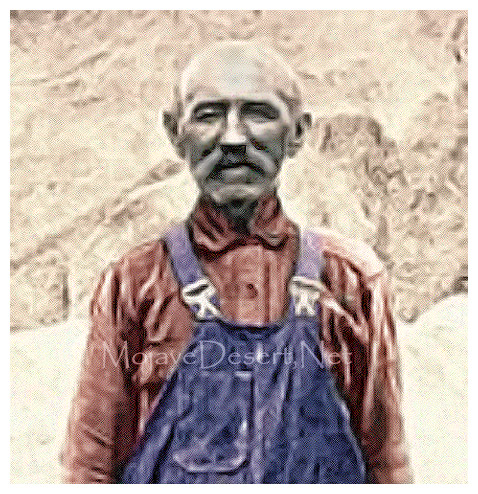
Lang’s final years added still more to the legend. He reportedly returned to the Lost Horse area after the mine’s productive life had largely passed, living in isolation and continuing to prospect in the surrounding country. In 1925, he died alone in the desert, an ending that fixed his place in local memory and deepened the mystery surrounding the supposed cache of hidden gold that later treasure seekers sought to find.
Today, the mill and its associated structures remain among the most important mining remnants in Joshua Tree National Park. The preserved ten-stamp mill stands as a rare and tangible link to the park’s mining era and to the boom-and-bust cycle that defined so many western ventures. Lost Horse Mine is also a popular hiking destination, reached by a trail that follows the old road once used to haul ore and supplies.
More than a ruined mine, Lost Horse is a place where documented history and desert legend meet. It preserves the story of one of Joshua Tree’s most successful mining operations while also keeping alive the memory of Johnny Lang, whose name remains permanently tied to the mine and to the enduring fascination of the desert gold rush.
The name Lost Horse Mine comes from a story associated with Johnny Lang, the early prospector who staked the claim. According to the traditional account preserved in park history and local desert lore, Lang discovered the mine while searching for a missing horse.
In the early 1890s, Lang was grazing cattle in the desert country north of what is now Indio. One morning, he noticed that one of his horses had wandered away. Following the tracks into the rocky uplands of what later became known as Lost Horse Valley, he eventually came upon a camp occupied by the McHaney Gang, a group reputed to be horse thieves and cattle rustlers. When Lang asked about the missing horse, the men warned him to leave.
As the story goes, Lang continued exploring the surrounding hills after leaving the camp. During this time, he encountered a prospector named “Dutch” Frank Diebold, who showed him a piece of rich, gold-bearing ore. Lang recognized the potential value of the find and purchased the mining rights for $1,000. When he filed the claim, the episode of the missing horse provided the name, and the property became known as the Lost Horse Mine.
Whether every detail of the story is historically verifiable is uncertain. Like many frontier mining stories, the tale blends documented events with local legend. What is clear is that the name Lost Horse was already in use by the time the claim was formally developed in the 1890s, and the story of Lang’s missing horse became the accepted explanation for the name.
The valley where the mine lies eventually took the same name, becoming Lost Horse Valley, and the story remains one of the enduring pieces of folklore attached to Joshua Tree National Park’s mining history.
Johnny Lang’s life ended quietly and rather tragically in the desert country around the mine that made him famous.
After losing control of the Lost Horse Mine in the late 1890s, Lang remained in the area and continued to prospect in the hills around Lost Horse Valley and the nearby canyons. According to accounts preserved in park history and local tradition, he occasionally returned to the old mine site and lived in abandoned structures, such as the cookhouse, for periods. He never discovered another profitable claim.
Lang became something of a solitary figure in the desert during his later years. Local rancher and miner Bill Keys, who lived nearby at what is now known as Keys Ranch, later recalled seeing Lang from time to time and even purchasing small pieces of gold bullion from him. These stories helped fuel the long-running legend that Lang had hidden some of the gold he had taken from the Lost Horse operation somewhere in the area.
In January 1925, Lang reportedly left a note saying he was going out to get supplies and would return soon. He never came back. Weak from age, exposure, and the harsh winter conditions of the desert, he died while traveling on foot a short distance from the mine.
About two months later, Bill Keys discovered Lang’s body near the old road leading toward Lost Horse Valley. Keys notified the county authorities and buried Lang where he was found. The burial site was later disturbed by treasure hunters who believed Lang might have been buried with a map to hidden gold, and during one of those disturbances, his skull was reportedly stolen.
Lang’s lonely death added to the legend surrounding the Lost Horse Mine. Stories of a hidden cache of stolen gold persisted for years afterward, though no confirmed discovery was ever made.
Today, Johnny Lang is remembered primarily through the story of the Lost Horse Mine in Joshua Tree National Park, where the mill ruins and the surrounding valley still bear the name associated with the missing horse and the prospector who followed its tracks into the desert.