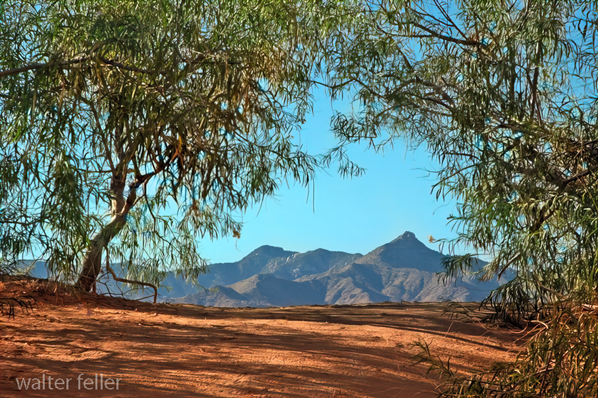
The idea of “intrusion” in the Mojave Desert is less straightforward than it first appears. On the surface, the landscape feels vast, empty, and available—an open field where one might expect solitude and personal dominion. Spend enough time out there, learn its routes, its quiet places, its rhythms, and it is easy to begin thinking of certain areas as your own. Not in a legal sense, but in a lived, experiential one. Familiarity builds attachment, and attachment can drift into a sense of claim.
But the Mojave resists that kind of ownership.
What feels like an intrusion is often just an overlap. The same qualities that draw you in—remoteness, stark beauty, a sense of separation from the rest of the world—draw others as well. Old mining roads, dry lake crossings, washes, and ridgelines are not random; they are part of a long-standing network of movement. Indigenous travelers, explorers, freighters, prospectors, ranchers, off-roaders, and hikers—all have used and continue to use these same pathways. What seems like a private discovery is often a rediscovery of something that has been in circulation for generations.
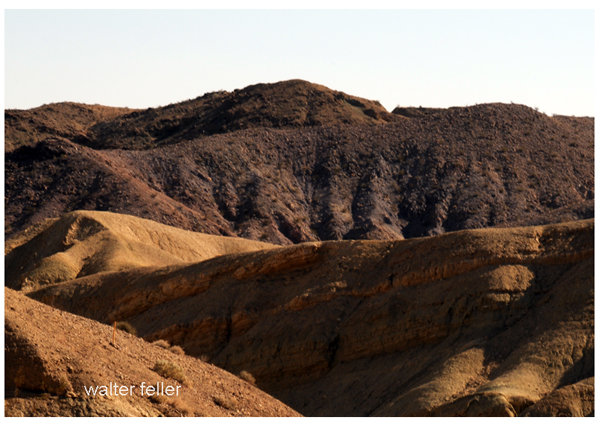
This creates a tension between expectation and reality. The expectation is solitude, perhaps even exclusivity. The reality is that the desert is a shared system, and access—whether formal or informal—is part of its structure. When someone else shows up in a place you’ve come to think of as yours, it can feel like a disruption, even a violation. But in most cases, they are participating in the same pattern you are: moving through a landscape that has never belonged to any single user.
There is also a practical dimension to this. The Mojave is not just open space; it is a network of limited resources. Water sources, shade, reliable routes—these are scarce and widely known, whether through maps, word of mouth, or simple observation. People tend to converge on the same nodes because there are only so many viable options. What feels like an intrusion is sometimes just inevitability.
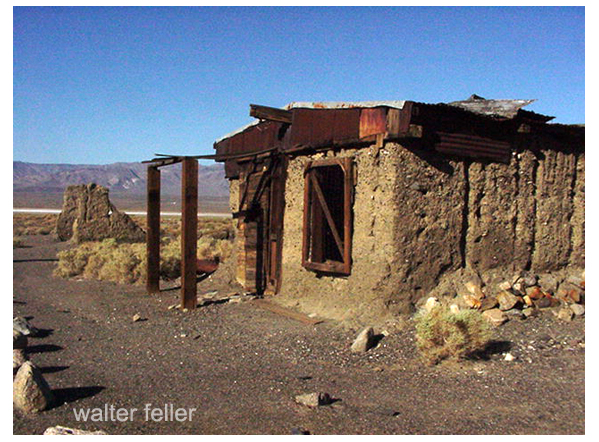
Attempts to control or exclude others rarely hold up over time. The desert is too large, the access points too numerous, and the traditions of movement too deeply rooted. Fences can be built, routes can be obscured, and information can be withheld, but none of these measures fully resolve the issue. They often create more friction than they prevent.
A more durable approach is to shift the frame. Instead of treating the desert as something to possess, it can be understood as something to participate in. That means recognizing that others will be present, even in places that feel remote, and adjusting expectations accordingly. Solitude becomes something you find in moments rather than something you permanently secure.
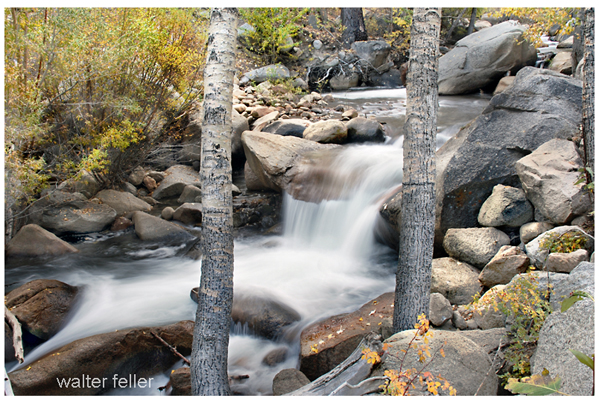
In practice, this often leads to quieter strategies. People who spend a great deal of time in the desert learn where and when others are likely to appear. They seek out less obvious routes, travel at off-peak times, or move deeper into areas that require more effort to reach. They do not eliminate intrusion; they work around it.
In the end, the Mojave does not reward attempts at control. It favors those who understand its scale, its history, and its shared nature. The space you find there is real, but it is never exclusively yours—and trying to make it so usually works against the very experience you’re looking for.