Gold Mines, Ghost Towns, and Historic Communities
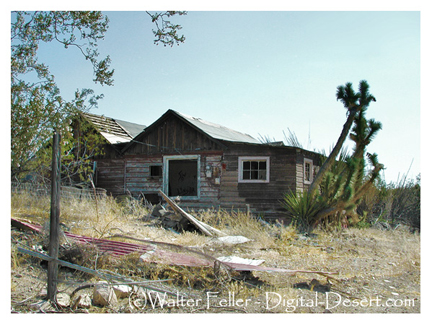
Most of these booms were short-lived. When the ore played out, the people left. Towns that had risen almost overnight were often abandoned just as quickly, leaving behind ghost towns: silent, sunbaked reminders of hope, speculation, and hard work.Not every location listed below is a ghost town or abandoned site. Some remain active communities, while others declined after the loss of mining, transportation, or commerce.
-- Amboy, CA
-- Arbuckle Mine
-- Atolia
-- Bagdad-Chase
-- Ballarat
-- Bickel Camp
-- Bodie
-- Bonanza King Mine
-- Bonanza King Mill
-- Cadiz Summit
-- Calico Ghost Town
-- Cartago
-- Cerro Gordo
-- Chloride, Arizona
-- Chloride Cliff
-- Chrysopolis
-- Cima
-- Coolgardie
-- Cudahy
-- Darwin
-- Death Valley Mine
-- Desert Queen Mine
-- Dolomite
-- Dublin Gulch
-- Eagle Cliff Mine
-- Essex
-- Eureka Mine
-- Evening Star Mine
-- Garlock
-- Goffs
-- Goldfield, Nv
-- Gold Hammer Mine
-- Goldstone
-- Goler Gulch
-- Goodsprings, Nv.
-- Greenwater
-- Ibex
-- Ivanpah
-- Johannesburg
-- Keane Wonder Mine
-- Keeler Smelter
-- Kokoweef
-- Keeler
-- Kelso
-- Leadfield
-- Llano del Rio
-- Manvel
-- Mastodon Mine
-- Moorehouse Mine
-- Moorten’s Mill
-- Nelson, Nevada
-- New Dale
-- Nipton
-- Oatman, Arizona
-- OK Mine
-- Old Dale
-- Old Dominion Mine
-- Old Dutch Cleanser Mine
-- Providence
-- Ragtown
-- Randsburg
-- Red Mountain
-- Rhyolite
-- Rice
-- Ruth Mine
-- Searchlight
-- Shoshone
-- Silver Bell Mine (JTNP)
-- Skidoo
-- Skidoo Mill
-- Stedman / Bagdad-Chase
-- Swansea
-- Techatticup Mine
-- Tecopa
-- Tonopah, Nevada
-- Tropico
-- Vanderbilt
-- Virginia Dale
-- Vontrigger
-- Yermo
Not all of these places vanished. A few endured and grew into modern communities because they offered more than a mineral strike. In the Mojave, location and water have always mattered. Springs, rivers, and accessible groundwater made certain places natural gathering points, providing travelers with places to rest and refill their canteens.
Many settlements began as stops along wagon roads and trails. As routes became railroads and highways, these well-sited locations retained their importance and developed into towns and transportation hubs.
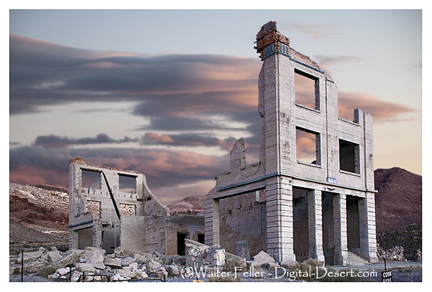
Today, the Mojave is scattered with abandoned mines, mill sites, and ghost towns. Some are well preserved; others have been steadily reclaimed by the desert. Communities such as Barstow, Needles, and Twentynine Palms demonstrate the staying power of places sustained by water, transportation, and continuing purpose.
Ghost towns show how quickly fortunes and communities can rise and fall when they depend on a single resource. The towns that survived tell a different story: one of adaptation, sound location, and the essential role of water in desert life.
Whether drawn by history, mystery, or scenery, visitors to these places encounter the lasting legacy of the Mojave’s boom years—a region shaped not only by wealth, but also by endurance and survival.
Warning
Many mines and ghosttown ruins have become active under private ownership. DO NOT TRESPASS! Obtain permission from the property owner before entering any private property for any activity.
Cemeteries
Death Valley Ghost Towns
East Mojave Ghost Towns
East Mojave
Upper Mojave Ghost Towns
Ore Processing
Mining History
Desert Fever
Gold
Boomtown Characteristics