Digital-Desert : Mojave Desert
Intro:: Nature:: Geography & Maps:: Parks & Preserves:: Points of Interest:: Ghosts & Gold:: Communities:: Roads & Trails:: People & History::
Ecology: Death Valley National Park

Death Valley National Park - Ecology and Ecosystems
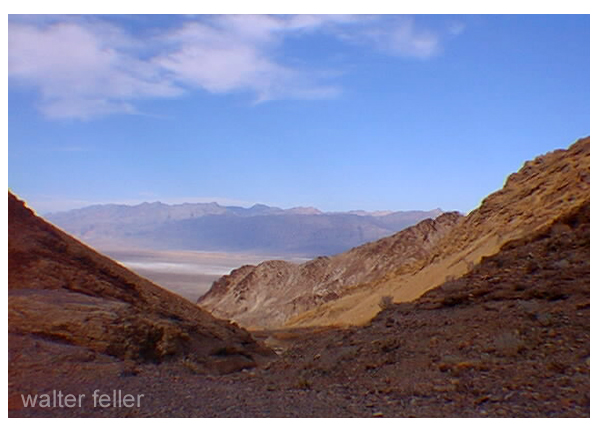
photo looking out from Mosaic Canyon

The ecology of Death Valley National Park is defined by the interaction of geology, climate, plants, and animals within an extreme desert environment. Despite its reputation for heat and aridity, the park supports a complex network of ecosystems shaped by both ancient geologic processes and ongoing environmental conditions.

An ecosystem describes how living organisms and their physical surroundings function together as an integrated system. In Death Valley, geology provides the foundation, influencing soil composition, elevation, and water availability. These factors determine plant distribution, which in turn supports animal life through food and habitat. Each organism is adapted to survive within the constraints of heat, limited moisture, and variable terrain.

Ecosystems in the park do not exist as sharply defined units. Instead, they often blend gradually into one another across transitional zones known as ecotones. These areas may contain species from adjacent ecosystems or unique combinations adapted specifically to transitional conditions. In some cases, ecotones function as distinct ecological systems in their own right.

The park's ecological structure is closely tied to several major natural features and environmental systems:

Natural features & ecosystems include:

Faults & Geologic Formations

Faulting is the one of the main reasons Death Valley exists. Movement along faults allow the mountains to ...

Weather and Climate

Death Valley is famous as the hottest and driest place in North America. Summer temperatures often top ...

Plants

Despite its reputation as a lifeless wasteland, Death Valley National Park contains a great diversity of ...

Wildlife

Despite those extremes it is home to a diverse amount of wildlife species: 56 mammals, 36 reptiles, ...

Springs and Seeps

Wetland and riparian areas have a unique scientific value. The Death Valley / Ash Meadows area is a classic example of ...

Geology

The landscape is so varied and extreme, one cannot help to wonder what events ...

Sand Dunes

For dunes to exist there must be a source of sand, prevailing winds to ...

Salt Flats

The salt flats in Badwater Basin cover nearly 200 square miles, among the largest ...

Below Sea Level

To have exposed land below sea level, an extremely dry climate is ...


Source - National Park Service

Geomorphic Setting

Basin and Range

The province is characterized by interior drainage with lakes and playas, and the typical horst and graben structure.

General Ecological Settings

Eco-subsection: Mojave Desert:

This section is the hot part of the Basin and ranges from the southern end of the Sierra Nevada and the north-northeastern side of the Transverse Ranges to Nevada and Arizona.

    Death Valley

    the alluvial plain of Death Valley, from Sand Spring south-southeast to the drainage divide between Death Valley and Silurian Valley.

    Funeral Mountains - Greenwater Valley

    the Funeral Mountains, Black Mountains, Greenwater Range, Resting Spring Range, and Nopah Range between Death Valley and the Amargosa Desert and Pahrump Valley.

Eco-subsection: Southern Great Basin:

southern Great Basin in the Basin and Range geomorphic province.

    Panamint Range

    the Panamint Mountains, which are between Panamint Valley and Death Valley.

Ecosystems and Habitats

Shrub Dominated

    Desert Wash

    Desert Wash habitats are characterized by the presence of arborescent, often spiny, shrubs generally associated with ...

    Desert Scrub

    Desert Scrub habitats typically are open, scattered assemblages of broadleaved evergreen or deciduous ...

Tree Dominated

    Desert Riparian

    Desert Riparian habitats are characterized as dense groves of low, shrublike trees or tall shrubs ...

    Pinyon-juniper

    Habitat. Pinyon-juniper habitat generally occurs at middle elevations adjoining a number of other wildlife habitats. At lower elevations, pinyon-juniper may interface with habitats such as Joshua tree and desert scrub.

Intro:: Nature:: Geography & Maps:: Parks & Preserves:: Points of Interest:: Ghosts & Gold:: Communities:: Roads & Trails:: People & History::
Digital-Desert : Mojave Desert
Country Life Realty
Wrightwood, Ca.
Mountain Hardware
Wrightwood, Ca.
Canyon Cartography
G.A. Mercantile


Grizzly Cafe
Family Dining


Abraxas Engineering
privacy

For educational use only; not a travel or safety guide. Copyright (c) Walter Feller, 1995-2026. All rights reserved.