-.-
Newberry Springs, CA
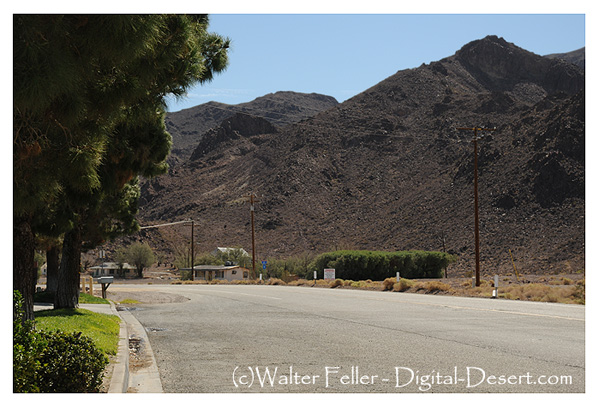
The history of Newberry Springs begins with water. Long before the community had its present name, the springs and groundwater of the Mojave River basin made this part of the desert a stopping place, travel corridor, and place of settlement.
Native peoples knew the area as part of a larger desert homeland. The Mojave River, springs, washes, mountains, and plant communities provided water, food, materials, and routes of travel. Trails connected the river corridor with surrounding valleys, the Colorado River, the San Bernardino Mountains, and other desert regions.
Spanish exploration entered the larger Mojave River region in the eighteenth century. Later, American trappers, traders, emigrants, surveyors, soldiers, and freighters followed older Native routes across the desert. The Mojave Road became one of the important overland routes between Southern California and the Colorado River.
Camp Cady, located north of Newberry Springs along the Mojave River, east of Harvard Road in what is now the Camp Cady Wildlife Area, marked the military period of this travel corridor. Established in 1860 and reoccupied in 1866, the post helped protect travelers, mail carriers, and freight traffic crossing the Mojave Desert. Its location was chosen because water, forage, and the road came together there.
The railroad brought a new phase of settlement in the 1880s. Steam locomotives needed water, and the springs near present-day Newberry Springs made the area valuable as a railroad watering stop. A small settlement grew around the station, which went through several names before becoming known as Newberry Springs.
Ranching and farming followed. Wells tapped the underground water supply, allowing settlers to raise livestock, plant fields, and develop orchards in a desert that otherwise received little rainfall. Agriculture became one of the community's defining activities, especially alfalfa, livestock, and later pistachios.
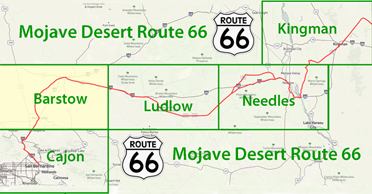
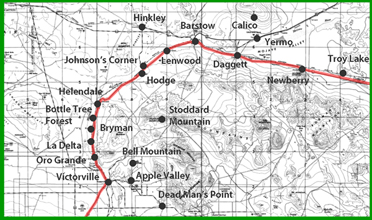
In the twentieth century, Route 66 brought travelers, cafes, garages, motels, service stations, and roadside businesses. Newberry Springs became part of the long highway story of the Mojave Desert. The Bagdad Cafe later made the community known internationally after the 1987 film of the same name.
The same groundwater that supported farming also made private lakes possible. Excavations into the water table created lakes used for homes, fishing, recreation, and competitive water skiing. Lake Dolores, begun in the 1960s by Bob Byers, became one of Southern California's pioneering water parks and remains an important part of the community's memory.
Modern Newberry Springs remains rural, spread out, and strongly tied to water, agriculture, Route 66, open space, and desert self-reliance. Its history is not the story of a town built around a courthouse square or city center. It is the story of people gathering, passing through, working, and living where dependable water made life possible in the Mojave Desert.
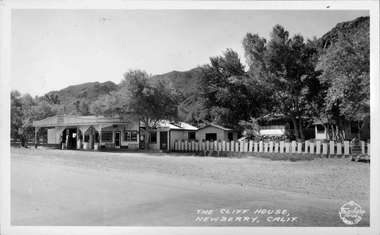
Cliff House
Newberry Springs also features natural attractions like lakes and volcanic formations, providing a scenic backdrop to the historic route. The community has often been associated with the quieter, more untouched aspects of Route 66, offering a glimpse into the less commercialized side of this historic road.