-.-
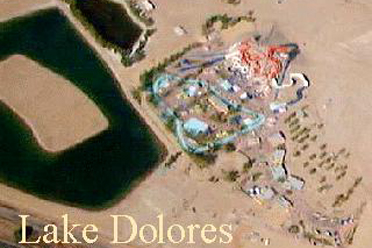
Lake Dolores Waterpark (Site)
The abandoned Lake Dolores Waterpark in Newberry Springs, California, has an interesting history. Established in the 1960s, the location was originally focused on families and named after the owner's wife, Dolores. It became well-liked for its distinctive features, such as zip lines and fast waterslides that sent riders into the lake.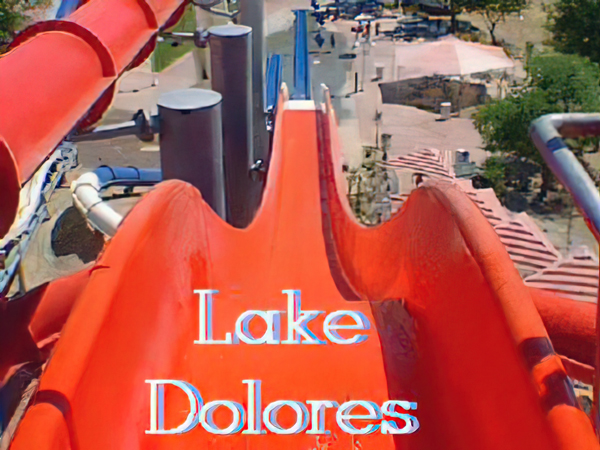
Lake Dolores Waterpark, in Newberry Springs, was one of the Mojave Desert's most memorable roadside attractions and later one of its best-known ruins. The site began as a family recreation project created by local businessman Bob Byers and named for his wife, Dolores. A basic campground and lake opened to the public in May 1962 near Interstate 15, and over time the property expanded from a swimming and camping stop into a full desert water attraction serving travelers moving between Southern California and Las Vegas.
What made Lake Dolores distinctive was not polish but character. It developed in a rough-and-ready roadside tradition, with attractions that felt improvised, daring, and unmistakably of the car-travel era. The park became known for its steep steel slides, stand-up slides that launched riders out above the water, zip-cord rides, and other lake-centered attractions that gave it a reputation very different from the more standardized corporate waterparks that came later. Over roughly twenty-five years, additions turned the site from a desert campground into what advertisements called the "Fun Spot of the Desert."
Its strongest years appear to have been in the 1970s and early 1980s, when it fit neatly into the old Interstate corridor culture of family stops, novelty attractions, and improvised desert fun. Byers himself described it in 1989 as an "old-fashioned swimming hole," which captures the place better than any modern label. But that same homespun quality also marked its limits. By the late 1980s the original operation had lost momentum and could not hold its position against newer and more elaborate leisure attractions.
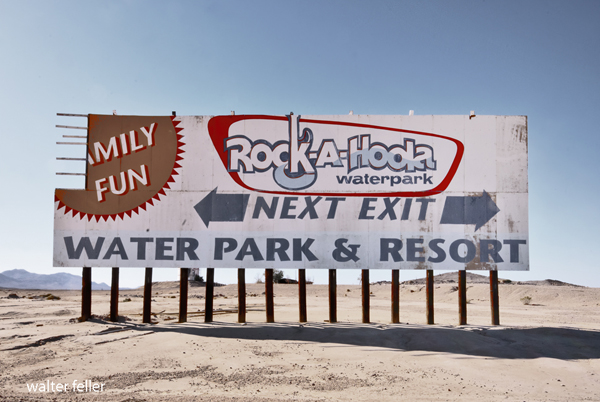
The property's most ambitious revival came with the Rock-A-Hoola relaunch. After major renovation, the park reopened on July 4, 1998, under a 1950s rock-and-roll theme, with newer fiberglass slides and a more heavily branded image. For a moment, Lake Dolores seemed poised to reinvent itself for a new era. But the revival was short-lived. A catastrophic 1999 after-hours slide accident involving an employee led to litigation, and a California appellate decision later upheld a $4.4 million judgment tied to that incident. The park filed for Chapter 11 bankruptcy in February 2000, then shifted into Chapter 7 liquidation later that year.
There was one final attempt. After the property changed hands, it reopened in May 2002 as Discovery Waterpark following another renovation. That effort never restored lasting stability. The park operated only on weekends in 2002 and 2003, then only intermittently in the summer of 2004 before closing for good. In that sense, the history of Lake Dolores is not a single rise and fall but a sequence of desert reinventions: family lake, improvised waterpark, themed revival, last-ditch relaunch, and then abandonment.
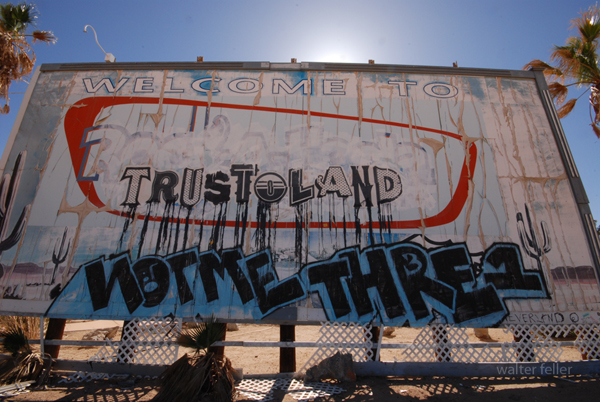
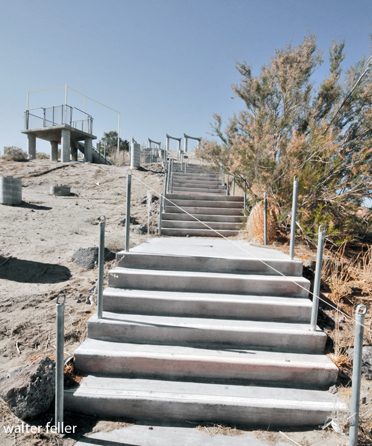
Since closure, the site has taken on a second life as a ruin. Empty pools, stripped slide supports, faded signs, and graffiti-covered structures turned it into a landmark of desert decay. Urban explorers began circulating images of the property online, and skateboarders later helped make the place part of a different cultural geography altogether. SFGATE reports that the abandoned park became a stop for skaters after the closing years, with the 2008 Rob & Big visit helping publicize it and later skate films reinforcing its afterlife as a subcultural landscape rather than a family destination.
Historically, Lake Dolores matters because it captures a very specific Mojave pattern: roadside ambition built on automobile traffic, informal recreation, spectacle in the desert, repeated attempts at reinvention, and eventual decline under the weight of cost, liability, and changing leisure culture. It was never merely a waterpark. It was also a piece of Interstate-era desert enterprise, and its ruins still stand as evidence of how that world could be both inventive and fragile.

1998
2013