-.-
Mojave River Fan
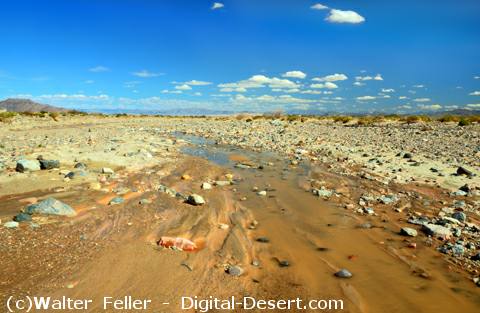
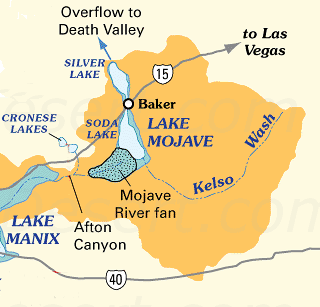
The Mojave River Fan is a large depositional landform within the ancestral Mojave River system, formed by the accumulation of sediment transported from upstream basins. It represents a clastic wedge composed of sand, gravel, and finer materials spread across a broad area of the desert.
GEOGRAPHIC SETTING
The fan is located downstream of Afton Canyon, where the Mojave River emerges from a confined bedrock channel into a more open, low gradient basin. As the flow exits the canyon, it loses velocity and begins to deposit its sediment load, forming an expanding fan shaped deposit.FORMATION AND COMPOSITION
The Mojave River Fan is composed of clastic material derived from the erosion of upstream mountain ranges and basin sediments. These materials were transported by high energy flows through Afton Canyon and deposited as the river spread out across the desert floor.The fan likely developed as a wedge shaped body of sediment, with coarser materials deposited closer to the canyon outlet and finer sediments extending farther outward.
DEVELOPMENT HISTORY
The formation of the Mojave River Fan may be closely linked to the initial carving of Afton Canyon. During this period, large volumes of sediment would have been released from the breaching or erosion of upstream barriers, including those associated with Lake Manix.As water and sediment flowed through the newly formed canyon, rapid deposition would have occurred at its outlet, building the fan over time. Continued episodes of flooding and sediment transport would have expanded and reworked the fan surface.
HYDROLOGIC ROLE
The fan influenced the downstream movement of water by dispersing flow across a wide area. Instead of a single confined channel, water spread into multiple distributary paths, reducing flow velocity and promoting further sediment deposition.This process helped regulate the transfer of water into downstream basins, including the Cronese Basin and the Lake Mojave system.
SIGNIFICANCE
The Mojave River Fan records a major phase of sediment transport and landscape adjustment within the Mojave River system. Its formation reflects the interaction between tectonic events, erosional processes, and hydrologic activity.As a preserved depositional feature, it provides insight into the scale of past flooding events and the evolution of the river as it transitioned from a confined canyon system to a distributary desert flow.
Cronese Basin
< Previous <> Next >
clickable map