Mojave Desert Ecozone: Nature Trail
Cap Rock Nature Trail
Elevation gain: about 20 feet
Surface: hard-packed dirt and sand
Features: interpretive signs, benches, picnic tables, and vault toilet
Location: Cap Rock parking area at the junction of Park Boulevard and Keys View Road. The trailhead is on Keys View Road, just south of the junction.
The trail is generally easy, but it is not paved. Loose or deeper sand and a few low boulder overhangs can make some sections difficult for wheelchairs and other mobility devices.
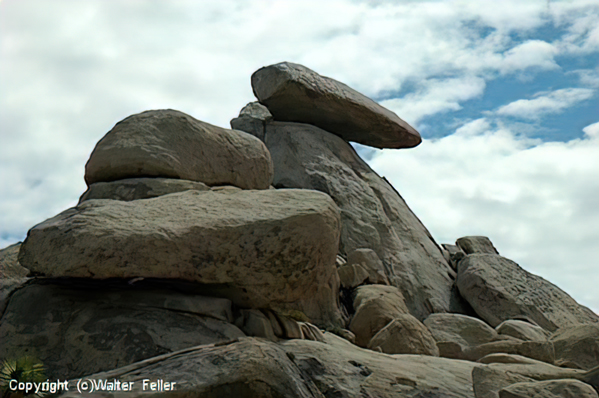
Cap Rock Nature Trail is a short walk through the Mojave Desert portion of Joshua Tree National Park. It passes Joshua trees, Mojave yuccas, junipers, desert shrubs, and the weathered granite boulder piles that make this part of the park so distinctive.
The Mojave is a high desert. Its elevation brings hot, dry summers, but also cold winter nights and occasional snow. Rain is scarce and unpredictable. Plants and animals survive by conserving water, avoiding the worst heat, using sheltered places, or waiting for favorable conditions.
The trail's numbered stops explain some of those practical ways of desert life.
Trail information
0.4-mile loop
30 to 45 minutes
About 20 feet of elevation gain
Hard-packed dirt and sand surface
Interpretive signs and benches
Vault toilet and picnic tables near the parking area
The Cap Rock parking area is at the junction of Park Boulevard and Keys View Road. The trailhead is on Keys View Road, just south of the junction.
The path is generally easy, but it is not paved. Loose or deeper sand and a few low boulder overhangs can make portions difficult for wheelchairs or other mobility devices.
the land of little rain", is located between the higher, colder evaporate adaptations, many plants and animals next >
Nature Trail
.4 mile loop - Paved, wheelchair accessible. Begins in Cap Rock parking area at junction of Park Blvd. and Keys View Road.Peachthorn
Many Mojave Desert plants, such as this peachthorn, Lycium cooperi, may look dead ...Desert Almond
The leaf structures of most desert perennials are modified in some way to ...Mormon Tea
Mormon tea, Ephedra spp., has gone a step further. It has dispensed with ...Microhabitats
In areas around large boulder piles, vegetation is thicker and more diverse ...Galleta Grass
In the more arid flats, wide spacing is a solution to survival. This reduces ...Mojave Yucca
Most desert insects make use of plants. Sometimes the plants also ...Lichens
On boulders may live some colorful lichens, a "marriage" of algae and ...Wanted - Dead or Alive
The Joshua tree, Yucca brevifolia, living or dead, has a large role in the ...Joshua Tree with Offshoots
Joshua trees can reproduce in two ways. Seeds produce tender seedlings that ...Cactus
Unlike the Sonoran Desert, the cacti species found here, such as silver cholla, ...Juniper
The basic adaptation of desert perennials is the ability of their roots to ...Annuals
Annual wildflowers are drought escapers, able to wait out years of drought as ...Designed for Desert Living
Life in the desert is possible as long as all residents adjust to ...
Gram Parsons