Reptiles in Joshua Tree
Reptiles are closely associated with the desert in many peoples minds. This seems to be based
partly on reality and partly on perception. Reptiles do form a very conspicuous part of the
vertebrate
fauna
of warm deserts such as are found in Joshua Tree National Park. There may not
be any larger number of reptiles in the desert than in neighboring less arid areas, but the
lack of dense vegetation on the desert certainly makes them easier to see. Many of the
lizards are especially conspicuous as they bask atop boulders or other elevated sites.
Reptiles are better adapted to life in
arid
lands than are most birds and mammals. Being
ectothermic
(obtaining their body heat solely from the external
environment),
reptiles have a much lower cost of
living than do
birds
and
mammals
which produce their own body heat using a great deal of food in the
metabolic process. In desert lands, where primary productivity (plant growth) is low, reptiles are
thus able to maintain larger populations on the limited food supplies than is possible for birds and mammals.
The most limiting factor for life on the desert is drinking water. Reptiles are pre-adapted to
such arid conditions. They do not need water for cooling because they do not perspire or pant. They just
crawl into a cool hole in the heat of the day. Their scales also greatly retard water loss through the
skin. In addition, reptiles do not need water for excretion; they produce no urine. Their nitrogenous
wastes are excreted as a solid: uric acid. Reptiles can get all the water they need from the food they
eat. Although desert tortoises and probably most other reptiles will drink water when it appears after
summer rains, many lizards and snakes probably go their whole lives without a drink of water.
The reptiles of Joshua Tree National Park include one tortoise, 18 lizards, and 25 varieties of snakes.
Lizards in Joshua Tree National Park
Lizard list includes common and scientific names, habitat notes and links to photos and life history accounts.Snakes in Joshua Tree National Park
Snake list includes common and scientific names, habitat notes and links to photos and life history accounts.Tortoise
Mojave Desert TortoiseGopherus agassizii agassizii
Creosote bush lowlands in the Mojave Desert; Rocky hillsides and bajadas in the Colorado Desert (threatened)
Source - NPS
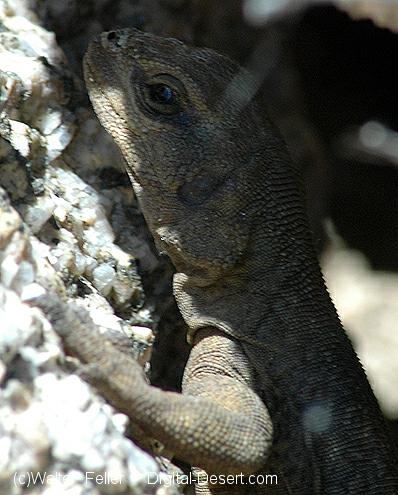
Chuckwalla
Mojave Desert Reptiles
-
Reptiles are cold-blooded and don't have a ...