Joshua Tree National Park - Flora & Fauna
Joshua Tree Wildlife
The broad vistas of desert landscapes can distract the visitor's eyes from the small and quick near at hand. Despite the impression that the desert is lifeless, many animals make their homes in deserts. Birds, lizards, and ground squirrels are most likely to be seen because they are largely active during the day. However, it is at night that desert animals come out to roam. Mostly nocturnal animals include: snakes, bighorn sheep, kangaroo rats, coyotes, and black-tailed jack rabbits. Dusk and dawn are good times for viewing many kinds of animals, both those just going to bed and those just getting up.Animals that thrive in desert environments often have special adaptations for dealing with limited water and high summer temperatures. One does not walk far in the desert without seeing a multitude of burrow openings. The smaller mammals and all reptiles take refuge from the heat underground. Reptiles are physiologically adapted to getting along with much less water than mammals and birds can fly to water. And desert mammals make more efficient use of their bodies' water supply than does the human body. Nevertheless, the springs and seeps in the park are necessary to the survival of many animals.
Most of the reptiles and many small rodents and insects go into an inactive state of hibernation during the winter. However, winter is the time of greatest bird concentrations in the park, because of the presence of many migrant species.
Joshua Tree is abundant in wildlife. Dependant on the seasons, weather conditions or time of day or night a large variety of wildlife may be seen throughout the various habits within the park. The following is only a partial list.
-
Jackrabbit
American Kestrel
Raven
Ladder-backed woodpecker
Red-tailed hawk
Great-horned owl
Horned lizard
Desert Cottontail
Coyote
Tarantula
Bobcat
Golden Eagle
Roadrunner
Mojave Rattlesnake
Tortoise
Reptiles
Reptiles are closely associated with the desert in many peoples minds. This seems to be based partly on ...Mammals
The chief obstacles to survival in the desert are lack of water, shortage of food, and extreme temperatures. Mammals, including ...Birds
With over 250 kinds of birds recorded from Joshua Tree National Park, it is understandable that the park affords a ...Notes:
Sidewinder
This small rattlesnake moves by looping along sideways in j-shaped curves - an efficient way to travel across the sand dunes and washes it inhabits. It waits in ambush for small rodents that it detects by sight or body temperature.
Western screech-owl
This owl lives in natural holes in trees or cliffs. Screech-owls eat insects, small mammals, birds and lizards. They can swoop down on prey or occasionally walk on the ground hunting for food.
Kangaroo rat
This small, mostly nocturnal mammal eats seeds, leaves, stems, buds, some fruit, and insects. Kangaroo rats use their burrows to cache and store food.
Yucca night lizard
This narrow lizard may live its entire life under the protective bark of a decaying Joshua tree. It fits in small crevices, where it feeds on ants and termites attracted by the host tree's shelter from predators and climate.
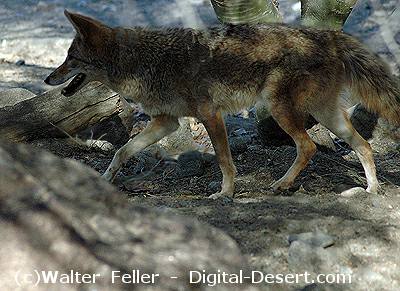
The coyote stalks his tasty prey
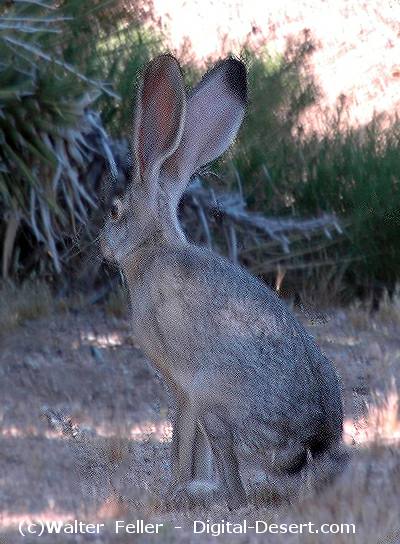
the jackrabbit hears the slightest shuffle ...
and runs away.