Racetrack Playa
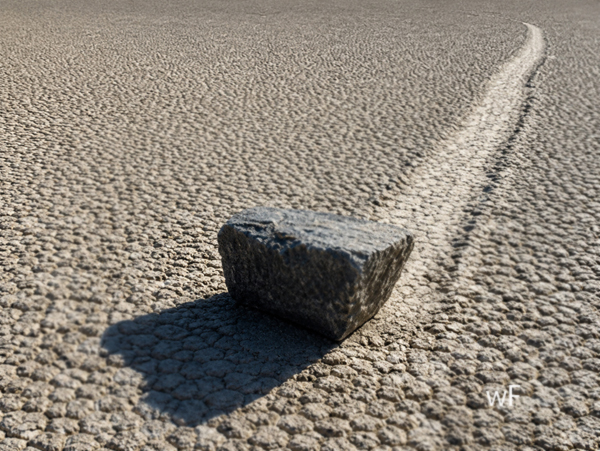
Few places in the Mojave Desert inspire as much curiosity as Racetrack Playa. Hidden deep within the northern reaches of Death Valley National Park, this broad, nearly level dry lake is famous for one of nature's most enduring mysteries: rocks that appear to move across its surface, leaving long trails behind them. For decades, visitors, scientists, and photographers puzzled over how stones weighing hundreds of pounds could seemingly slide across the cracked clay without anyone witnessing the event.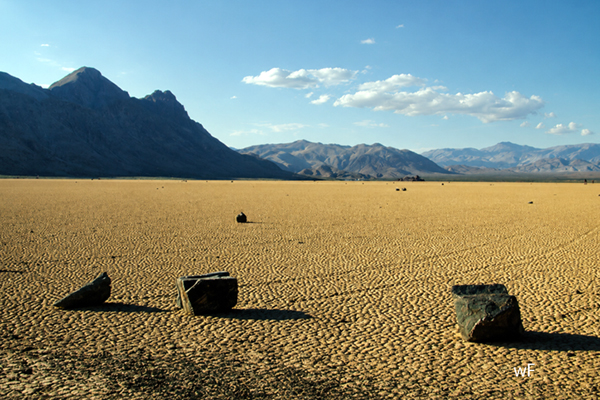
The mystery captured imaginations around the world. Explanations ranged from powerful winds and earthquakes to magnetic forces, pranksters, and even extraterrestrials. The real answer, however, proved to be even more remarkable. Under a rare combination of rain, freezing temperatures, thin sheets of floating ice, and light winds, the stones slowly glide across the muddy surface before the desert sun dries the playa once again.
Although the sliding rocks have made Racetrack Playa world famous, they are only one part of a much larger story. The playa is the remnant of an ancient lake that occupied this basin during the cooler and wetter climates of the Ice Age. Its remarkable flatness, patterned mud surface, surrounding mountain ranges, and harsh desert environment combine to create one of the most unusual landscapes in North America.
Racetrack Playa lies between the Cottonwood Mountains on the east and the Last Chance Range on the west at an elevation of about 3,700 feet. The playa stretches nearly three miles long and about one mile wide. Its surface is so level that slight differences in elevation, often measured in inches, determine where shallow water collects after winter storms.
Reaching the Racetrack requires planning and patience. More than twenty miles of rough dirt road separate it from the nearest paved highway. Sharp rocks frequently puncture tires, and services are nonexistent. The difficult drive has helped preserve the area's solitude, rewarding prepared visitors with one of the quietest and least disturbed landscapes in Death Valley National Park.
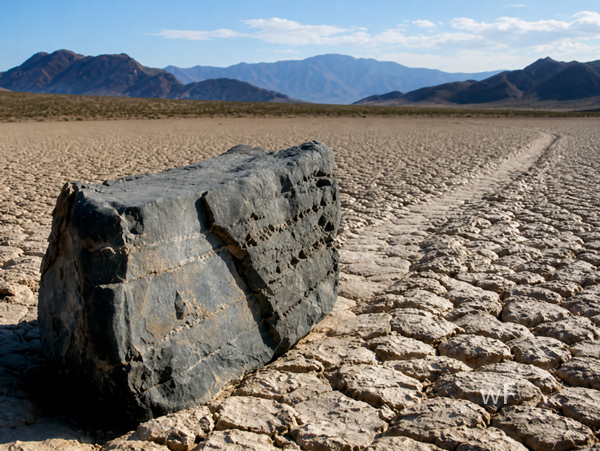
The playa is constantly changing. Winter storms occasionally flood the basin with a shallow layer of water. As the water evaporates beneath the desert sun, the clay shrinks and cracks into a mosaic of polygons. Wind smooths the surface, while each cycle of flooding and drying erases old rock trails and prepares the playa for the next rare movement.
For generations, no one actually witnessed the stones moving. In 2013, researchers from the Slithering Stones Research Initiative finally documented the process. They found that thin sheets of floating ice formed during cold winter nights. As the morning sun broke the ice into large panels, gentle winds slowly pushed the floating ice and the rocks resting within it across the soft mud. The movement was surprisingly slow, often only a few feet per minute, quiet enough that it could easily occur without anyone noticing.
Rather than diminishing the mystery, the discovery added another layer of appreciation for this remarkable place. It showed that extraordinary events can result from ordinary natural forces acting together under just the right conditions.
Today, Racetrack Playa is recognized as one of the great natural wonders of Death Valley National Park. Visitors come not only to see the famous sliding stones, but also to experience a landscape shaped by ancient lakes, desert weather, and geologic time. Standing on the broad, silent playa, surrounded by distant mountains and an immense desert sky, it becomes clear that the Racetrack is much more than a geological curiosity. It is a place where patience, observation, and the slow work of nature reveal one of the Mojave Desert's most memorable landscapes.