East -- Rock Springs - Fort Mojave
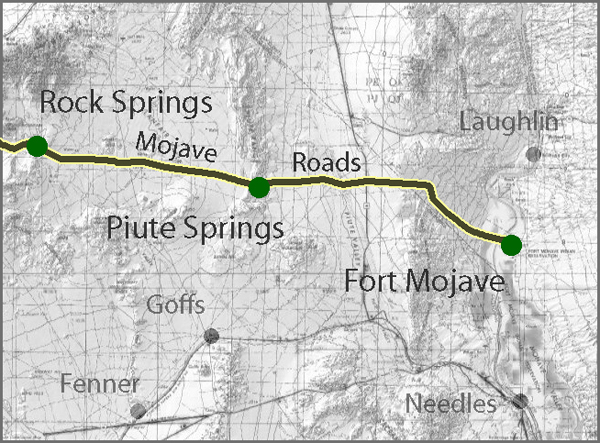
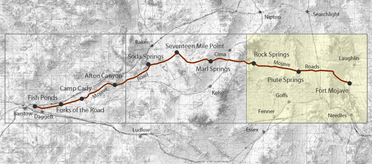
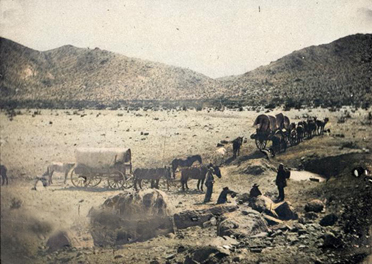
The eastern Mojave Road ran from Rock Springs across the dry mountain-and-valley country of the eastern Mojave to Piute Springs and the Colorado River at Fort Mojave. It followed an older network of Native trade routes, where travel depended on known springs, seasonal water, and the ability to move people and animals between widely separated sources of water.
Rock Springs was one of those necessary stops, but it was never dependable. In 1853, Lieutenant Amiel W. Whipple's survey party found a small spring oozing from a rocky ravine. Later travelers sometimes found it dry or too weak for their needs. Government Holes, wells about a mile west of the spring, helped supply water when Rock Springs failed. The Army established Camp Rock Spring in 1866 to guard the road and assist mail traffic between Camp Cady and Fort Mojave. The post was difficult to supply, had little forage, and suffered from its poor water source. It was abandoned in 1868.
East of Rock Springs, the route crossed broad gravelly valleys, rocky washes, and low mountain passes toward Piute Springs. The land is shaped by faulting, flash floods, and erosion from the surrounding ranges. Most of the country is dry desert scrub: creosote bush, yucca, cholla, Joshua trees, grasses, and scattered shrubs. Water changes everything.
At Piute Springs, groundwater from the Lanfair Valley aquifer reaches the surface near Piute Gorge. The spring feeds Piute Creek, creating a narrow green corridor of willows, cottonwoods, rushes, and other riparian plants. Red-spotted toads and other desert wildlife live near the water. This small oasis made Piute Springs one of the most important stops on the road.
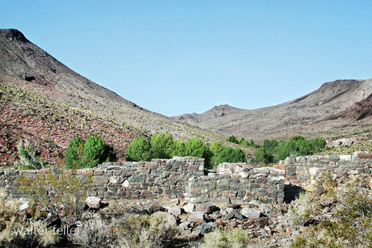
Fort Piute was built near the spring in 1867 by soldiers of Company D, 9th U.S. Infantry. Its stone walls and gun ports protected the spring, mail riders, and travelers using the road. The post was occupied only briefly, but the ruins remain as evidence of the military importance of water in the desert.
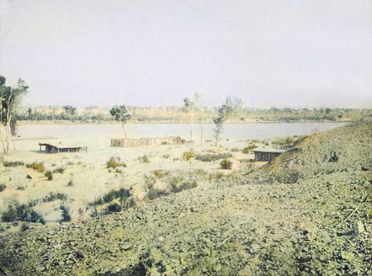
The road ended at Fort Mojave on the Colorado River, established in 1859. The fort was the eastern military anchor of the route and a supply point for troops, mail, travelers, and mining districts in Arizona. By the 1870s, river steamboats and railroads reduced the old road's importance, but its springs, camps, and river crossing remain central to the history of the Mojave.