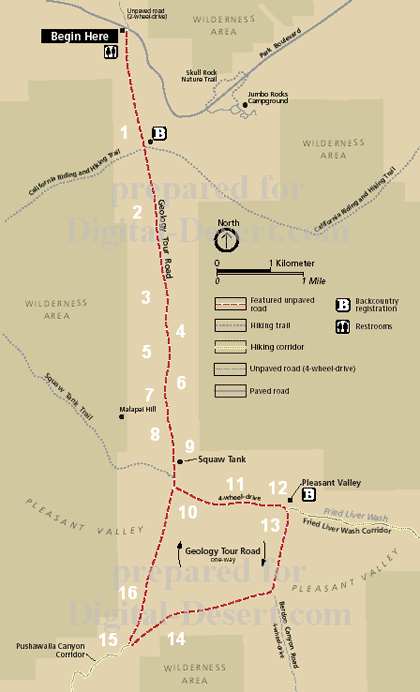
Stop #5
Rock Piles
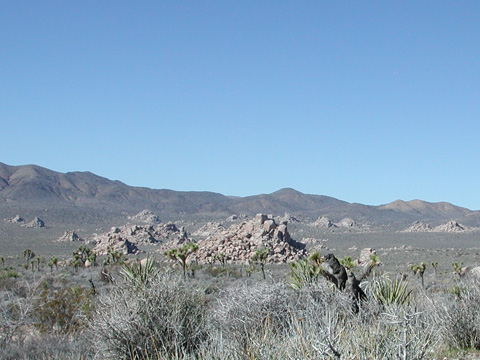
The monzogranite forming these rock piles was once a molten mass which was forced upward, or intruded, into an older layer of Pinto Gneiss. The molten mass (magma), cooled about 15 miles below the surface and crystalized to form solid rock. The overlying gneiss has been stripped away by erosion over the years, exposing the monzogranite outcrops. Within the monzogranite, areas with wider spaced joint cracks are more resistant to erosion, and weather more slowly than the cracks that are closer together. This type of wear results in the high rock piles called inselbergs. In some piles the joint crack systems are well defined and obvious, while in other piles smaller boulders have fallen into disordered piles obscuring the underlying joint pattern.
PREVIOUS - NEXT
| GLOSSARY | > erosion, gneiss, magma |
Also see:
Granitic Rocks and Associated Landforms
Weathering and erosion in arid regions underlain by granitic bedrock produce unique characteristic landforms. ...