Lizards
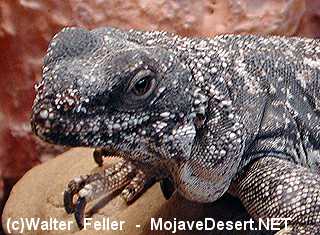
Lizards are reptiles of the order Squamata, closely related to snakes. They are cold-blooded, relatively long-bodied with usually two pairs of legs and a tapering tail. They also have external ear openings and movable eyelids. Desert species range in adult length from 6-10 centimeters to nearly a meter (chuckwalla).Chuckwalla
Sauromalus aterAreas of rocks and boulders on alluvial fans and in canyons; throughout Death Valley up to 5000 ft.
Rocky outcrops, rocky canyons, rocky slopes, and alluvial fans (special concern)
Mojave Fringe-toed lizard
Uma scopariaIbex Dunes; may dive into loose sand when frightened.
Wind-blown sand of dry lake beds, washes, and sand dunes (special concern)
Desert iguana
Dipsosaurus dorsalis dorsalisIn hummocks of mesquite and creosote bush in areas of fine, sandy soil; up to 3000 feet; very heat tolerant.
Most common on sandy flats, dunes, and washes but also along rocky washes and on alluvial fans (common)
Zebra-tailed lizard
Callisaurus draconidesOpen areas in desert; near dunes and washes; on roads in morning; runs at great speeed with tail curved forward.
Open areas of sandy and gravelly desert flats, sandy washes, and alluvial fans (common)
Black Collared lizard
Crotaphytus bicinctoresCollared lizard
Crotaphytus collaris
Areas of boulders for basking and open areas for hunting; from 1000 to 5000 feet.
Rocky slopes, rock outcrops of gullies, and boulder-strewn alluvial fans (common)
Long-nosed Leopard lizard
Gambelia wislizenii wislizeniiValley floor to 3600 feet on alluvial fans, in canyons and washes with scattered vegetation.
Open sandy or gravelly flats and plains; less commonly in rocky areas (common)
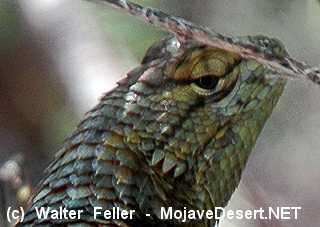
Desert Spiny lizard
Sceloporus magister magisterYellow-backed Spiny Lizard
Sceloporus magister uniformis
Rocky slopes and canyons around vegetation from 3500 to 7000 feet; a good climber.
Most abundant in the Joshua tree woodland; Occasionally on rock outcrops (common)
Whiptail lizard
Cnemidophorus tigris tigrisGreat Basin Whiptail Lizard
Aspidoscelis tigris tigris
Sandy areas with sparce vegetation; rocky areas of upper washes; from below sea level to 5000 feet.
Most common in areas where vegetation is densest (common)
Side-blotched lizard
Uta stansburianaDesert Side-blotched lizard
Uta stansburiana stejnegeri
Most commonly seen lizard in park; throughout park below 5000 feet in gravelly areas; active on warm days all year. Open, sunny ground Usually some rocks and loose soil are present (common)
Horned lizard
Phrynosoma platyrhinosSouthern Desert Horned Lizard
Phrynosoma platyrhinos calidiarum
Sandy flats and canyon bottoms (common)
Western Banded gecko
Coleonyx variegatus variegatusNocturnal; rocky areas, creosote bush flats; valley floor to 3500 feet.
Most common in sandy flats; occasional in canyons and rocky areas (common)
Western Fence lizard
Sceloporus occidentalisThe western fence lizard is probably California's most common reptile. This adaptable lizard is found throughout California except in true desert, where it is restricted to riparian and high mountain locations. Elevation sea level to 3250 m (10,000 ft)
-
Also see: Related Pages
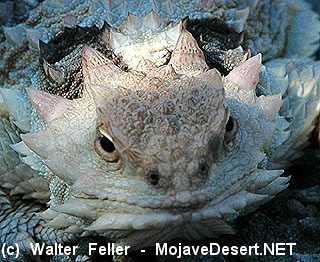
Desert Horned Lizard
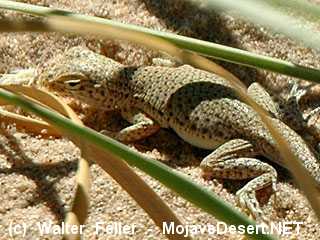
Mojave Fringe-toed Lizard
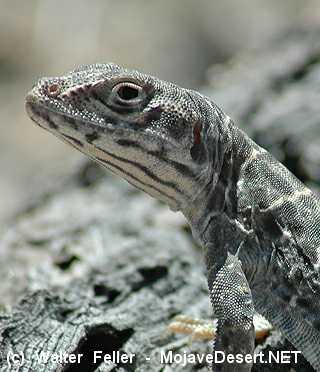
Long-nosed Leopard Lizard
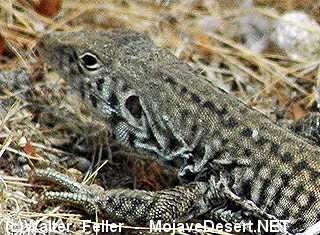
Whiptail Lizard
Spiny Lizard
Chuckwalla