Bodie, Ghost Town
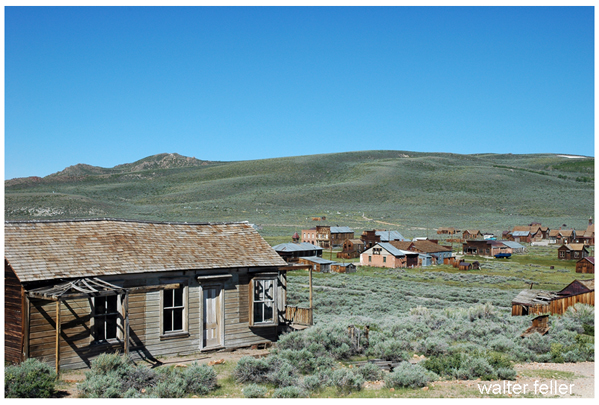
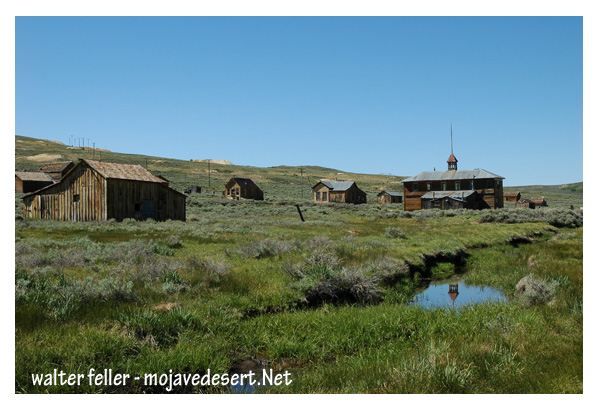
Bodie State Historic Park is a genuine California gold-mining ghost town. Visitors can walk down the deserted streets of a town that once had a population of nearly 10,000 people. The town is named for Waterman S. Body (William Bodey), who had discovered small amounts of gold in hills north of Mono Lake. In 1875, a mine cave-in revealed pay dirt, which led to purchase of the mine by the Standard Company in 1877. People flocked to Bodie and transformed it from a town of a few dozen to a boomtown.
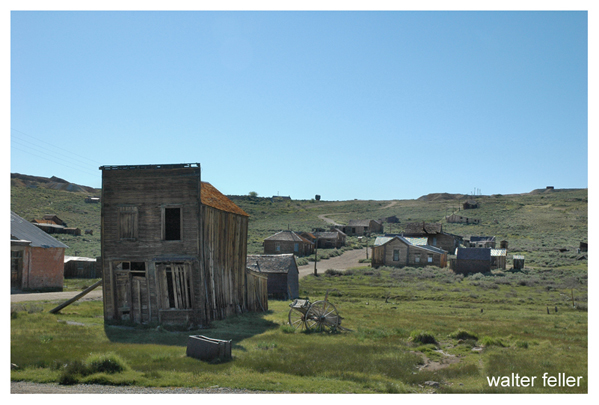
Only a small part of the town survives, preserved in a state of "arrested decay." Interiors remain as they were left and stocked with goods. Designated as a National Historic Site and a State Historic Park in 1962, the remains of Bodie are being preserved in a state of "arrested decay". Today this once thriving mining camp is visited by tourists, howling winds and an occasional ghost.
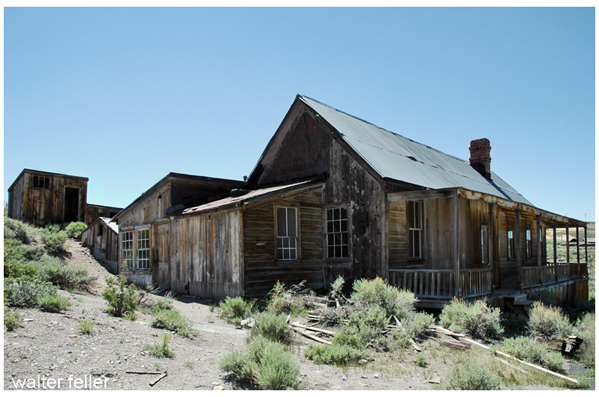 Hoover House
The wild rush to the high desert country began as placer mining declined along the western slopes of the Sierra Nevada. In 1859 W.S. Body (Bodey) and others came upon what was to be one of the richest gold discoveries the West had ever known. The ore mined in the Bodie hills accounted for more than 32 million dollars in gold and 6-7 million in silver.
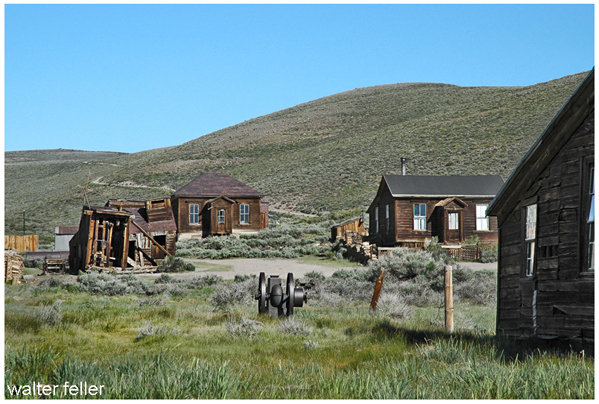
The spelling of the town's name was changed to Bodie in the early years to avoid the name being mispronounced. Bodie himself was not able to enjoy the fruits of his discovery as he froze to death the first winter while returning with supplies.
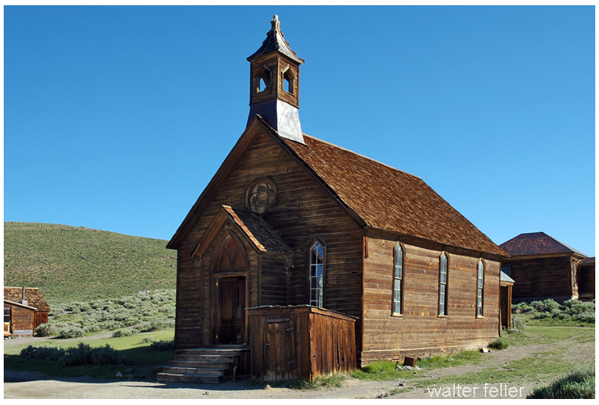
Mining was slow during the 1860's and early 1870's as nearby mines in Aurora, Nevada, were producing well. About 1875, a rich strike of gold ore was discovered after a mine cave-in. The rush was on! Even the severe winter of 1877-78 did not deter the miners. Mining companies formed and stocks jumped to fifty dollars a share. Stamp mills crushed ore from the mines around the clock
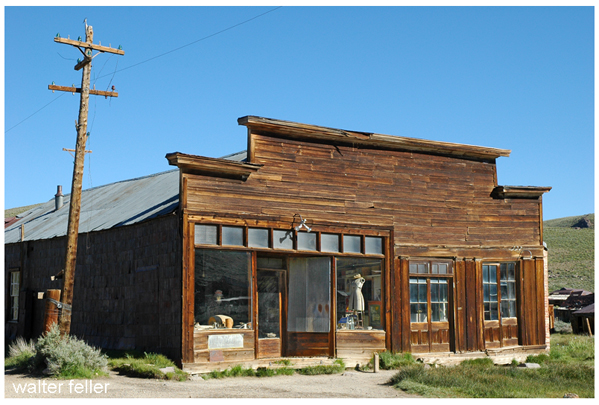
Gold fever spread like wildfire amongst all those who wanted to "get rich quick". The cry, "Good-bye God, I'm going to Bodie" was only half jest. During its heyday (1877-1881) Bodie rose to a population of approximately 10,000 and acquired over sixty saloons and dance halls. Bodie became known as the "most lawless, wildest and toughest mining camp the far west has ever known". The "Bad Man from Bodie" walked the seldom quiet street, and killings occurred with regularity.
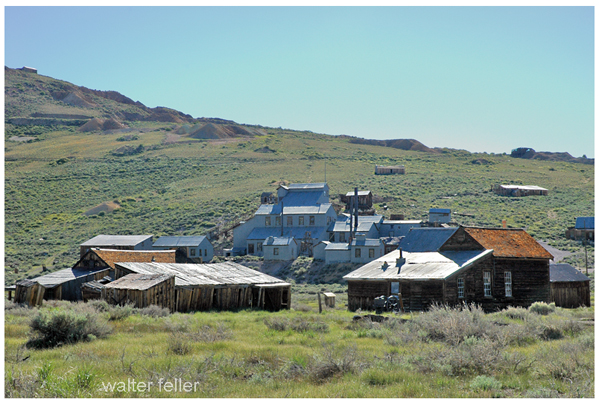
Other businesses profited during Bodie's Boom. A steady supply of wood was needed to power the mills and warm the houses. The Chinese provided this by the "mule load" until the Bodie-Benton Railroad was completed to transport heavy loads of lumber and firewood. A room, with meals, was between $1.00 - $2.00 a day, general stores and saloons provided the necessities of life, and the oldest profession of the mining camps was practiced by the women of Bonanza Street. Yes siree, Bodie had just about all a man could ask for.
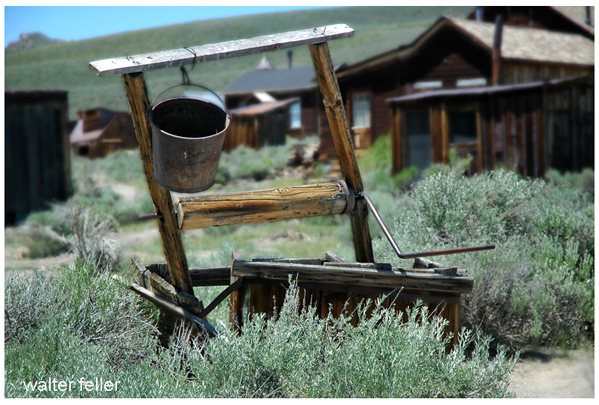
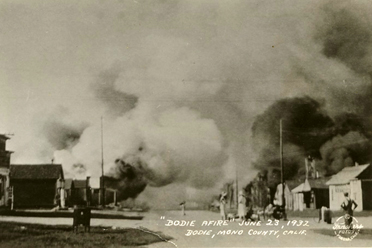
Bodie's heyday was short-lived. After 1881, mining diminished and homes and businesses were abandoned. The town was threatened by a disastrous fire in 1892, when many homes and buildings were destroyed. The advent of electrical power to run the stamp mill and the introduction of the cyanide process for working the mill tailings aroused interest once again; however this rise was also short-lived. While playing with matches, 2½ year-old "Bodie Bill" was blamed for starting the 1932 fire which destroyed all but 5-10 percent of the town.
Source:
California State Parks
Historic Photos
History of Bodie
Bad Man from Bodie
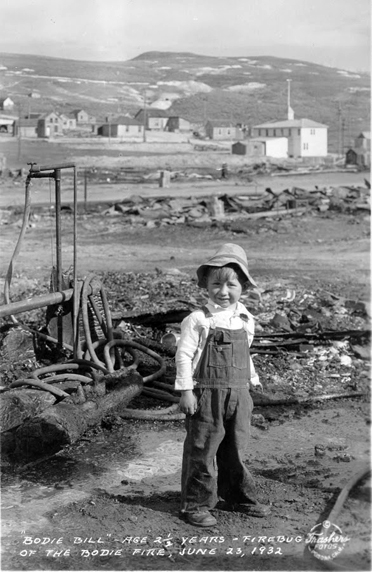
William Brewster “Bodie Bill” Godward
Son of William T. Godward and Delcie Pearl Millslagle. “Bill” was the 2 year child old responsible for the 1932 fire in Bodie, California that destroyed 70% of the town. It is said that he was playing with matches behind the Old Sawdust Corner saloon and ignited the building.
He married Dian Dovereaux on Sept. 9, 1949 in Sandusky, Ohio. He worked as an Engineman Third Class in the US Coast Guard.
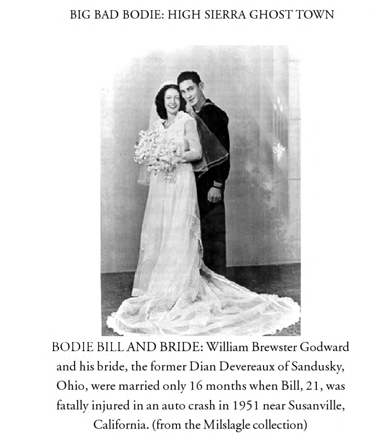
Bill and his new bride were on their delayed honeymoon when they were involved in a single-car accident on the US 395 near Susanville, California. Bill died from a broken back and injuries he sustained from the accident.
(Findagrave.com)
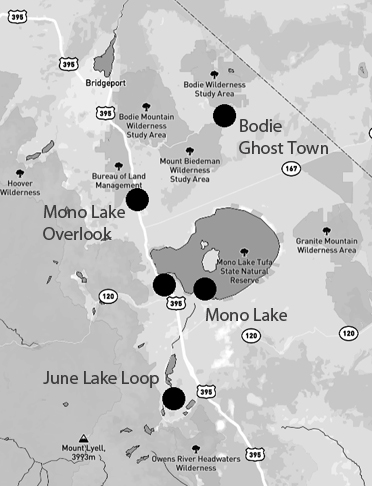
Bodie ghost town on the eastern slope of the Sierra Nevada mountain range in Mono County, California, United States, about 75 miles (120 km) southeast of Lake Tahoe, at an elevation of 8369 feet (2550 m).
Gold was discovered in 1859 by prospector Wakeman S. Bodey, who the town was named after. Bodey died in November making a supply trip and becoming stranded in a blizzard.
In 1876, the Standard Company discovered a profitable deposit of gold transformed Bodie from an isolated mining camp of few prospectors to a boomtown.
Bodie was famous for its lawlessness. At its peak in 1880, it had 60 saloons. Murders, brawls, and stagecoach holdups were constant occurrences. Legend has it that a little girl, upon finding out that her family was moving there, prayed one night, "Goodbye God, I am going to Bodie."
Gold bullion from the town's nine stamp mills was shipped to Carson City, Nevada accompanied by armed guards. Once the bullion reached Carson City, it was sent by rail to the San Francisco mint.
In 1893 the Standard Company built its own hydroelectric plant, located approximately 13 miles away on Green Creek, above Bridgeport, California. The plant developed a maximum of 130 horsepower and 6,600 volts alternating current to power the company's 20-stamp mill. This pioneering installation was one of the first times an electric motor was operated over long-distance power lines.
Bodie's Chinatown, had several hundred Chinese residents at one point. The Chinese workers earned their incomes mainly from selling vegetables, operating laundries, and cutting, hauling, and selling firewood.
Winter temperatures in Bodie would often fall well below zero, and winds reaching nearly 100 miles per hour would sweep across the high open valley. Large amounts of firewood were needed to keep residents warm through the long winters. Many ill-prepared towns folk perished during the extremely harsh winter of 1878-1879.
Today Bodie is an authentic, intact ghost town. Bodie is currently a State Historic Park. Visitors walk the deserted streets of a town that once had a population between 7,000 and 8,000 people. Interiors remain as they were left and in some cases stocked with goods. The remains of Bodie are being preserved in a state of arrested decay
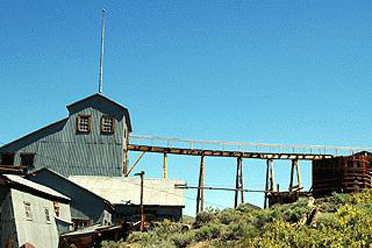
The Standard Mill is the largest and most well preserved examples of an ore processing plant used during the period. For an explanation of how a stamp mill operated, see the Stamp Mill in detail page.
Bodie
Location. The Bodie district is in eastern Mono County about 18 miles southeast of Bridgeport. History. Gold was discovered here in 1859 by William S. Bodey, and the district was organized in 1860, but activity was minor until 1872, when rich ore was discovered. From 1876 to about 1884, a rush was on with much production from rich but shallow deposits. By 1888, the district had yielded more than $18 million, but, thereafter until World War II, mining was confined to lower-grade deposits and reworking of old tailings.
From 1881 until 1914 timber was delivered to the mines by a narrow-gauge railroad from the east side of Mono Lake. Bodie was one of the first mining camps to use electricity (1893). Most of the important mines came under the control of J. S. Cain in 1915. The town became a noted tourist attraction in the 1940s, although many of the buildings had been destroyed by fire in 1932. The remaining portion be came a state park in 1961. Studies have been made to determine the feasibility of working the entire Standard Hill area as a large open-pit operation. Bodie is the most productive district in the Basin Ranges, with a total production estimated to be valued at slightly more than $30 million. The district also has yielded more than 1 million ounces of silver.
Geology and Ore Deposits. A number of steep, north-trending silicified and brecciated zones and narrow quartz veins occur in Tertiary andesite. They are especially common in the Standard mine area, where the mineralized zone is as much as 1000 feet wide. Most of these veins and brecciated zones pinch out at depths of around 1000 feet, but some in the central portion of the di.strict are reported to be deeper. The deepest shaft is 1 200 feet. Most of the values have been recovered from above 500 feet. The ore contains finely disseminated free gold in both the quartz and silicified breccia with little or no sulfides. In only one vein, the Addonda Oro of the Southern Consolidated group, is pyrite abundant. The high-grade ore recovered in the early days from shallow workings yielded from $100 to $300 of gold and silver per ton.
Mines. Bechtel Cons. $200,000+, Bodie Tunnel $200,000-f, Bulvvar $428,000+, Mono $122,000+, Southern Cons. $1 million+. Standard Cons. $18 million+, Syndicate |1 million+.
BULLETIN 193
California Division of Mines and Geology
Sacramento, California, 1970
