|
|
Mono Lake
Mono Lake, at an elevation of 6,382 feet has held water for over 760,000 years. Of
volcanic
origins,
Mono Lake covers an area of a little over 45,000 acres and is about 160 feet at its deepest
point. The lake is too
alkaline
for fish to live, but supports an abundance of birds
living on alkali flies, which in turn live off brine shrimp, which feed on algae growing in the
water which is approximately 3 times saltier than the ocean.
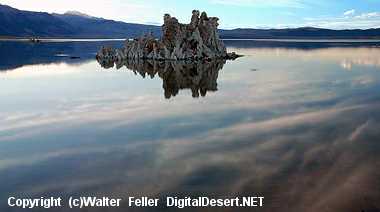
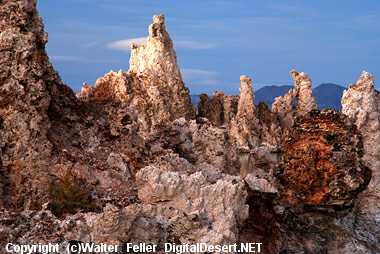
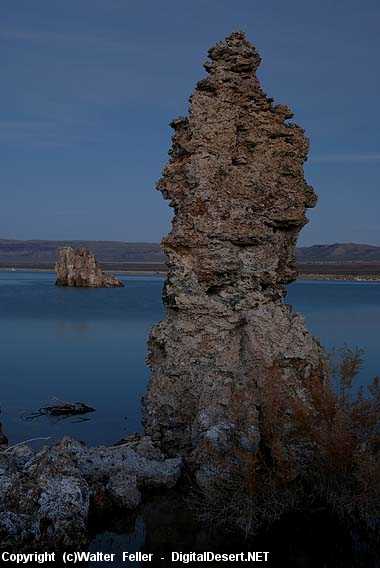
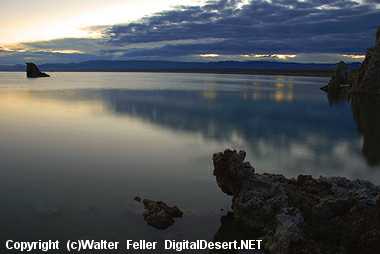
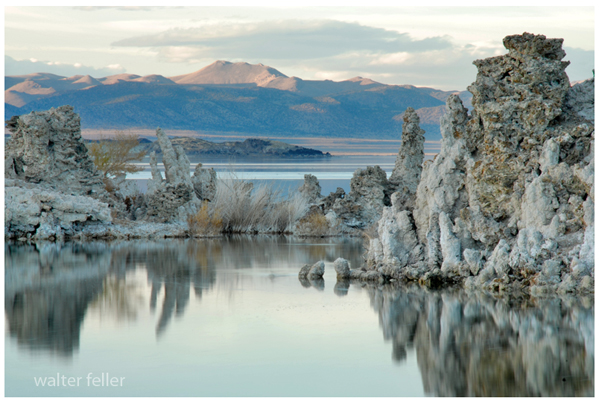
The reserve was established to preserve the spectacular "tufa
towers," calcium-carbonate spires and knobs formed
by interaction of freshwater springs and alkaline lake water.
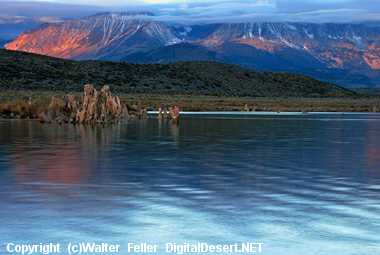
Mono Lake is a majestic body of water covering about 65 square miles. It is an ancient lake, over 1 million
years old -- one of the oldest lakes in North America. It has no outlet.
Throughout its long existence, salts and minerals have washed into the lake from
Eastern Sierra streams.
Freshwater evaporating from the lake each year has left the salts and
minerals
behind so that the lake is now about 3 times
as salty and 80 times as alkaline as the ocean.
Mono Lake Tufa State Reserve
Mono Lake – and Mono Lake Tufa State Reserve, near the town of Lee Vining in Mono County - is also a vital stop on the
Pacific Flyway. Migrating eared grebes, Wilson’s phalaropes, and red-necked phalaropes are among the most common of the
nearly 100 species of birds found in the area. By mid-summer abundant alkali flies and brine shrimp provide an endless
food supply for migrating birds. Stream delta, and near-shore wetland habitat also provide good bird
habitat.
The Wilson’s phalarope is one of the hardiest travelers visiting Mono Lake. About 30,000 to 80,000 of these small
shorebirds arrive at Mono Lake in mid-summer after breeding in the northern U.S. and southern Canada. While at Mono
they molt their feathers and double their weight after several weeks. Leaving in stages in August and September during
the cover of darkness, they depart for a journey that takes them all the way to South America. The fact that these
birds fly over 3,000 non-stop miles to South America is amazing enough, but what is truly astonishing is how fast
these little birds reach their destination— an unbelievable three days!
Eared grebes, diving, duck-like birds that spend their entire life on water, arrive at Mono Lake in greater numbers
than any other species. Aerial surveys have revealed 1.5 - 1.8 million birds on the lake in the fall — comprising
a large portion of North America’s population. The grebes double, and in some cases nearly triple their weight
after gorging themselves on shrimp. Many grebes end up getting too fat to fly, and must lose weight before departing
for winter destinations on the Salton Sea and Gulf of California.
About 50,000 adult California gulls fly to Mono Lake from the coast each spring to nest, where island nesting sites
are plentiful. Approximately 90% of the California population of this species is born at Mono Lake.
Location/Directions
Highway 395, 13 miles east of
Yosemite National Park,
near the town of Lee Vining, California.
Seasons/Climate/Recommended clothing
The weather can be changeable; layered clothing is recommended.
Winter is a particularly beautiful time at Mono Lake. The crowds are gone, a quiet stillness prevails, and snow crystals
sparkle on the tufa towers.
The road to South Tufa is kept plowed, allowing year round access except immediately after large storms.
South Tufa, Old Marina, and the State Reserve boardwalk below the Mono Lake County Park are all wonderful places to
cross-country ski when snow conditions permit.
--
Facilities - Activities
Interpretive Programs
These programs are a cooperative effort of the State Reserve, U.S. Forest Service and the Mono Lake Committee. Rangers
lead tufa walks at the South Tufa area -- tours are at 1:00 pm on Saturdays and Sundays May through October.
Tours are offered 3 times daily from July 1 through Labor Day (10am, 1pm, and 6pm); and daily at 1pm in September.
Bird walks are offered at the Mono Lake County Park/State Reserve boardwalk at 8:00 a.m. Fridays and Sundays mid-May
through September.
Cross-country ski tours are offered in winter when snow conditions permit.
A spooky Halloween Moonlight Walk is offered each October.
Visitor Center
The Mono Basin Scenic Area Visitor Center is a great place to start your visit to this area. The center is located
just off Highway 395, north of Lee Vining and includes a variety of exhibits about the natural and human history of
the Mono Basin. Visitor center staff stand ready to help you plan your explorations of Mono Lake and the Eastern Sierra.
Outdoor Activities
Hiking, swimming, boating, and cross-country skiing are just a few of the many activities you can enjoy at this
unusual lake.
Photographers come from all over the world to capture the interplay of light, desert, and water. The natural
history of the lake is described and explained in a one-mile self-guided nature trail at South Tufa.
This spectacular tufa area is the best place to visit if you have time for only one stop. A boardwalk trail
below the Mono Lake County Park allows access to the north shore tufa area and marsh. A trail at Panum Crater
leads to the dome and crater rim.
A swim in Mono Lake is a memorable experience. The lake's salty water is denser than ocean water, and provides
a delightfully buoyant swim. Old timers claim that a soak in the lake will cure almost anything. Keep the water
out of your eyes or any cuts, as it will sting.
Camping
The State Reserve is surrounded by the Mono Basin National Forest Scenic Area, operated by the Forest Service. There
are no campgrounds in the State Reserve or the Scenic Area. Dispersed camping is permitted in most of the Scenic
Area outside the exposed lake bed lands. Campfire permits are required. Established campgrounds are located in Lundy
Canyon, Lee Vining Canyon, and the June Lake Loop.
Boating
All types of boating are permitted on Mono Lake, although access is restricted to all islands between April 1 and
August 1 each year to protect the nesting gulls. It is advisable to stay near shore while boating, and to be alert
for sudden high winds. We recommend launching canoes and kayaks at Navy Beach, on the south shore, where a
parking lot is close to the water. For those with boats too large to carry, an unimproved launch ramp is available
near Lee Vining Creek. Stop by the Scenic Area Visitor Center for directions.
|
click the photo to view the slideshow pictures


More examples of tufa "towers", can be seen at
Trona Pinnacles National Natural Landmark
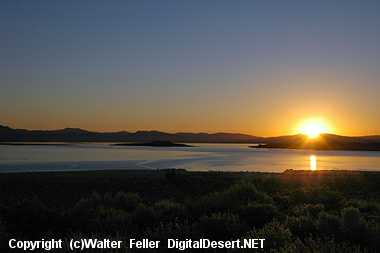
Mono Lake Satellite Image
|