-.-
Grand Canyon Village
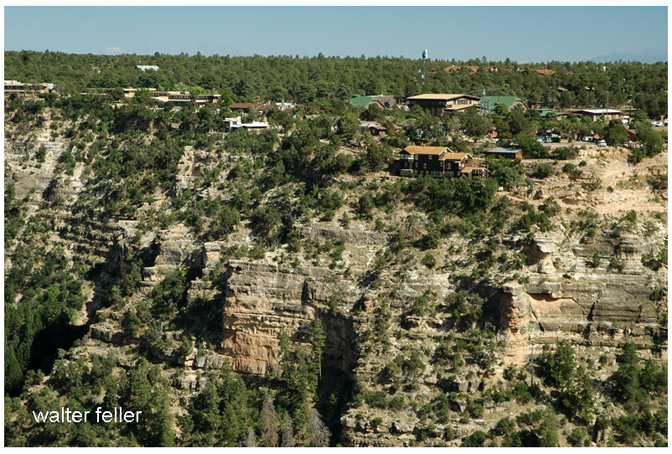
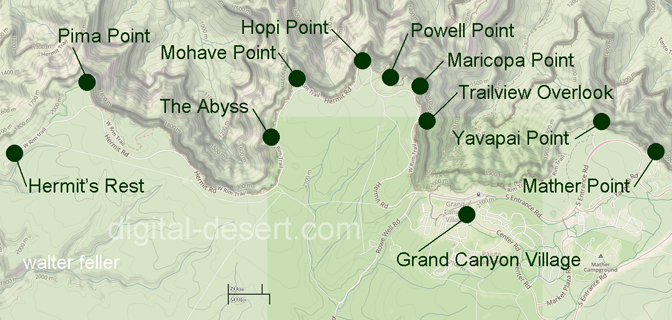
Grand Canyon Village grew where the railroad, the tourist trade, and the new American idea of protecting wild country came together at the edge of the great canyon.
Long before there was a village, the South Rim was known and used by Indigenous people, including the Havasupai, Hopi, Navajo, Paiute, and others. There were trails and seasonal camps, old trading ways, and places in the canyon country that carried meanings no newcomer could fully see.
In the 1880s and 1890s, prospectors, ranchers, and men looking for a chance began coming to the South Rim. The first visitors arrived by stagecoach from far-off railheads in northern Arizona. There were tent camps, rough hotels, dust, and the long wait for anyone who wanted to see the canyon.
Then, in 1901, the Atchison, Topeka and Santa Fe Railway brought its line from Williams to the South Rim. The railroad made the canyon available to people who had never traveled so far from the cities of the East. Its depot became the center from which the modern village spread.
The railroad men wanted a proper destination for their well-to-do passengers. In 1905 they opened El Tovar, designed by Charles Whittlesey. Its limestone walls and pine logs gave it the look of a great lodge set against the wilderness, though inside it offered comforts familiar to travelers from back East.
Mary Colter helped give the village its lasting character. Her Hopi House, completed in 1905, drew on Southwestern Indigenous building traditions and craft. In the years that followed, she designed other canyon buildings that became part of the place as surely as the trails and the rim itself.
Federal protection came quickly. Theodore Roosevelt knew the canyon was too great to be divided up, built over, and used up. In 1908 he set aside Grand Canyon National Monument, and in 1919 Congress made the area Grand Canyon National Park.
The village grew with the park. There were camps, mule barns, employee homes, curio shops, and government offices. The National Park Service, founded in 1916, concentrated development there so that the wider rim would not become a long row of businesses and roadside buildings.
By the middle of the century, automobiles had taken the place of the railroad for most visitors. Roads were widened, parking lots appeared, and new facilities were built. But the old center of the village remained. In 1975, much of it was recognized as the Grand Canyon Village Historic District, important for its railroad history, park architecture, tourism, and the national park movement.
Today, the stone buildings, old rail facilities, rim trails, and Colter's work still hold much of the feeling of the railroad era. The village is busy, as it has long been, but the canyon is still there beyond it - too large, too old, and too plain in its truth to be made small by the things built along its edge.