Dry Wash
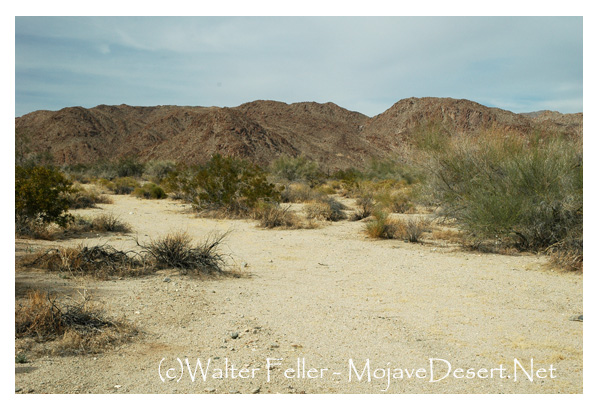
A dry wash is usually empty of flowing water, but during heavy rains it can quickly fill with runoff from the surrounding desert. These washes form an important habitat for certain desert plants. Larger species such as palo verde, Cercidium floridum, and smoke tree, Psorothamnus spinosus, often grow in or near washes, where occasional floodwater brings added moisture and fresh deposits of soil.
The force of running water also helps these plants reproduce. Their hard seeds may require the scouring and churning action of floodwater to crack the seed coat and make germination possible. In this way, the wash is not simply an empty channel between storms. It is an active part of the bajada landscape, shaping plant distribution, renewal, and survival in the desert.
next >
< previous
Also see Desert Wash Habitat. For information on how a desert wash is formed see Stream Channel Development