Rocks, Minerals & Ores
Metallic Oxides
Turquoise aft. apatite
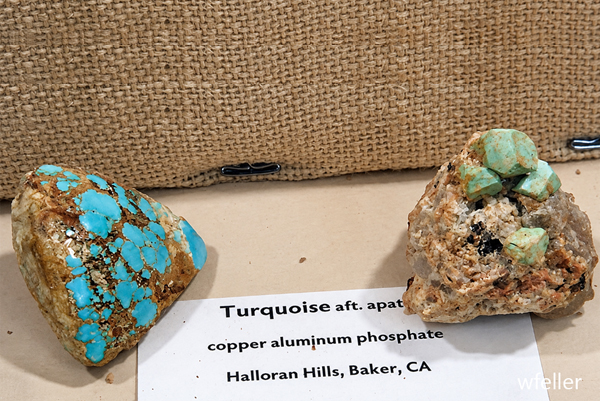
Hydrous copper aluminum phosphate
Chemical formula: CuAl6(PO4)4(OH)8.4H2O
Specimen locality: Halloran Hills, near Baker, California
This specimen is described as turquoise after apatite. The word "after" indicates a pseudomorph: turquoise replaced the original apatite while retaining some or all of the apatite crystal's outward form. The specimen may therefore resemble an apatite crystal even though its original material has been altered or replaced by turquoise.
Turquoise is a secondary phosphate mineral that forms when copper-bearing groundwater reacts with aluminum- and phosphorus-bearing rock. It commonly occurs as veins, nodules, crusts, and fracture fillings. Copper produces its characteristic blue color, while iron may contribute green or yellow-green shades.
Turquoise has a Mohs hardness of approximately 5 to 6 and usually has a waxy to subvitreous luster.
<< - >>
Metallic Oxides
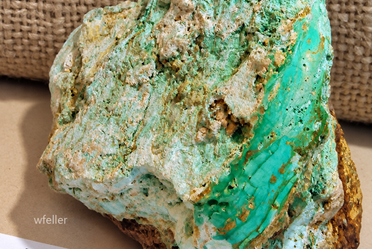
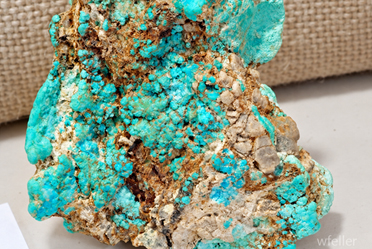
Lane Mountain, Barstow, CA
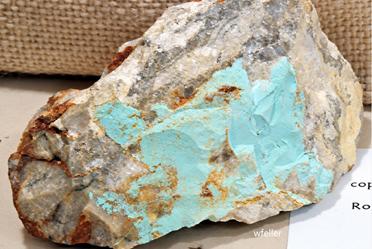 Royston Mine, Tonopah, NV
Halloran Turqouise